

Quick Answer
The Thunder Perfect Mind is a Gnostic poem from the Nag Hammadi library in which an unnamed feminine divine being reveals herself through paradoxical "I am" statements: "I am the whore and the holy one, I am the wife and the virgin." It is the most powerful expression of the divine feminine in ancient Gnostic literature and has become one of the most resonant spiritual texts of the modern era.
Table of Contents
- What Is The Thunder Perfect Mind?
- Discovery and Manuscript History
- The Ancient "I Am" Tradition
- Reading the Paradoxes: A Close Analysis
- Who Is Speaking? The Identity Question
- The Feminine Divine and Social Transgression
- Literary Form and Poetic Craft
- Theological Context: Gnostic, Jewish, Egyptian
- Modern Cultural Impact
- How to Engage with It Spiritually
- Significance for Contemporary Spirituality
- Frequently Asked Questions
Key Takeaways
- A poem, not a narrative: Unlike the Gospel of Philip or the Pistis Sophia, The Thunder Perfect Mind is a pure poem with no narrative frame, characters, or theological system.
- The "I am" paradoxes: The text consists entirely of paradoxical self-declarations by a feminine divine being who encompasses all opposites.
- Refuses all categories: The speaker claims both honored and despised identities, refusing the human systems of moral judgment that separate "holy" from "whore."
- Ancient and modern resonance: Its roots are in Egyptian Isis literature and Hebrew Wisdom, but it speaks directly to contemporary feminist spirituality.
- No easy interpretation: Unlike most sacred texts, The Thunder Perfect Mind deliberately resists summary. Its power is in the encounter with paradox, not in doctrinal content.
What Is The Thunder Perfect Mind?
There are ancient texts that explain things, and then there is The Thunder Perfect Mind, which refuses to explain anything at all. Instead, it places you in the presence of a voice that cannot be categorized, reduced, or contained. That is its point. That is its power.
The Thunder Perfect Mind is a poem, discovered at Nag Hammadi in 1945 as part of the extraordinary cache of Gnostic manuscripts hidden in the Egyptian desert. It is preserved in Codex VI of the Nag Hammadi library. Unlike the Gospel of Philip, which is a philosophical anthology, or the Pistis Sophia, which is a lengthy theological dialogue, The Thunder Perfect Mind is pure poetry: a monologue by an unnamed feminine divine being who speaks only in paradoxes.
The poem opens with a summons: "I was sent forth from the power, and I have come to those who reflect upon me, and I have been found among those who seek after me." What follows is one of the most radical and disorienting experiences available in all of ancient literature. The speaker proceeds to declare herself simultaneously as opposites that human society treats as absolute categories:
I am the first and the last. I am the honored one and the scorned one. I am the whore and the holy one. I am the wife and the virgin. I am the mother and the daughter. I am the members of my mother. I am the barren one and many are her sons. I am she whose wedding is great, and I have not taken a husband. I am the midwife and she who does not bear. I am the solace of my labor pains. I am the bride and the bridegroom, and it is my husband who begot me. I am the mother of my father and the sister of my husband, and he is my offspring.
This is not confusion or incoherence. It is a deliberate and sophisticated theological statement about the nature of the divine that human categories cannot contain. The poem returns to this paradoxical pattern again and again across its length, each repetition adding new dimensions of meaning without resolving the fundamental paradox.
What makes The Thunder Perfect Mind particularly remarkable is that it achieves this theological complexity through purely poetic means. There is no narrative, no cosmological explanation, no list of doctrines. There is only the voice, relentlessly encountering you with its refusal to be reduced.
Discovery and Manuscript History
The Thunder Perfect Mind is preserved in Codex VI of the Nag Hammadi library, the same collection of Gnostic manuscripts discovered in 1945 when Egyptian farmers digging near a cliff face uncovered a sealed jar containing thirteen leather-bound papyrus codices. The Coptic manuscript dates to approximately the fourth century CE.
Like most of the Nag Hammadi texts, The Thunder Perfect Mind was almost certainly composed in Greek and later translated into Coptic. The Greek original is lost. Scholars debate when the Greek original was composed, with estimates ranging from the first to the third century CE. Some scholars argue for a pre-Christian origin, pointing to its close parallels with Hellenistic Isis literature that predates Christianity by centuries. Others see it as a product of the second-century Gnostic movement that flourished in Egypt and Syria.
The poem is complete in the surviving manuscript, which is unusual among the Nag Hammadi texts, many of which are damaged or fragmentary. This completeness has allowed scholars to analyze its structure with unusual confidence. The text is approximately 13 pages in the Coptic manuscript.
The first scholarly translation into English was made by George W. MacRae and included in James M. Robinson's standard edition of The Nag Hammadi Library in English, first published in 1977. Since then, multiple new translations have been produced, including a dedicated translation and introduction by Hal Taussig, Maia Kotrosits, and colleagues published in 2010, which brought significant new scholarly attention to the poem and situated it more carefully in the context of Hellenistic women's religious experience.
The Ancient "I Am" Tradition
To understand The Thunder Perfect Mind, you need to understand the ancient tradition of divine self-revelation through "I am" (Greek: ego eimi) statements. This tradition runs through multiple ancient religious cultures and gives The Thunder Perfect Mind its literary and theological DNA.
The most direct ancient parallels are the Isis aretalogies of Hellenistic Egypt. An aretalogy is a text in which a deity speaks in first person, cataloguing their own powers, deeds, and aspects. The Isis aretalogy from Kyme (roughly second century BCE) includes remarkable parallels to The Thunder Perfect Mind: "I am Isis, the mistress of every land... I am in the rays of the sun... I am that which is called the goddess by women... I gave and ordained laws for men, which no one is able to change... I am she who is called goddess by women." The parallels in form and spirit with The Thunder Perfect Mind are striking enough that many scholars believe the Gnostic poet was consciously drawing on the Isis aretalogy tradition.
The Hebrew Bible's personification of Wisdom (Hokhmah/Sophia) in Proverbs 8 is another important parallel. There, Wisdom speaks in first person: "I, Wisdom, dwell with prudence, and find out knowledge and discretion... I was set up from everlasting, from the beginning, or ever the earth was." The divine Wisdom who speaks in this tradition is feminine, pre-existent, and claims a cosmic role in creation. The Thunder Perfect Mind's speaker echoes this tradition while pushing it into far more radical paradoxical territory.
The Gospel of John in the New Testament is also relevant. John's Jesus speaks repeatedly using the "I am" formula: "I am the way, the truth, and the life," "I am the light of the world," "I am the resurrection and the life." These are not identical to the Wisdom/Isis tradition but they draw on the same framework of divine self-revelation through "I am" declarations. The Thunder Perfect Mind stands in creative tension with all of these traditions: like them in form, unlike them in its radical inclusivity of opposites.
Why Paradox Is the Language of the Divine
The consistent use of paradox in The Thunder Perfect Mind is not rhetorical decoration. It is a theological position. If the divine encompasses all reality, then the divine cannot be described only by honorable, socially approved categories. The categories of "honored and scorned," "wife and whore," "first and last" are human divisions of a reality that is, in its source, undivided. The paradoxes are a way of using human language to point beyond human language, of using categories to indicate what exceeds all categories. This is the same logic that leads mystics in multiple traditions (Meister Eckhart, Nagarjuna, Lao Tzu) to speak of God or ultimate reality in paradoxical or negative terms: not because they are confused, but because they are being maximally precise.
Reading the Paradoxes: A Close Analysis
The paradoxes in The Thunder Perfect Mind are not random or arbitrary. They cluster around specific domains: social status, family relationships, life stages, and cosmic opposites. Reading them carefully reveals a systematic theological vision.
Social status paradoxes: "I am the honored one and the scorned one. I am the whore and the holy one." These paradoxes directly challenge the social hierarchies that assigned divine favor to the respected and divine disfavor to the despised. In the ancient Mediterranean world, honor and shame were the primary social currencies. Prostitutes were among the most socially degraded women. Holy women (particularly virgins dedicated to divine service) were among the most honored. The divine speaker claims both without preference, asserting that neither social position determines access to the divine or exhausts the divine's own nature.
Family relationship paradoxes: "I am the mother of my father and the sister of my husband, and he is my offspring." These statements deliberately collapse the kinship categories that structured ancient social life. Kinship relations were not merely social categories but cosmological ones in much ancient thought: the relationship between father and son mirrored the relationship between creator and creation, between priest and god. By declaring herself simultaneously mother, daughter, sister, wife, and offspring of every possible relation, the speaker asserts that the divine feminine is the ground and source of all relationship rather than a participant in any particular relationship.
Life-stage paradoxes: "I am the barren one and many are her sons. I am the midwife and she who does not bear." These paradoxes engage with the specific experiences of women's bodies and women's social roles in the ancient world. Barrenness was considered a curse; many sons were a supreme blessing. The divine speaker encompasses both, refusing to allow human experiences of loss or abundance to define the divine. The midwife who does not bear is perhaps the most striking image: a woman who brings life forth without herself entering the process of birth, a figure for divine generativity that operates without being subject to the mortal rhythms of birth, suffering, and death.
Cosmic paradoxes: "I am the first and the last. I am knowledge and ignorance. I am strength and I am fear." The cosmic paradoxes assert that the divine encompasses all extremes of existence: temporal, epistemological, psychological. The divine is not simply the good pole of any binary but the ground from which all binaries arise. This resonates with mystical traditions across cultures: the Taoist understanding of Tao as the source of both yin and yang, the Kabbalistic Ein Sof as the infinite that contains all finite opposites, the Sufi concept of the divine as the All that encompasses both existence and non-existence.
The demand paradoxes: "Hear me, you hearers, and learn of my words, you who know me. I am the hearing that is attainable to everything; I am the speech that cannot be grasped." The final series of paradoxes turns directly to the audience. You are invited to hear, but the speaker is also unhearable. You are invited to know, but the speaker is unknowable. This is not cruelty but precision: the encounter with genuine divine reality always exceeds what the finite human mind can grasp. The poem ends by placing the reader in the position of the seeker who can never reduce the divine to an object of knowledge but can only remain in the living encounter with what exceeds understanding.
Who Is Speaking? The Identity Question
One of the most debated questions in Thunder Perfect Mind scholarship is the identity of the speaker. The poem never names her. Several scholarly proposals have been made.
The most common identification is with Sophia, the divine wisdom principle of Gnostic theology. This makes sense contextually: the poem was found in a Gnostic library, and Sophia is the central feminine divine figure in Gnostic thought. The speaker's claim to be simultaneously honored and despised, present in the highest and lowest places, resonates with Sophia's cosmic situation as the Aeon who fell into matter and is present in all levels of creation.
Some scholars identify the speaker as Barbelo, the first Aeon of the Invisible Spirit in Sethian Gnostic cosmology. Barbelo is described in other Sethian texts as a perfect, primordial divine feminine being who is the "mother-father" (combining masculine and feminine) and the "first power." The paradoxes of the Thunder Perfect Mind's speaker, especially the paradoxes about being simultaneously mother and father of divine relationships, align with Barbelo's cosmological role.
A third proposal, championed by Hal Taussig and his colleagues, is that the speaker is not a specifically Gnostic figure but a broader Mediterranean feminine divine figure, akin to Isis, who was adopted by the Gnostic community. This interpretation emphasizes the pre-Gnostic parallels with the Isis aretalogies and suggests that the poem may have circulated in multiple religious contexts before it was collected in the Nag Hammadi library.
The most honest answer is probably that the poem deliberately refuses a single fixed identification. By never naming the speaker, the poem keeps her identification open and forces the reader into an encounter with divine paradox rather than with a named deity whose attributes can be looked up and catalogued. The refusal to name is itself a theological statement: the divine feminine exceeds all names.
The Politics of Divine Identity
The question of the speaker's identity in The Thunder Perfect Mind is not merely a scholarly puzzle. It reflects a real theological and political question: what happens when the divine feminine refuses to be defined by the categories that patriarchal religion has assigned to women? By encompassing both the honored and the despised, both the holy and the sexually transgressive, both the powerful and the subordinate, the speaker refuses every reductive definition that would make the divine feminine safe, manageable, and compatible with social hierarchies. This is why the poem has been so resonant for feminist theology: it presents a divine feminine that is genuinely dangerous to every system of human domination.
The Feminine Divine and Social Transgression
One of the most striking features of The Thunder Perfect Mind is how specifically it engages with the social realities of women's lives in the ancient world. This is not an abstract poem about gender in general. It is a poem that knows exactly what it means to be called a whore, to be barren, to be the daughter of a disgraced mother, to be marginalized by the religious and social hierarchies that define respectable femininity.
In the ancient Mediterranean world, women's social identity was almost entirely defined by their relationships to men and by their sexual conduct. The wife, the virgin, and the holy woman were honored. The prostitute, the barren woman, and the widow were pitied, despised, or treated with suspicion. The divine speaker of The Thunder Perfect Mind claims all of these identities without hierarchy, without shame, and without apology.
The passage "Do not be arrogant to me when I am cast out upon the earth, and you will find me in the kingdoms. And do not look upon me on the dung-heap nor go and leave me cast out, and you will find me in the kingdoms" is particularly striking. The divine feminine is present in the places of greatest social degradation, on the dung-heap, cast out, and she demands to be recognized there as surely as in the kingdoms. This is a direct claim that divine presence is not confined to sacred or honorable spaces but extends to every location of human suffering and social rejection.
This social radicalism is one reason The Thunder Perfect Mind has become so important in modern feminist theology. It presents a pre-modern sacred text that explicitly challenges the equation of divinity with social respectability, that refuses the Madonna/whore dichotomy that has structured so much of Western religious thought, and that claims divine presence precisely where human systems of honor would deny it.
Literary Form and Poetic Craft
The Thunder Perfect Mind is not just theologically sophisticated; it is a work of considerable literary craft. Understanding the techniques the poet uses helps to explain why the text has such power.
Parallelism: The text relies extensively on the kind of parallelism that characterizes Hebrew biblical poetry, where a statement is followed by a related statement that either echoes, extends, or inverts it. This creates a rhythmic, almost hypnotic quality that draws the reader deeper into the cascade of paradoxes.
Direct address: The poem alternates between describing the speaker's identity ("I am...") and directly addressing the audience ("Hear me... look upon me... do not be arrogant to me..."). This alternation keeps the reader personally implicated in the poem rather than at a comfortable analytical distance. The poem insists that it matters to you, that recognizing or failing to recognize the divine feminine has personal consequences for the hearer.
Accumulation: The sheer accumulation of paradoxes creates an effect that no single paradox could produce. By the time you have read "I am the first and the last, the honored and the scorned, the whore and the holy one, the wife and the virgin, the mother and the daughter," the categories themselves begin to lose their rigid solidity. The poem creates, through repetition and accumulation, an experience of the inadequacy of human categories when applied to the divine.
The frame of sending and seeking: The poem opens with the speaker declaring that she was "sent forth from the power" and came to "those who reflect upon me." It closes with references to knowledge and gnosis, understanding and incomprehension. This frame suggests that the poem is not simply a declaration but an invitation: the divine feminine has come to those who are already seeking her. The reader who has found the poem is already, in the poem's own logic, someone who was meant to find it.
Theological Context: Gnostic, Jewish, Egyptian
The Thunder Perfect Mind sits at the intersection of three major religious traditions of the ancient Mediterranean world, drawing from each and belonging fully to none.
From the Egyptian religious tradition, particularly the Hellenistic Isis cult, the poem takes its form (the aretalogy), its boldness in claiming universal divine authority, and its celebration of the feminine divine as encompassing all aspects of existence. The Isis tradition was the most universal and syncretic religion in the ancient Mediterranean world: by the first century CE, Isis was worshipped across the entire Roman Empire, and her aretalogies proclaimed her as the goddess behind all divine names and all aspects of cosmic and human life.
From the Jewish Wisdom tradition, the poem takes the concept of Sophia/Hokhmah as a pre-existent, speaking feminine divine figure who was present at creation and who calls out to humanity to recognize her. The parallels with Proverbs 8 and Sirach 24 are specific enough that some scholars believe the poem was written by someone deeply familiar with Jewish Wisdom literature.
From the Gnostic tradition, the poem takes its context (it was preserved in a Gnostic library), its concern with gnosis as the key to recognizing the divine, and perhaps its identification of the divine feminine with Sophia. The poem's insistence that the divine feminine is present in the despised and marginalized aligns with the Gnostic emphasis on the hidden divine light present in the material world.
The result of this three-way intersection is a text that is more universal and less doctrinally specific than most other Gnostic texts. It does not require belief in Valentinian Aeons or Sethian cosmological hierarchies. It requires only the willingness to encounter a divine voice that refuses to be reduced to any human category of the honorable.
Modern Cultural Impact
Few ancient religious texts have had as vivid a second life in modern culture as The Thunder Perfect Mind. Its paradoxical language and its refusal of conventional categories have made it particularly resonant for artists, filmmakers, and feminist thinkers.
Ridley Scott's 2012 film Prometheus, the prequel to Alien, opens with lines displayed on screen that are taken directly from The Thunder Perfect Mind. The choice to open a science fiction film about humanity's encounter with its creators using a Gnostic text about the paradoxical divine feminine was not accidental. The poem's themes of origins, the relationship between the created and the creator, and the presence of the divine in unexpected and disturbing places resonate with the film's central concerns.
The poem has been the subject of multiple dance performances and musical compositions. Its cascading paradoxes translate well into movement and sound, and its formal qualities (parallelism, repetition, direct address) make it effective for performance in ways that more discursive theological texts are not.
In feminist theology and spirituality, The Thunder Perfect Mind has become one of the most important ancient touchstones. The text is referenced in academic feminist theology, incorporated into women's liturgies and rituals, and read at spiritual gatherings from Wiccan circles to progressive Christian services. Its celebration of the divine feminine in despised as well as honored forms speaks to women and others whose identities have been marginalized by conventional religious hierarchies.
The poem has also attracted significant scholarly attention in gender studies and religious studies. April DeConick, Hal Taussig, and other scholars have written extensively about it as a document of ancient feminine religious experience and divine self-assertion. New translations continue to appear, each bringing different interpretive frameworks to bear on its paradoxes.
How to Engage with It Spiritually
The Thunder Perfect Mind resists the kind of doctrinal extraction that works for many religious texts. You cannot read it and derive a list of beliefs to adopt. Its spiritual engagement is necessarily different, and this is a feature rather than a limitation.
Read it aloud. The Thunder Perfect Mind is oral poetry. It was designed to be heard, not read silently on a page. Reading it aloud changes the experience completely: the rhythms assert themselves, the paradoxes become auditory shocks rather than intellectual puzzles, and the accumulation of "I am" statements creates a cumulative effect that silent reading cannot match. If possible, read it in a group, taking turns with the verses.
Let it disturb you. The poem is designed to disturb the systems of categorization that keep the divine at a comfortable distance. If you find yourself resisting a particular paradox (the "whore and the holy one" particularly disturbs readers whose spirituality depends on sharp distinctions between sacred and profane), that resistance is itself an invitation. What does the resistance protect? What would it mean for the divine to be genuinely present in the despised?
Use it as a mirror for your own identity. The speaker's refusal to be reduced to any single category is an invitation to consider which categories you have been reduced to, and which parts of yourself you have hidden or denied because they did not fit the honored categories. The poem's insistence on encompassing both the honored and the despised aspects of existence applies not just to the divine but to the human being who is made, in every mystical tradition, in the divine image.
For the full text and scholarly introduction, the Nag Hammadi Library edition is the standard reference:
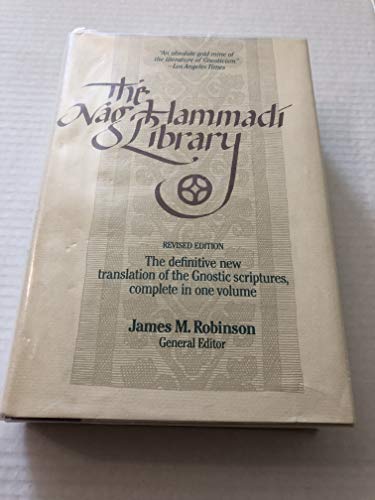
The Nag Hammadi Library in English
The complete Nag Hammadi texts including The Thunder Perfect Mind, the Gospel of Philip, the Gospel of Thomas, and 49 other texts. Edited by James M. Robinson.
View on AmazonThe Thunder Practice: Reclaiming the Despised
Choose one aspect of yourself that you have consistently hidden, denied, or been ashamed of because it did not fit the honored categories in your family, culture, or spiritual community. Write a short "I am" statement in the style of the Thunder Perfect Mind that claims this aspect without shame and places it alongside one of your most honored qualities. For example: "I am the one who fails and the one who succeeds. I am the one who was cast out and the one who found the way home." Sit with this statement for a week. Where does it disturb you? Where does it feel true? The Thunder Perfect Mind teaches that divine wholeness includes everything we have been trained to hide.
Significance for Contemporary Spirituality
The Thunder Perfect Mind occupies a unique position in the landscape of sacred texts for contemporary spiritual seekers. It offers something that most religious texts, including most Gnostic texts, do not: a direct, unmediated encounter with the divine feminine that refuses all the strategies by which patriarchal religion has made the feminine divine safe.
In most religious traditions, the divine feminine, when she is acknowledged at all, is carefully managed. The Virgin Mary is honored for her purity and her submission. The Hindu goddess Lakshmi is honored for her benevolence and her gifts. Even the more powerful goddess figures, like Kali, are contained within theological systems that ultimately subordinate the feminine to masculine divine structures. The Thunder Perfect Mind refuses all of this. Its divine feminine is not pure, not benevolent, not subordinate. She is the first and the last, the honored and the despised, the power that encompasses all opposites without being captured by any.
For those who have experienced spiritual damage from religious systems that equated divinity with a particular kind of approved femininity (or rejected the feminine divine altogether), The Thunder Perfect Mind can function as genuine healing. It offers a pre-modern, ancient, authoritative voice that says: the divine is here too, in this despised and rejected place, in this body that did not fit the honored categories, in this life that the religious system said was not acceptable.
This is not merely psychological comfort. It is a theological claim with real implications for how we understand the divine, human dignity, and the relationship between social systems and genuine spiritual authority. The Thunder Perfect Mind teaches that social honor and divine presence are not the same thing, that the systems which sort people into the honored and the despised are human constructions rather than divine ones, and that the divine exceeds and encompasses all such constructions.
Deepen Your Hermetic Practice
The Hermetic Synthesis Course guides you through all seven principles with structured daily practices.
Explore the CourseFrequently Asked Questions
What is The Thunder Perfect Mind?
The Thunder Perfect Mind is a Gnostic poem found at Nag Hammadi in 1945. It is an extended monologue by a feminine divine being who reveals herself through paradoxical "I am" statements that encompass both honored and despised human identities. It is one of the most powerful expressions of the divine feminine in ancient religious literature.
Who is the speaker?
The speaker is an unnamed feminine divine being. Scholars have proposed various identifications including the Gnostic Sophia, the Sethian Barbelo, or a figure in the tradition of the Hellenistic Isis aretalogies. The poem deliberately refuses a single fixed identification, presenting the divine feminine as encompassing all paradoxes rather than fitting any named deity's specific attributes.
What does "I am the whore and the holy one" mean?
This paradox asserts that the divine feminine cannot be defined by the human categories of moral judgment that separate women into honored and despised types. The divine speaker encompasses both the socially marginalized (the prostitute) and the socially honored (the holy woman), refusing to allow either category to determine divine presence. It is a direct challenge to the social hierarchies that equate divine favor with social respectability.
Is this related to the Isis religion?
Yes, significantly. The Hellenistic Isis aretalogies, in which Isis speaks in first person to declare her universal divine authority, are the closest formal parallels to The Thunder Perfect Mind. Many scholars believe the Gnostic poet was consciously drawing on or responding to the Isis tradition. The Isis aretalogy from Kyme contains strikingly similar "I am" self-declarations about encompassing all aspects of divine and human reality.
Has the poem appeared in modern films?
Yes. Ridley Scott's 2012 film Prometheus opens with lines from The Thunder Perfect Mind displayed on screen. The poem has also appeared in documentaries, dance performances, and musical compositions. Its paradoxical language has made it a resonant text for contemporary artists exploring themes of identity, the divine, and the relationship between the honored and the despised.
How does it compare to the Gospel of Thomas?
The Gospel of Thomas is a collection of 114 sayings attributed to Jesus, many of them cryptic or paradoxical. The Thunder Perfect Mind is a single continuous poem by a feminine divine speaker. Both use paradox and resist simple interpretation, but the Gospel of Thomas is focused on the teachings of Christ while The Thunder Perfect Mind is a direct divine self-revelation by the feminine divine principle. They were found in the same Nag Hammadi collection.
What is the best translation to read?
For completeness, James M. Robinson's "The Nag Hammadi Library in English" (HarperCollins) is the standard scholarly edition. For a dedicated scholarly treatment with introduction, Hal Taussig's "The Thunder: Perfect Mind - A New Translation and Introduction" (Palgrave Macmillan, 2010) is the most rigorous recent academic work. For accessibility, multiple translations are freely available online through the Gnosis Archive (gnosis.org).
How can I use it in spiritual practice?
The most effective approaches are: reading it aloud to experience its oral-poetic power; sitting with individual paradoxes as contemplative prompts; using it as a mirror for examining your own relationship to honored and despised aspects of your identity; and incorporating its "I am" declarations into personal ritual or liturgy, particularly in contexts that honor the divine feminine.
What is The Thunder Perfect Mind?
The Thunder Perfect Mind is a Gnostic poem found in Codex VI of the Nag Hammadi library, discovered in Egypt in 1945. It takes the form of an extended monologue by a feminine divine being who describes herself through a series of paradoxical 'I am' statements: 'I am the whore and the holy one, I am the wife and the virgin.' The speaker's identity is debated by scholars but is widely understood as a manifestation of divine wisdom or the divine feminine principle.
Who is speaking in The Thunder Perfect Mind?
The speaker of The Thunder Perfect Mind is an unnamed feminine divine being. Scholars have proposed various identifications: the Gnostic Sophia, Barbelo (the first Aeon of the Invisible Spirit in Sethian Gnosticism), a personification of divine wisdom related to the Hebrew Hokhmah or Greek Sophia, or a manifestation of the Isis tradition. The text deliberately refuses a single fixed identity, presenting the divine feminine as encompassing all paradoxes.
What does 'I am the whore and the holy one' mean?
This paradoxical statement from The Thunder Perfect Mind asserts that the divine feminine cannot be reduced to any single human category of judgment. The 'whore and the holy one' formulation deliberately violates the social and religious binary that assigns moral value to women based on sexual purity. The divine speaker refuses to be categorized by human systems of honor and shame, asserting that she encompasses and transcends all human definitions.
Is The Thunder Perfect Mind a Gnostic text?
The Thunder Perfect Mind was found in the Gnostic Nag Hammadi library, but scholars debate whether it is strictly Gnostic or a broader religious poem that was adopted by Gnostic communities. It lacks the elaborate cosmological mythology typical of Gnostic texts. Its closest parallels are with the Isis aretalogies of Hellenistic Egypt and the wisdom literature of the Hebrew Bible (particularly Proverbs 8 and Sirach 24).
When was The Thunder Perfect Mind written?
The Thunder Perfect Mind is difficult to date precisely. The surviving Coptic manuscript belongs to the Nag Hammadi codices of the fourth century CE. The text was likely composed in Greek, and estimates for its original composition range from the first to the third century CE. Some scholars argue for a pre-Christian origin based on its parallels with Hellenistic Isis literature.
What is the 'I am' tradition in ancient religious texts?
The 'I am' (ego eimi in Greek) tradition is a pattern of divine self-revelation found across several ancient religious traditions. Isis speaks in this format in Hellenistic aretalogies, presenting herself as the goddess who encompasses all roles and aspects. Divine Wisdom (Sophia/Hokhmah) speaks similarly in Proverbs 8. Jesus uses 'I am' statements in the Gospel of John. The Thunder Perfect Mind belongs to this tradition of self-revealing divine identity declarations.
Has The Thunder Perfect Mind appeared in popular culture?
Yes. The Thunder Perfect Mind has had a remarkable presence in modern culture. Ridley Scott's film Prometheus (2012) opens with lines from the poem on screen. The poem was read aloud in the 1998 documentary film on Toni Morrison. Poet Adrien Rich referenced it in her work. It has been the subject of dance performances, musical compositions, and art installations. Its paradoxical language has made it particularly resonant for feminist artists and thinkers.
How does The Thunder Perfect Mind relate to the Goddess tradition?
The Thunder Perfect Mind is one of the most important ancient texts for contemporary goddess spirituality. Its feminine divine voice that claims complete authority, refuses shame, and encompasses all human experience including the despised and marginalized aspects has become a touchstone for feminist spirituality, Wiccan practice, and goddess-centered religious movements. The text predates these modern movements by nearly two millennia but speaks directly to their central concerns.
What does 'thunder' mean in the title?
The 'thunder' in the title may refer to the voice of divine revelation, which in ancient Mediterranean religions was associated with thunder as the voice of heaven. The combination 'thunder perfect mind' suggests a revelation that comes with divine authority (thunder) and is characterized by completeness or perfection of understanding (perfect mind). It also may echo the Hebrew and Greek traditions of divine Wisdom speaking with prophetic authority.
Where can I read The Thunder Perfect Mind?
The Thunder Perfect Mind is available in James M. Robinson's standard edition of The Nag Hammadi Library in English (HarperCollins). A dedicated translation and introduction by Hal Taussig and colleagues was published as 'The Thunder: Perfect Mind - A New Translation and Introduction' (Palgrave Macmillan). Multiple translations are also freely available online through the Gnosis Archive and Early Christian Texts websites.
How is The Thunder Perfect Mind used in spiritual practice?
The Thunder Perfect Mind is used in several ways in contemporary spiritual practice. Many readers use it as a contemplative text, reading sections slowly and sitting with the paradoxes. It is used in feminist liturgy and ritual as a declaration of the divine feminine's complexity. Some practitioners recite sections of it as a form of invocation or affirmation, particularly the passages about encompassing both honored and despised aspects of identity.
Sources and References
- MacRae, George W. "The Thunder, Perfect Mind." In Robinson, James M., ed. The Nag Hammadi Library in English. HarperCollins, 1988. The standard academic translation.
- Taussig, Hal, Maia Kotrosits, Justin Lasser, Celene Lillie, and Hal Taussig. The Thunder: Perfect Mind - A New Translation and Introduction. Palgrave Macmillan, 2010. The most important recent scholarly treatment.
- Pagels, Elaine. The Gnostic Gospels. Random House, 1979. Essential context for the Nag Hammadi collection.
- Dunand, Francoise. "The Religious System at Alexandria." In Pagan Monotheism in Late Antiquity, ed. P. Athanassiadi and M. Frede. Oxford University Press, 1999. Relevant to the Isis aretalogy tradition that informs the Thunder Perfect Mind.
- Witt, R.E. Isis in the Ancient World. Johns Hopkins University Press, 1971. Comprehensive study of the Isis tradition and its parallels with The Thunder Perfect Mind.
- DeConick, April D. Holy Misogyny: Why the Sex and Gender Conflicts in the Early Church Still Matter. Continuum, 2011. Essential for understanding the social context of texts like The Thunder Perfect Mind.
- Layton, Bentley. The Gnostic Scriptures. Doubleday, 1987. Provides broader Gnostic context for the poem's reception in the Nag Hammadi library.