

Quick Answer
The Gospel of Truth is a Valentinian Gnostic homily found in the Nag Hammadi library, likely written by Valentinus himself around 150 CE. It meditates on how Error and ignorance caused the separation of spiritual beings from the Father, how Christ came as the living Word to reveal gnosis and dissolve Error, and how those who receive this knowledge return to the divine fullness in rest and unity.
Table of Contents
- What Is the Gospel of Truth?
- Who Was Valentinus?
- Did Valentinus Actually Write It?
- The Two Manuscripts
- Error, Ignorance, and the Fall
- Christ as the Living Word and Revealer
- The Father and the Pleroma
- Parables and New Testament Echoes
- Key Teachings: Rest, Naming, and Return
- The Literary Beauty of the Gospel of Truth
- How to Read It as a Spiritual Seeker
- Frequently Asked Questions
Key Takeaways
- A meditation, not a story: The Gospel of Truth is a homily or theological meditation, not a narrative gospel with events and characters.
- Likely by Valentinus: Most scholars attribute it to Valentinus himself, making it the most direct expression of the founder's own thought in the Nag Hammadi library.
- Error, not evil: The material world arose from Error (personified confusion) rather than from a deliberately malevolent creator, giving this text a gentler cosmological tone than many Gnostic works.
- Salvation as recognition: Gnosis in this text is the recognition of one's own name in the Father's book: a return to what was always already true rather than an achievement of something new.
- Literary masterpiece: Scholars consistently describe it as one of the most beautifully written texts in the entire Nag Hammadi collection, poetic and moving in a way that doctrinal texts rarely achieve.
What Is the Gospel of Truth?
The Gospel of Truth opens with a sentence of disarming directness: "The gospel of truth is joy for those who have received from the Father of Truth the grace of knowing him, through the power of the Word that came forth from the Pleroma." In that single sentence, the entire theological universe of the text is already present: the Father, the truth, joy, grace, knowledge, the Word, the Pleroma. Everything that follows is an extended meditation on what those words mean and why they matter.
Unlike the Gospel of Philip (an anthology of theological fragments), the Pistis Sophia (a lengthy dialogue), or the Thunder Perfect Mind (a paradoxical poem), the Gospel of Truth is a sustained meditation: a long, flowing, poetically written homily that circles around a set of interrelated themes without ever quite developing a linear argument. It moves through metaphors the way a jazz musician moves through themes, returning to them from different angles, letting each repetition add new meaning.
The text is found in two manuscripts from the Nag Hammadi library (the Jung Codex and Codex XII) and is widely considered the most beautifully written of all the Nag Hammadi texts. Where many Gnostic documents are dense, technically complex, and demanding in their cosmological detail, the Gospel of Truth reads more like mystical poetry. It is accessible in a way that the Apocryphon of John, with its elaborate Aeon lists, is not.
For spiritual seekers today, it offers something relatively rare in ancient Gnostic literature: a direct, emotionally resonant account of what it feels like to have forgotten one's divine origin and what it means to remember. The text is not primarily a theological system. It is an invitation to a specific kind of inward recognition.
Who Was Valentinus?
To understand the Gospel of Truth, you need some understanding of the man most scholars believe wrote it: Valentinus, arguably the most intellectually formidable Gnostic teacher of the second century.
Valentinus was born around 100 CE in Egypt and received his education in Alexandria, then the intellectual capital of the Mediterranean world and a city where Greek philosophy, Jewish mysticism, Egyptian religion, and emerging Christianity intersected and fertilized each other in ways that were simply not possible anywhere else. Alexandria was where Philo of Alexandria had synthesized Jewish scripture with Platonic philosophy; where Clement and Origen would later develop the most sophisticated forms of Christian theology; and where, in the second century, Gnostic thinkers like Valentinus were doing their most creative work.
Around 136 CE, Valentinus moved to Rome, the political and increasingly the cultural center of the Roman world. There he taught for several decades and established a school that produced some of the most sophisticated theological writing in the ancient world. His students and successors, including Ptolemy, Heracleon, and Marcus, developed his initial insights into what became one of the most influential theological systems of the second and third centuries.
The early Christian writer Tertullian claims that Valentinus was passed over for the position of Bishop of Rome by a narrower margin than history might suggest: "Valentinus had expected to become a bishop, because he was an able man both in genius and eloquence. Being indignant, however, that another obtained the dignity by reason of a claim which confessorship had given him, he broke with the church of the true faith." Whether or not this is accurate, it confirms Valentinus's prominence within second-century Roman Christianity before his eventual break with the emerging orthodox establishment.
Valentinus apparently wrote hymns, homilies, letters, and at least one major theological text. Almost none of his works survive under his direct name. The Gospel of Truth is the primary candidate for direct authorship.
Valentinus and Middle Platonism
Valentinus's theological system is deeply indebted to Middle Platonic philosophy, the dominant philosophical tradition of the second century. Middle Platonism posited an unknowable, transcendent One (or Nous) as the highest divine principle, a secondary creative principle, and a world soul that mediated between the divine and material realms. Valentinus took this structure and gave it a distinctly Christian and Gnostic valence, identifying the transcendent Father with the Platonic One, the Pleroma with the realm of divine ideas, and the material world with the imperfect realm of appearances. This synthesis was intellectually sophisticated enough to attract the attention and respect (as well as the hostility) of mainstream Christian thinkers like Justin Martyr, Irenaeus, and Clement of Alexandria.
Did Valentinus Actually Write It?
The question of whether Valentinus personally wrote the Gospel of Truth is one of the more interesting debates in Nag Hammadi scholarship. The answer is: probably yes, or at least very likely.
The primary evidence for Valentinian authorship comes from Irenaeus of Lyon, the late second-century bishop who wrote the most extensive early Christian attack on Gnosticism ("Against Heresies"). Irenaeus specifically mentions a "Gospel of Truth" used by the Valentinian school, distinguishing it from the four canonical gospels. This reference, dated to around 180 CE, confirms that a Valentinian "Gospel of Truth" existed by that date and was well known enough for the heresy-hunters to have noticed it.
The theological content of the Gospel of Truth aligns closely with what we know of Valentinus's own thought from fragments quoted by his opponents. The central theological moves, the personification of Error, the emphasis on the Father's unknowability and perfection, the description of salvation as the return of dispersed elements to the Pleroma, the use of the term "deficiency" (hysterema) for the state of the material world, are all characteristic of the earliest layer of Valentinian theology.
The literary quality of the text is also relevant. The Gospel of Truth is significantly more elegant, more poetically accomplished, and more theologically original than most of the Valentinian texts that survive from later members of the school. This literary quality is consistent with what we know of Valentinus himself, who was described by his contemporaries as an unusually gifted writer and speaker.
The main objection to Valentinian authorship is that the text's cosmological system is less elaborate than the full Valentinian system as it appears in later texts. But this may simply reflect the fact that Valentinus himself was the originator of the system and had not yet developed all its later elaborations, which were the work of his students.
The Two Manuscripts
The Gospel of Truth is preserved in two different manuscripts from the Nag Hammadi collection, which is unusual among the Nag Hammadi texts and suggests that the text was considered important enough to copy multiple times.
The primary and better-preserved copy is found in the Jung Codex (Codex I). This codex is named after the psychologist Carl Gustav Jung, to whom it was presented in 1952 by the Zurich-based scholar Gilles Quispel, who purchased it as a gesture of respect for Jung's lifelong engagement with Gnostic ideas. The Jung Codex is particularly well-preserved and contains several important Valentinian texts including the Gospel of Truth, the Epistle to Rheginos (also called the Treatise on the Resurrection), and portions of the Tripartite Tractate.
A second, more fragmentary copy is found in Codex XII. This copy is too damaged to contribute significantly to the text's reconstruction but confirms the text's circulation in at least two different manuscript traditions.
Both manuscripts are Coptic translations of a Greek original. The Greek original is lost. The Coptic language of the manuscripts dates to approximately the fourth century CE, but the Greek original was likely composed in the mid-second century, probably between 140 and 180 CE.
Error, Ignorance, and the Fall
The theological heart of the Gospel of Truth is its account of how the world came to be and why it is characterized by suffering, confusion, and forgetfulness of the divine. This account differs significantly from the more elaborate Gnostic creation myths and deserves careful attention.
In the Gospel of Truth, the cause of the fall is not a malevolent being who deliberately created a prison-world to trap souls. It is Error (plane in Greek, sometimes translated as "Wandering" or "Delusion"). Error is a personified cosmic force, but one that is characterized by its lack of root or stability rather than by malice: "Error became powerful; it worked on its own matter foolishly, not having known the truth. It set about with a creation, preparing with power and beauty the substitute for the truth."
Error creates a world that is a substitute for truth, a substitute that looks real but has no genuine foundation. The world built on Error is compared to fog, to a nightmare from which one needs to awaken, to a dream that dissolves when the dreamer wakes. This is a significantly gentler cosmological vision than the Archon-heavy systems of the Apocryphon of John or the Pistis Sophia. Error is not evil in the way that a deliberate torturer is evil; it is more like the mistake of someone who acts in good faith but in ignorance.
Ignorance (agnoia) is the root cause from which Error proceeds. The text states: "Ignorance of the Father brought about anguish and terror; and the anguish grew solid like a fog, so that no one was able to see." Ignorance here is not simply the absence of information. It is an existential condition, a fundamental forgetfulness of the divine that produces anguish as its natural consequence. The material world is not merely a physical realm but a state of consciousness, a state of having forgotten where one came from.
This is psychologically precise in a way that resonates beyond the mythological framework. The experience the Gospel of Truth is describing, a fundamental disorientation in which one does not know who one is, where one came from, or where one belongs, is recognizable as a description of certain states of human spiritual experience that have been reported across cultures and traditions. The Gnostic cosmology is one way of mapping this experience; it is not the only way, but it is a remarkably accurate map.
Error vs. Evil: A Theological Distinction with Consequences
The Gospel of Truth's choice to name the cosmic antagonist "Error" rather than a malevolent Creator God has significant consequences for spiritual practice. If the world is the product of deliberate evil, then the appropriate response might be aggressive resistance or escape. If the world is the product of Error, the appropriate response is correction, remembering, and a return to clarity. This gentler diagnosis suggests a gentler treatment: not warfare against the material world but the gentle dissolution of Error through the light of gnosis, in the same way that fog dissolves when the sun comes up. This vision of spiritual transformation as dissolving rather than conquering is one of the most psychologically sophisticated aspects of the Gospel of Truth.
Christ as the Living Word and Revealer
Into this world of Error and ignorance, the Gospel of Truth says, Christ came as the Word of the Father. The text draws heavily on the Prologue to the Gospel of John ("In the beginning was the Word, and the Word was with God, and the Word was God") but gives it a distinctly Valentinian reading.
Christ in the Gospel of Truth is the living Word who brings the revelation of the Father's name. He comes not to offer sacrifice or to fulfill legal requirements but to reveal truth: "Jesus the Christ enlightened those who were in darkness through oblivion. He enlightened them; he showed them a way; and the way is the truth which he taught them."
The incarnation is described in striking terms: "The Word came into the midst of their schools and spoke the word as a teacher. There came the wise men in their own esteem, testing him. But he confounded them because they were foolish." The Christ of the Gospel of Truth does not primarily perform miracles or establish a church. He teaches, and his teaching is itself the redemptive act because it is the communication of gnosis, the knowledge of the Father that dissolves Error's power.
The crucifixion receives an unusual interpretation. The Gospel of Truth describes Christ being "nailed to a tree" and calls this tree a "fruit of knowledge of the Father." The cross, traditionally a symbol of sacrificial death, is here transformed into the tree of knowledge, recalling both the tree in the Garden of Eden and the cosmic world-tree motif of many ancient mythologies. Christ's death on the cross is the supreme act of revelation: it is where the Word is most fully expressed in matter, where the divine name is most completely written in the world.
The text says: "He was nailed to a tree; he published the edict of the Father on the cross. Oh such great teaching! He draws himself down to death though life eternal clothes him. Having stripped himself of the perishable rags, he put on imperishability, which no one can possibly take away from him." This passage is among the most beautiful in the text, and it captures the Gospel of Truth's characteristic move: taking a symbol that seems to point toward death and loss and showing how it actually reveals the imperishability that was always already present.
The Father and the Pleroma
The Gospel of Truth describes the Father with a characteristic combination of apophatic (negative) and kataphatic (positive) language. On one hand, the Father is the transcendent source of all things who exceeds all human concepts and categories. On the other, the Father is the very ground of rest, joy, and completeness that the spiritual elements are seeking.
The Pleroma, the divine fullness, is described as the realm where the Father dwells and where the spiritual elements find their proper home: "The Father is perfect, knowing every space within him. If he wishes, he manifests whomever he wishes, by giving him a form and furnishing him with a name, and he gives a name to him and brings it about that those come into existence who, before they came into existence, were ignorant of him who fashioned them."
The relationship between the Father and the Pleroma and the individual spiritual elements is described through the metaphor of naming. The Father knows every name in his book; the spiritual elements are those whose names are written there. When a person receives gnosis, they are in a sense reading their own name in the Father's book for the first time, recognizing the identity they always already had but had forgotten in the world of Error.
This concept of names as the vehicle of spiritual identity is theologically rich. In the ancient world, a name was not merely a label but a participation in the reality it named. To know a god's true name was to have access to the god's power. In the Gospel of Truth, the Father's revelation of his own name through Christ is not simply the communication of a label but the communication of the Father's own nature and the recognition of the spiritual element's true identity within that nature.
Parables and New Testament Echoes
One of the most striking features of the Gospel of Truth is its extensive and creative engagement with New Testament texts. The author is clearly deeply familiar with the emerging canon of Christian scripture and is offering a Valentinian reading of its central images and parables.
The parable of the lost sheep appears in the Gospel of Truth in a fascinating reinterpretation. In the canonical Gospels (Matthew 18:12-14, Luke 15:3-7), Jesus tells of a shepherd who leaves 99 sheep to find one that is lost. In the Gospel of Truth, this parable becomes a cosmic myth: the 99 are the spiritual elements in the Pleroma, and the one lost sheep is the spiritual element that has fallen into the world of Error. The shepherd's joy on finding the lost sheep is the Father's joy at the return of the spiritual element to the Pleroma. The whole cosmos is oriented around this act of recovery.
The Gospel of John's Prologue ("In the beginning was the Word...") is woven throughout the Gospel of Truth's treatment of Christ as the divine Word who comes into the world of Error to reveal the Father. The Gospel of Truth is, in a sense, an extended meditation on what the Prologue to John really means when understood through Valentinian eyes.
The Pauline letters, particularly Romans and Galatians, contribute the language of adoption, of knowing and being known by God, of the Spirit crying "Abba, Father" from within the believer. The Gospel of Truth uses this language to describe the gnosis that the spiritual elements receive: they recognize the Father as their source and call out to him as their own.
This extensive New Testament engagement is significant because it shows that the Valentinian tradition was not simply rejecting mainstream Christianity but offering an alternative reading of the same texts. Valentinus and his school were arguing that the deeper meaning of the canonical scriptures supported their theology, not the theology of their opponents. This made Valentinianism a much more sophisticated and difficult opponent for orthodox Christianity than movements that simply rejected the New Testament entirely.
Key Teachings: Rest, Naming, and Return
Beyond the central myth of Error and redemption, the Gospel of Truth contains several distinct theological teachings that deserve attention.
Rest (anapausis): The concept of rest (in the sense of spiritual completeness or cessation of the restless seeking that characterizes life in Error's world) is one of the most important in the Gospel of Truth. The text says: "The Father is sweet and in his will is good. He knows what is his; he also knows what is not his, what belongs to the other. He knows what belongs to him, which is at rest." Rest in this sense is not inactivity but the condition of a being that is in its proper place, no longer driven by the anguish and confusion of ignorance. It is the rest of homecoming.
Naming and knowledge: "But he who is ignorant is in need, and it is many things that he lacks, since he lacks that which will make him perfect. Since the perfection of the totality is in the Father, it is necessary for the totality to ascend to him and for individuals to know what is theirs." Knowledge in the Gospel of Truth is always self-knowledge in a specific sense: the recognition of one's own place in the Father's order, of one's own name in the Father's book.
The dissolution of Error: "As with the ignorance of a person, when he comes to have knowledge, his ignorance vanishes of itself, as the darkness vanishes when light appears, so also the deficiency vanishes in the perfection." This is one of the most elegant formulations in the text. Error does not need to be defeated, fought, or punished. It simply dissolves when gnosis arrives, in the same way that darkness is not destroyed by light but simply ceases to exist when the light comes.
The book of the living: The image of a book in which the names of the spiritual elements are written appears several times in the Gospel of Truth. This book of the living is the Father's knowledge of all that belongs to him. Receiving gnosis is described as having one's name called from this book. The image anticipates the Book of Life in the New Testament's Book of Revelation but gives it a Gnostic reading: it is not a record of moral achievement but a record of spiritual identity.
The Literary Beauty of the Gospel of Truth
Scholars are almost unanimous in describing the Gospel of Truth as the most literary and aesthetically accomplished of the Nag Hammadi texts. This is worth dwelling on, not merely as a matter of aesthetics but as a theological point.
The text is composed in long, flowing sentences that accumulate images and metaphors. A single sentence might move through the images of a dream, a jar of water, a book, and a shepherd, finding in each the same theological truth from a different angle. This technique of accumulation through varied metaphors is characteristic of mystical literature across traditions and reflects the Gospel of Truth's approach to its subject: the divine exceeds any single image or description, so many descriptions are offered, each partial, each pointing toward what cannot be fully captured.
The text's use of paradox is more controlled and less radical than the Thunder Perfect Mind but no less theologically precise. The cross becomes the tree of knowledge; death reveals imperishability; the shepherd's absence from the 99 is the act that saves the one; ignorance, by existing, points toward the knowledge that dissolves it. These inversions are not rhetorical tricks but genuine theological insights dressed in literary form.
The emotional register of the text is notable. There is genuine longing and genuine tenderness in the Gospel of Truth's descriptions of the spiritual elements' separation from the Father and their eventual return. The text says at one point: "And so they came to know, they were received, they were enriched. He who lacks nothing possesses everything." The joy in that final sentence, following the patient description of the long journey through ignorance, is a literary as much as a theological achievement.
How to Read It as a Spiritual Seeker
The Gospel of Truth rewards an approach that is simultaneously more meditative and less analytical than the approach that works for most theological texts. Here are some specific suggestions.
Read it as poetry, not doctrine. The text does not present propositions to be evaluated and accepted or rejected. It presents images to be inhabited. The image of gnosis as awakening from a nightmare, for example, is not a claim to be assessed but an experience to be recognized. Ask yourself: have I had the experience this image is pointing toward? Where in my own life have I "awakened" from a state of confusion that seemed solid and real while I was in it?
Pay attention to the metaphors of rest. The Gospel of Truth returns repeatedly to the concept of rest as the condition of those who have found their way back to the Father. In a culture saturated with the imperative to be productive, busy, and constantly achieving, the Valentinian concept of spiritual rest as the highest state is itself a theological counter-narrative worth sitting with.
Take the concept of Error seriously. The personification of Error (rather than evil or malevolence) as the cosmic antagonist has real implications for how you understand your own spiritual situation and the situations of others. If confusion, forgetfulness, and misperception are at the root of human suffering rather than deliberate wickedness, this suggests very different responses: compassion rather than judgment, clarification rather than punishment, illumination rather than suppression.
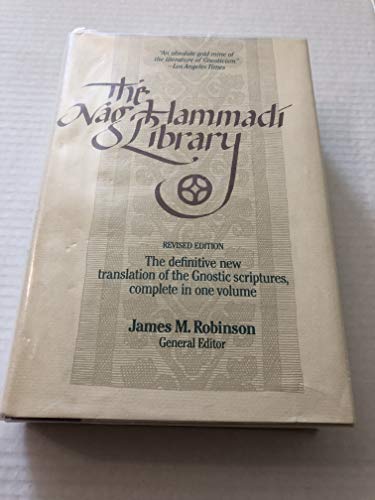
The Nag Hammadi Library in English
The complete Nag Hammadi texts including the Gospel of Truth, Gospel of Philip, Gospel of Thomas, Thunder Perfect Mind, and 48 other texts. The standard scholarly edition.
View on AmazonThe Book of Names: A Personal Practice
The Gospel of Truth describes the Father as knowing each spiritual element's name and holding it in a book of the living. Try this practice: Sit quietly and ask yourself, "What is my true name? Not the name my parents gave me, not the name defined by my roles and relationships and achievements, but the name that was mine before I was born?" You may not get an answer in words. You may simply get a quality, a felt sense, a direction. Sit with that for twenty minutes. The Gospel of Truth is pointing toward a recognition that is deeper than thought, a knowing of where you belong in the order of things that precedes all the identities constructed by the world of Error.
Deepen Your Hermetic Practice
The Hermetic Synthesis Course guides you through all seven principles with structured daily practices.
Explore the CourseFrequently Asked Questions
What is the Gospel of Truth?
The Gospel of Truth is a Valentinian Gnostic homily found in two manuscripts from the Nag Hammadi library. It is a theological meditation on Error, ignorance, the Christ-revelation of the Father, and the return of spiritual elements to the divine fullness (Pleroma). It is widely considered the most beautifully written text in the entire Nag Hammadi collection.
Did Valentinus really write it?
Most scholars believe yes, or at least that it comes directly from Valentinus's own circle. Irenaeus mentions a Valentinian "Gospel of Truth" around 180 CE, and the theological content aligns closely with Valentinus's own known views. The literary quality is consistent with what we know of Valentinus as a gifted and original writer.
What is "Error" in the Gospel of Truth?
Error (plane) is a personified cosmic force that is the cause of the material world's existence, but not through malice. Error acts without knowing the truth and creates a substitute world, like fog or a dream, that has no genuine foundation. It dissolves when the light of gnosis arrives, just as darkness disappears when light appears.
How does the Gospel of Truth describe salvation?
Salvation is described as awakening from a nightmare, finding one's name in the Father's book, and returning home after a long absence. The consistent image is one of recognition: the spiritual element was always part of the Father's fullness and always known by the Father; gnosis is the moment when the element itself recognizes this truth for the first time.
Is the Gospel of Truth connected to the Gospel of Philip?
Yes, closely. Both are Valentinian texts found at Nag Hammadi. The Gospel of Truth is likely an earlier and more direct expression of Valentinus's own thought, while the Gospel of Philip represents the Valentinian tradition at a somewhat later and more developed stage. Both share the core themes of gnosis, the Pleroma, the five sacraments (in the Gospel of Philip), and the union of the spiritual element with the Father.
What is the Jung Codex?
The Jung Codex (Codex I of the Nag Hammadi library) is named after the psychologist Carl Jung, to whom it was presented in 1952 as a gesture of respect for his lifelong interest in Gnostic ideas. It contains the Gospel of Truth and several other important Valentinian texts. The Jung Codex version of the Gospel of Truth is the primary and most complete surviving manuscript.
How does the Gospel of Truth use the parable of the lost sheep?
The Gospel of Truth transforms the lost sheep parable into a cosmic myth. The shepherd is the Father (or Christ), the 99 sheep are the spiritual elements in the Pleroma, and the one lost sheep is the spiritual element that has fallen into the world of Error. The shepherd's joy at recovering the one sheep is the Father's joy at the return of any spiritual element to the Pleroma. The parable becomes a description of the entire cosmic drama of fall and redemption.
Where can I read the Gospel of Truth?
The Gospel of Truth is available in James M. Robinson's "The Nag Hammadi Library in English" (HarperCollins), which is the standard scholarly collection. The translation by Harold W. Attridge and George W. MacRae is included there. A free text version is available online through the Gnosis Archive at gnosis.org.
What is the Gospel of Truth?
The Gospel of Truth is a Gnostic homily or meditation found in two manuscripts from the Nag Hammadi library. It is considered one of the most beautifully written texts in the entire Nag Hammadi collection. The text meditates on the themes of ignorance, Error, the incarnation of Christ, and the restoration of the spiritual elements to the Father through gnosis. It is likely the work of Valentinus himself, the founder of Valentinian Gnosticism, composed around 150 CE.
Did Valentinus write the Gospel of Truth?
Most scholars believe the Gospel of Truth was written by Valentinus himself or by a very close member of his school, based on its theological sophistication, its poetic style, and the fact that the early church father Irenaeus mentions a 'Gospel of Truth' used by the Valentinian school. Valentinus taught in Rome from around 136 to 165 CE and is considered one of the most intellectually capable theologians of the second century.
What is the main message of the Gospel of Truth?
The Gospel of Truth teaches that the universe originated through Error (personified) and ignorance, not through a malevolent creator but through a kind of cosmic mistake. Christ came to reveal the knowledge (gnosis) of the Father to those who had forgotten their divine origin. Through this gnosis, the spiritual elements within humanity return to their proper place in the divine fullness (Pleroma). The text emphasizes that salvation is a return to the unity and rest that exist in the Father.
What is 'Error' in the Gospel of Truth?
Error (plane in Greek, sometimes translated as 'Wandering' or 'Delusion') is a personified cosmic force in the Gospel of Truth. Unlike the explicitly malevolent Demiurge of some Gnostic systems, Error in the Gospel of Truth is more like a cosmic mistake or misperception. It works with a kind of matter that has no root or foundation, like fog or mist, and it eventually dissolves when the light of gnosis arrives. Error is the principle of confusion and forgetfulness that separates the spiritual elements from the Father.
How does the Gospel of Truth describe salvation?
Salvation in the Gospel of Truth is described as awakening from a nightmare, as finding a name written in a book, as the return of lost sheep to the shepherd, and as the return of an exile to their true home. The consistent metaphor is one of remembering or recognizing: the spiritual elements have forgotten their divine origin, and gnosis is the act of remembering. Christ brings this remembering by revealing the Father's name and nature to those who were lost.
What is the Pleroma in the Gospel of Truth?
The Pleroma (Greek for 'fullness') is the divine realm of the Father in Valentinian theology. It is a state of completeness, unity, and perfect rest. The Gospel of Truth describes the Father as the one who 'exists in perfection, replete with all good and replete with all truth.' The Pleroma is the source from which the spiritual elements came and to which they return through gnosis. The material world exists as a kind of deficiency relative to the Pleroma.
Is the Gospel of Truth a narrative gospel?
No. The Gospel of Truth is not a narrative gospel like Matthew or Mark and does not contain stories about Jesus's life. It is a theological meditation or homily, more like a sermon or spiritual essay. It circulates among a series of metaphors and themes rather than developing a linear argument. This makes it unusual in the Nag Hammadi collection and it is often described as one of the most literary and poetically sophisticated texts in the entire library.
Where was the Gospel of Truth found?
The Gospel of Truth is found in two manuscripts from the Nag Hammadi library: the Jung Codex (Codex I) and Codex XII. The Jung Codex version is the more complete and better-preserved copy. The Nag Hammadi library was discovered in 1945 in Upper Egypt and contains 52 texts in 13 leather-bound codices.
What New Testament texts does the Gospel of Truth reference?
The Gospel of Truth contains numerous allusions to New Testament texts, including the Gospel of John (the Prologue), Matthew (the parable of the lost sheep and the parable of the lost coin), Paul's letters (particularly Romans, 1 Corinthians, Galatians, Ephesians, Colossians), Hebrews, and the Book of Revelation. This extensive engagement with canonical texts suggests the author was deeply familiar with the emerging New Testament canon and was offering a Gnostic reading of it.
How does the Gospel of Truth differ from other Gnostic texts?
The Gospel of Truth is distinctive for its gentler and more poetic tone compared to the more systematic and cosmologically complex texts like the Apocryphon of John or the Pistis Sophia. It does not use the elaborate Aeon lists and Archon hierarchies common to many Gnostic texts. Its creator God (Error) is less malevolent and more simply confused. The overall tone is one of warmth, longing, and homecoming rather than dramatic cosmic conflict.
Who was Valentinus?
Valentinus (c. 100-160 CE) was born in Egypt, educated in Alexandria, and came to Rome around 136 CE where he taught for several decades. He was one of the most creative and influential theologians of the second century and nearly became Bishop of Rome, according to the Christian writer Tertullian. His theological school, Valentinianism, produced some of the most sophisticated Gnostic writings, including the Gospel of Philip and very likely the Gospel of Truth.
Sources and References
- Attridge, Harold W. and George W. MacRae. "The Gospel of Truth." In Robinson, James M., ed. The Nag Hammadi Library in English. HarperCollins, 1988. The standard English translation.
- Markschies, Christoph. Gnosis: An Introduction. T&T Clark, 2003. Excellent overview of Gnosticism including the Valentinian tradition and the Gospel of Truth.
- Pagels, Elaine. The Gnostic Gospels. Random House, 1979. The landmark popular introduction to the Nag Hammadi texts.
- Thomassen, Einar. The Spiritual Seed: The Church of the Valentinians. Brill, 2006. The most comprehensive modern study of Valentinianism, including analysis of the Gospel of Truth.
- Layton, Bentley. The Gnostic Scriptures. Doubleday, 1987. Contains translation and introduction for the Gospel of Truth and broader Valentinian context.
- Irenaeus of Lyons. Against Heresies. Translated by Alexander Roberts and W.H. Rambaut. Ante-Nicene Fathers, vol. 1. Available through multiple publishers. The primary ancient source for Valentinian teaching from an orthodox opponent.
- Desjardins, Michel R. Sin in Valentinianism. Scholars Press, 1990. Detailed analysis of Valentinian ethical and theological concepts including those in the Gospel of Truth.