

Quick Answer
Modern Magick by Donald Michael Kraig (Llewellyn, 1988, revised 2010) is the world's most popular step-by-step textbook for Western ceremonial magic. Its twelve lessons guide students from basic concepts through the Lesser Banishing Ritual of the Pentagram, Kabbalah, Tarot, the Middle Pillar exercise, astral projection, evocation, and talismans. It is the most accessible, practical, and complete self-study course for beginners entering the Golden Dawn tradition of ceremonial magic.
Table of Contents
- Who Was Donald Michael Kraig
- What Is Modern Magick
- The Twelve Lessons Overview
- The Lesser Banishing Ritual of the Pentagram
- The Middle Pillar Exercise
- Kabbalah and Tarot in Modern Magick
- Astral Projection and the Astral Plane
- Evocation and Talismans
- The Golden Dawn Lineage
- Building a Daily Magical Practice
- How to Get the Most from Modern Magick
- Frequently Asked Questions
Key Takeaways
- Best beginner textbook: Modern Magick is the most widely used practical textbook for Western ceremonial magic, designed as a complete self-study course for students with no prior experience.
- LBRP foundation: The Lesser Banishing Ritual of the Pentagram is introduced early and treated as the cornerstone of daily practice - Kraig recommends twice-daily performance from the first lesson forward.
- Golden Dawn tradition: The book draws primarily from the Hermetic Order of the Golden Dawn and makes its elaborate ceremonial system accessible without requiring membership in a magical order.
- Progressive structure: Twelve lessons build systematically from basic concepts through complex practices, with practical exercises, discussion questions, and reading assignments at each stage.
- Still the standard: Decades after its first publication, Modern Magick remains the book most commonly recommended as a starting point for ceremonial magic study, praised for clarity, practical focus, and non-dogmatic presentation.
Who Was Donald Michael Kraig
Donald Michael Kraig (1951-2014) was an American author, teacher, and ceremonial magician who spent his career making complex esoteric practices accessible to general audiences. Born in Los Angeles, he became deeply interested in Western magical traditions in the 1970s and spent a decade studying Kabbalah, Tarot, Western ceremonial magic, tantra, and psychic development before producing Modern Magick in 1988.
Kraig taught regular courses in the Los Angeles area on kabbalah, tarot, magic, and related topics, and his teaching experience gave him a practical sense of how students learn and where they get stuck. This pedagogical awareness is one of Modern Magick's great strengths: the book is organized the way a skilled teacher would organize a curriculum, building from simple to complex, returning repeatedly to core concepts from new angles, and anticipating the questions beginners typically ask.
He was also a writer and editor for Llewellyn Publications, which published Modern Magick and became the largest New Age and Pagan publisher in the United States. His work with Llewellyn gave him exposure to the full range of contemporary magical and spiritual literature, and this breadth shows in Modern Magick's nuanced awareness of different approaches within the Western esoteric tradition.
Kraig died in March 2014 at age 62. In the months before his death he wrote extensively on his illness and his experiences, approaching both with the same directness and lack of drama that characterized his teaching. Modern Magick and his other works continue to introduce thousands of new students to ceremonial magic every year.
What Makes Modern Magick Different
Before Modern Magick, the most complete practical guide to Golden Dawn ceremonial magic was Israel Regardie's The Golden Dawn - a thousand-page compilation of the Order's original documents. It was comprehensive but overwhelming for a beginner, organized historically rather than pedagogically. Kraig's innovation was to extract the essential practices, explain them clearly, and sequence them in a learnable order. He created a course where Regardie had produced an archive. This difference explains why Modern Magick became the standard beginner text.
What Is Modern Magick
Modern Magick: Twelve Lessons in the High Magickal Arts was first published by Llewellyn in 1988 as Eleven Lessons in the High Magickal Arts. It was revised and expanded in 2010 to twelve lessons, adding a new chapter that addressed developments in magical practice over the previous two decades. The book has sold hundreds of thousands of copies and is consistently rated one of the best practical introductions to ceremonial magic available.
The book's scope is ambitious. It covers the theoretical background (Hermetic philosophy, Kabbalah, elemental systems), the fundamental daily practices (ritual banishing, the Middle Pillar), the tools and their consecration, divination through Tarot, the expansion of consciousness through astral projection, and more advanced practices including evocation of spirits, talisman creation, and healing magic. This breadth is unusual: most introductory magic books focus on one area. Modern Magick attempts to give students a complete system.
The underlying tradition is the Hermetic Order of the Golden Dawn and its descendants: the Stella Matutina, the A.'.A.'., and the various Thelemic and neo-Golden Dawn orders that proliferated in the 20th century. But Kraig's presentation is deliberately non-dogmatic. He does not require students to join an order or adopt a specific cosmological framework. He presents the Golden Dawn system as a toolkit, explaining why each practice is effective in terms that a rational modern reader can evaluate.
The book is also unusually honest about the actual experience of learning magic. Kraig acknowledges that progress is slow, that results are often subtle rather than spectacular, that failures and dead ends are normal, and that the inner psychological work is as important as any outward ritual. This grounded realism distinguishes Modern Magick from books that promise dramatic results and is one reason it has maintained its reputation over decades.
The Twelve Lessons Overview
Modern Magick is organized as a progressive course, with each lesson building on the previous ones. The twelve lessons cover:
Lesson One: Getting Started introduces the philosophy of Western magic, its historical roots, the concept of magical will, and the basic practices that will be developed throughout the course. Kraig immediately introduces the magical diary - a private record of all practice and experience - as an essential tool.
Lesson Two: Preparations for the LBRP teaches students how to perform the Qabalistic Cross (an opening and closing practice that aligns the practitioner with divine force) and prepares them for the full LBRP.
Lesson Three: The LBRP and Kabbalah Basics introduces the full Lesser Banishing Ritual of the Pentagram and begins systematic instruction in Kabbalah, focusing on the Tree of Life and its basic attributions.
Lesson Four: Elemental Attributions and Ritual Tools covers the four elements and their correspondences, and introduces the four elemental weapons: wand, cup, dagger, and pentacle. Instructions for making or acquiring and consecrating each tool are provided.
Lessons Five and Six continue Kabbalah instruction, introduce the Banishing Ritual of the Hexagram, and begin work on pathworking - guided journeys through the symbolic landscape of the Tree of Life.
Lessons Seven and Eight introduce the Middle Pillar exercise and begin work on astral projection, explaining both the theory and specific techniques for inducing and directing out-of-body experience.
Lessons Nine through Twelve cover evocation (calling spirits into manifestation), talisman creation and consecration, healing magic, and the integration of all practices into a sustainable long-term magical life.
The Lesser Banishing Ritual of the Pentagram
The Lesser Banishing Ritual of the Pentagram (LBRP) is the central practice of Golden Dawn ceremonial magic and the foundational exercise of Modern Magick. Kraig introduces it in the third lesson and recommends that students perform it twice daily - morning and evening - from that point forward throughout the entire course and beyond. Many experienced practitioners continue daily LBRP practice for years or decades.
The LBRP consists of four main phases. First, the Qabalistic Cross: the practitioner touches the forehead, sternum, right shoulder, and left shoulder while vibrating divine names (ATAH, MALKUTH, VE-GEBURAH, VE-GEDULAH, LE-OLAHM, AMEN), tracing a cross of light through the body that connects the practitioner to the divine axis of the cosmos.
Second, the Formation of the Pentagrams: the practitioner faces each of the four cardinal directions in turn, traces a large invoking or banishing pentagram in the air, and vibrates one of four divine names associated with the four elements (YHVH for East/Air, ADONAI for South/Fire, EHEIEH for West/Water, AGLA for North/Earth). Each pentagram is "stabbed" at its center as the name is vibrated, fixing it in place.
Third, the Invocation of the Archangels: the practitioner calls upon the four archangels - Raphael (East), Michael (South), Gabriel (West), Auriel (North) - visualizing each as a towering figure of elemental force taking their position at the corresponding quarter.
Fourth, a closing Qabalistic Cross that mirrors the opening, sealing the space. The entire ritual takes about five to ten minutes when performed at a practiced pace.
Starting a Daily LBRP Practice
The most effective approach for beginners is to memorize the LBRP in stages rather than all at once. In the first week, practice only the Qabalistic Cross until it is fluid and automatic. In the second week, add the pentagram formations. In the third week, add the archangel invocations. By the fourth week you should be able to perform the complete ritual smoothly from memory. At that point, move to twice-daily practice. Keep a brief record of each session in your magical diary, noting the quality of your visualization and any unusual experiences.
The Middle Pillar Exercise
The Middle Pillar exercise is the second foundational practice introduced in Modern Magick. It is a meditation that builds and circulates vital energy through five centers along the vertical midline of the body, corresponding to the five sephiroth on the middle pillar of the Kabbalistic Tree of Life.
The five centers and their associated divine names are: Keter at the top of the head (divine name EHEIEH); Da'at at the throat (divine name YHVH ELOHIM); Tiferet at the heart center (divine name YHVH ALOAH VE-DA'AT); Yesod at the groin (divine name SHADDAI EL CHAI); and Malkuth at the feet and below (divine name ADONAI HA-ARETZ). The practitioner visualizes each center as a sphere of white light, vibrates the corresponding divine name, and feels the sphere intensify and expand.
After building energy at each center, the practitioner circulates it through several patterns: first up the front of the body and down the back, then down the left side and up the right, then outward from the heart in all directions and back inward. These circulation patterns correspond to Kabbalistic concepts of how divine energy flows through the Tree of Life and the human body as its microcosmic reflection.
Israel Regardie, who was Aleister Crowley's secretary and one of the most important figures in 20th-century Western magic, considered the Middle Pillar exercise the most important single magical practice he knew. His book The Middle Pillar (1938) is entirely devoted to it. Kraig's presentation in Modern Magick makes this important practice accessible to students who might not otherwise encounter Regardie's more technical exposition.
Kabbalah and Tarot in Modern Magick
Modern Magick weaves instruction in Kabbalah throughout its twelve lessons, treating it not as an academic subject but as the practical cosmological framework that explains why magical practices work. Kraig introduces the Tree of Life in the third lesson and returns to it repeatedly, adding depth and detail as the student's practice develops.
The Tree of Life as Kraig presents it is a map of the structure of consciousness and reality: ten spheres (sephiroth) connected by twenty-two paths, each attributed to a Hebrew letter, a Tarot major arcana, a planet or element, a color, and a divine name. This network of correspondences is the backbone of the entire magical system. When a practitioner performs the LBRP, they are working with specific divine names associated with specific sephiroth. When they work with Tarot, they are working with symbols of paths on the Tree. When they evoke a spirit, they summon a being associated with a specific planetary sephirah.
Tarot instruction in Modern Magick focuses primarily on the major arcana and their Kabbalistic associations, following the system developed by Eliphas Levi and refined by the Golden Dawn. Kraig teaches the Tarot as a tool for self-examination and divination rather than just fortune-telling, and introduces spreads that use the Tree of Life structure to analyze complex situations. He recommends the Rider-Waite-Smith deck as the most useful for beginners, noting that its pictorial minor arcana make it more intuitively accessible than older decks.
Astral Projection and the Astral Plane
The section of Modern Magick on astral projection is one of its most distinctive contributions. Many ceremonial magic textbooks treat astral work briefly or avoid it as too controversial. Kraig devotes two full lessons to the theory and practice of astral projection, explaining it clearly and providing specific techniques for inducing controlled out-of-body experience.
Kraig presents the astral plane as a non-physical dimension of reality that underlies the physical world and through which magical forces operate. The astral body (or astral double) is a subtle vehicle of consciousness that can be separated from the physical body and directed through the astral plane during meditation or specific exercises. Pathworking - the practice of journeying through visualized symbolic landscapes corresponding to paths on the Tree of Life - is one form of organized astral exploration.
The practical techniques Kraig presents for inducing astral projection include: progressive relaxation followed by visualization of rolling out of the body, the rope technique (imagining climbing a rope that leads upward out of the body), and hypnagogic imagery techniques that use the state between waking and sleep as a transition point. He also discusses methods for maintaining consciousness and control during projection, and for returning to the body safely.
Evocation and Talismans
The later lessons of Modern Magick address more advanced practices including evocation of spirits and the creation of talismans. These topics often intimidate beginners, and Kraig's achievement here is to demystify them without trivializing their significance.
Evocation, as Kraig defines it, is the process of calling forth a spirit or entity into manifestation - not necessarily into full physical visibility (which he treats as very rare and not particularly useful) but into a state of perceptible presence that allows communication. He distinguishes evocation from invocation: evocation calls a being into a space outside the magician (typically into a triangle placed opposite the magical circle), while invocation calls a being into the magician's own consciousness.
Kraig draws on the Goetia (the first section of the Lesser Key of Solomon), the planetary intelligences, and the sephirothic spirits of the Kabbalah as the primary sources for the spirits he discusses. He emphasizes that the purpose of evocation is to work with these beings for specific purposes rather than to command or dominate them, and he stresses the importance of careful preparation, clear intention, and proper opening and closing of the ritual space.
Talismans are physical objects charged with specific magical intention to attract or repel specific forces. Kraig explains the theory (how talismans work through the astral light and correspondence principle), the practical process of creating them (using planetary hours, appropriate symbols, and consecration rituals), and the importance of magical diary records that track each talisman's intended purpose and results.
On Magical Ethics
Modern Magick devotes significant attention to magical ethics - questions about when magic is appropriate to perform, what intentions are acceptable, and how the magician's own consciousness is affected by different kinds of magical work. Kraig is neither permissive nor dogmatic on these questions. He encourages students to develop their own ethical frameworks through reflection rather than simply adopting a fixed rule set. This ethical seriousness distinguishes Modern Magick from more sensationalist introductions to the subject and is part of what has given it lasting credibility.
The Golden Dawn Lineage
To fully appreciate Modern Magick, it helps to understand the tradition it draws from. The Hermetic Order of the Golden Dawn was founded in London in 1888 by three Freemasons: William Wynn Westcott, Samuel Liddell MacGregor Mathers, and William Robert Woodman. The Order developed one of the most elaborate and comprehensive systems of ceremonial magic in history, drawing on Kabbalah, Hermeticism, Enochian magic, astrology, Tarot, and alchemical symbolism.
The Golden Dawn attracted major cultural figures including William Butler Yeats, Aleister Crowley, Arthur Machen, and Dion Fortune. Internal conflicts eventually destroyed the original Order, but its teachings survived through published works and successor organizations. Israel Regardie's publication of The Golden Dawn documents in 1937-40 made the complete system publicly available for the first time.
Modern Magick belongs to this post-Regardie phase of the Golden Dawn tradition. Kraig explicitly acknowledges his debt to Regardie, whose work provides the foundation for Modern Magick's curriculum. He also draws on Aleister Crowley's systematizations and on the work of Dion Fortune, whose Mystical Qabalah remains the most accessible theoretical introduction to Golden Dawn Kabbalah.
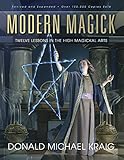
Modern Magick: Twelve Lessons in the High Magickal Arts
Donald Michael Kraig - Third Edition (Llewellyn)
View on AmazonBuilding a Daily Magical Practice
One of the most practically valuable aspects of Modern Magick is its insistence on daily practice as the foundation of magical development. Kraig is explicit about this from the beginning: sporadic ritual work, however elaborate, produces far less development than consistent daily practice of even simple exercises. The LBRP and Middle Pillar, performed every day, will produce more measurable growth than elaborate occasional rituals performed without a daily foundation.
The book provides guidance on building a sustainable practice schedule. A basic daily practice takes about fifteen to twenty minutes: LBRP in the morning (five minutes), Middle Pillar afterward (ten minutes), brief diary entry (five minutes). An evening LBRP before sleep adds another five minutes. This minimum practice fits into almost any schedule and, maintained consistently over months, produces significant results.
Kraig also addresses the common problem of motivation and consistency. Beginners typically start with enthusiasm, practice diligently for a few weeks, then find the practice feeling mechanical or unrewarding, and quietly stop. He recommends keeping the magical diary specifically to counter this pattern: reviewing past entries reveals subtle progress that is invisible day-to-day. He also recommends connecting with others who are studying and practicing, whether through local groups, online communities, or study partners.
How to Get the Most from Modern Magick
The most important piece of advice for anyone beginning Modern Magick is to actually do the exercises rather than just reading about them. The book is a course, not just an information source. Understanding the theory of the LBRP does not develop the faculty of magical will; performing the ritual does. Understanding the theory of the Middle Pillar does not develop sensitivity to subtle energies; practicing the meditation does. This seems obvious, but many readers treat magical books as intellectual entertainment rather than practice manuals.
Read each lesson fully before attempting its practical exercises. Then spend at least two to four weeks on each lesson's practices before moving to the next. Rushing through the twelve lessons in twelve weeks will produce far less than working through them over twelve months, because magical development is cumulative: each practice builds on the skills developed in previous ones.
Keeping the magical diary that Kraig recommends from the first lesson is more valuable than it sounds. The diary serves several functions: it builds consistency (writing an entry requires actually doing the practice), it trains the habit of reflection, and it provides an evidence base for evaluating your own development. Many practitioners report that reviewing their diaries after a year reveals growth that was completely invisible month-to-month.
Deepen Your Magical Practice
The Hermetic Synthesis Course integrates Western ceremonial magic with other sacred traditions through structured daily practices.
Explore the CourseFrequently Asked Questions
What is Modern Magick by Donald Michael Kraig?
Modern Magick: Twelve Lessons in the High Magickal Arts (Llewellyn, 1988, revised 2010) is the world's most popular self-study textbook for Western ceremonial magic. Its twelve progressive lessons guide students from basic concepts through the LBRP, Kabbalah, Tarot, the Middle Pillar exercise, astral projection, evocation, and talisman work.
Is Modern Magick good for beginners?
Yes. Modern Magick was specifically designed for students with no prior experience. Each lesson builds on the previous one, and the book includes practical exercises, discussion questions, and reading assignments. It is widely considered the best single introduction to ceremonial magic for self-directed study.
What is the LBRP in Modern Magick?
The Lesser Banishing Ritual of the Pentagram is a Golden Dawn ceremonial ritual that purifies a space by tracing pentagrams in the four directions, vibrating divine names, and invoking four archangels. Kraig introduces it early and recommends twice-daily practice. Most experienced ceremonial magicians consider it the cornerstone of a daily magical practice.
What tradition does Modern Magick belong to?
Modern Magick draws primarily from the Hermetic Order of the Golden Dawn and its descendants, particularly the work of Israel Regardie and Aleister Crowley. It also incorporates Kabbalistic material, Tarot symbolism, and elements from Wicca. Kraig presents the Golden Dawn system in a non-dogmatic, self-directed way that doesn't require joining any order.
How long does it take to work through Modern Magick?
Kraig recommends spending at least two to four weeks on each lesson before moving to the next. Working at this pace, the complete course takes six to twelve months. Rushing produces less development than working slowly with consistent daily practice. Many practitioners return to specific lessons repeatedly over years.
What magical tools does Modern Magick discuss?
Kraig covers the four elemental weapons: wand (fire/will), cup (water/emotions), dagger (air/intellect), and pentacle (earth/manifestation). He also discusses the sword, lamp, holy oil, and magical diary. Instructions for making, acquiring, and consecrating each tool are provided, along with their symbolic significance in the overall system.
How does Modern Magick compare to Regardie's The Golden Dawn?
Regardie's The Golden Dawn is a comprehensive archive of original Golden Dawn documents - complete but overwhelming for beginners, organized historically rather than pedagogically. Modern Magick extracts the essential practices, explains them clearly, and sequences them in a learnable order. Kraig created a course where Regardie produced an archive. Many practitioners study Modern Magick first and Regardie's compilation later.
Do I need to believe in magic for Modern Magick to work?
Kraig takes a pragmatic approach: he encourages students to suspend both belief and disbelief, perform the practices as described, and evaluate results based on direct experience. He does not require philosophical commitment to a specific worldview. Many practitioners begin skeptically and arrive at their own views through practice. This non-dogmatic stance is one of the book's enduring strengths.
What is Modern Magick by Donald Michael Kraig?
Modern Magick: Twelve Lessons in the High Magickal Arts by Donald Michael Kraig (Llewellyn, revised 2010) is the most widely used practical textbook for beginning ceremonial magic. Originally published in 1988 as Eleven Lessons, it was expanded to twelve lessons in the third edition. The book guides students step-by-step through the foundational practices of Western ceremonial magic: ritual tools, the Lesser Banishing Ritual of the Pentagram, the Middle Pillar exercise, Tarot, Kabbalah, astral projection, and evocation.
Who was Donald Michael Kraig?
Donald Michael Kraig (1951-2014) was an American author, teacher, and practitioner of ceremonial magic. He studied kabbalah, tarot, tantra, and Western magical traditions for decades and taught extensively in Southern California. Modern Magick is his most famous work. He also wrote books on tarot, tantra, psychic development, and the tarot card reading. He died in 2014, and his work continues to be widely used in magical communities worldwide.
What is the LBRP in Modern Magick?
The Lesser Banishing Ritual of the Pentagram (LBRP) is a ceremonial magic ritual developed by the Hermetic Order of the Golden Dawn and taught by Kraig as the first and most important practical skill in Modern Magick. The LBRP involves tracing pentagrams in the four cardinal directions, vibrating divine names, and invoking the four archangels to create a purified ritual space. Kraig recommends practicing it twice daily, and most experienced ceremonial magicians consider it the cornerstone of a daily magical practice.
What is the Middle Pillar exercise in Modern Magick?
The Middle Pillar exercise is a Golden Dawn meditation practice taught in Modern Magick that involves visualizing and vibrating divine names at five energy centers aligned along the vertical midline of the body, corresponding to the central pillar of the Kabbalistic Tree of Life. The exercise builds and circulates vital energy, balances the aura, and develops the practitioner's sensitivity to subtle energies. Israel Regardie wrote an entire book on this practice, and Kraig's introduction makes it accessible for beginners.
Is Modern Magick good for beginners?
Yes. Modern Magick was specifically designed as a self-study course for beginners with little or no prior experience. Each lesson builds on the previous one, beginning with basic concepts and simple exercises and progressing to more complex rituals and practices. The book includes discussion questions and practical assignments at the end of each lesson. It is widely considered the best single introduction to ceremonial magic for self-directed study.
What traditions does Modern Magick draw from?
Modern Magick draws primarily from the Hermetic Order of the Golden Dawn and its descendants, including the work of Aleister Crowley (Thelema) and Israel Regardie. It also incorporates Kabbalistic material, Tarot symbolism, and elements from Wicca and contemporary Paganism. Kraig presents these materials in a systematic, non-dogmatic way, encouraging students to develop their own understanding rather than simply following a fixed system.
How is Modern Magick structured?
Modern Magick is organized into twelve lessons covering: the basics of Western magic and its history; ritual tools (wand, cup, dagger, pentacle); the LBRP and its performance; Kabbalah and the Tree of Life; Tarot and divination; the Middle Pillar exercise; astral projection and the astral plane; evocation of spirits; talismans and sigils; healing; initiation; and the integration of magical practice into daily life. Each lesson includes practical exercises, discussion questions, and reading assignments.
What magical tools does Kraig discuss in Modern Magick?
Kraig covers the four elemental weapons of ceremonial magic: the wand (fire, will), the cup or chalice (water, emotions), the dagger (air, intellect), and the pentacle or disk (earth, physical manifestation). He also discusses the sword, the lamp, the Holy Oil, and the Book of Shadows or magical diary. He provides instructions for consecrating each tool and explains its symbolic significance in the overall system.
How does Modern Magick compare to older ceremonial magic texts?
Modern Magick was groundbreaking because it made Golden Dawn ceremonial magic accessible without requiring membership in a magical order. Earlier texts like Regardie's The Golden Dawn compilation were complete but not pedagogically organized for self-study. Kraig reordered and simplified the material, added explanatory context, and created a step-by-step curriculum. He also updated the language to speak to contemporary practitioners rather than assuming Victorian-era cultural context.
Should I practice the LBRP daily as Kraig recommends?
Many practitioners find that daily LBRP practice produces noticeable results over weeks and months: increased clarity, better sleep, a greater sense of energetic boundaries, and growing facility with visualization. Kraig recommends morning and evening practice. Even once-daily practice produces benefits. Most experienced ceremonial magicians who have worked with Modern Magick confirm that consistent daily practice over at least three months is where the real development happens, rather than sporadic study.
Sources and References
- Kraig, Donald Michael. Modern Magick: Twelve Lessons in the High Magickal Arts. Third Edition. Llewellyn Publications, 2010.
- Regardie, Israel. The Golden Dawn: The Original Account of the Teachings, Rites, and Ceremonies of the Hermetic Order. Llewellyn Publications, 2002.
- Fortune, Dion. The Mystical Qabalah. Samuel Weiser, 1984.
- Crowley, Aleister. Magick in Theory and Practice. Dover Publications, 1976.
- Howe, Ellic. The Magicians of the Golden Dawn: A Documentary History of a Magical Order 1887-1923. Samuel Weiser, 1978.
- Regardie, Israel. The Middle Pillar: The Balance Between Mind and Magic. Llewellyn Publications, 1998.