

Quick Answer
The Twelve Houses (1985) by Howard Sasportas is the definitive psychological astrology guide to the 12 houses of the horoscope. Sasportas cofounded the Centre for Psychological Astrology with Liz Greene and brings Jungian depth to each house - not just listing life events but exploring the psychological dynamics underlying each domain. Required reading for serious astrologers.
Table of Contents
- What Is The Twelve Houses?
- Who Was Howard Sasportas?
- What Are the Twelve Houses?
- The Angular Houses: 1, 4, 7, 10
- The Succedent Houses: 2, 5, 8, 11
- The Cadent Houses: 3, 6, 9, 12
- Sasportas's Psychological Approach
- The Eighth House: Depth and Transformation
- The Twelfth House: The Hidden Self
- Planets in Houses: How It Works
- How to Use This Book
- Frequently Asked Questions
Key Takeaways
- The definitive house guide: No other book on the astrological houses matches Sasportas's combination of psychological depth, comprehensive coverage, and accessible writing. It has been the standard reference for forty years.
- Psychological depth beyond keywords: Each house is explored for its underlying psychological dynamics, not just its traditional associations with career, money, or relationships.
- All planets, all houses: The book provides interpretations for every planet in every house - a complete reference that allows any natal chart element to be looked up in detail.
- Best companion to Liz Greene's Saturn: Sasportas and Greene developed their approaches together, and the two books complement each other - Greene's for understanding Saturn's role in depth, Sasportas's for understanding the house system that locates that role.
- Suitable for all levels: Genuinely accessible to beginners with some chart knowledge, yet deep enough to reward repeated reading by experienced practitioners.
What Is The Twelve Houses?
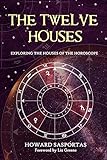
Published in 1985, The Twelve Houses remains the most complete and psychologically sophisticated guide to the astrological houses available in English. Howard Sasportas - who cofounded the Centre for Psychological Astrology with Liz Greene and was considered one of the world's leading practitioners in the field - wrote it as a comprehensive reference: thorough enough to serve as a textbook, accessible enough to be used by anyone with basic chart-reading knowledge.
The houses are the aspect of chart interpretation that causes the most confusion for people new to astrology, and the aspect that most general astrology books handle most superficially. Sasportas's achievement was to give the house system the sustained, intelligent attention it deserved - exploring each house not just as a category of life circumstances but as a domain of psychological experience with its own characteristic dynamics, challenges, and developmental possibilities.
The structure is comprehensive: an extended introduction to the house system itself, followed by individual chapters on each house that cover its traditional meanings, its psychological dimensions, and then a planet-by-planet analysis of how each celestial body expresses itself when placed in that domain. It is genuinely a complete reference - the kind of book you return to repeatedly as your understanding of the chart deepens.
Why This Book Has Not Been Superseded
Forty years after publication, The Twelve Houses is still assigned at the Centre for Psychological Astrology and still cited by practicing astrologers as the definitive house reference. This longevity is unusual in a field where new books appear constantly. The reason is that Sasportas's approach was psychologically grounded in a way that does not date: he was drawing on the enduring insights of Jungian depth psychology, not on astrological fashions that shift from decade to decade. The psychological dynamics he describes in each house - projection in the seventh, depth encounter in the eighth, transcendence in the twelfth - are as recognizable in clients today as they were in 1985.
The book is available on Amazon in the Flare Publications edition with a foreword by Liz Greene, who reflects on Sasportas's legacy. A Kindle edition is also available.
Who Was Howard Sasportas?
Howard Sasportas was born in 1948 in the United States and spent his last twenty years in London, where he became one of the most respected astrologers of his generation. He was a gifted teacher with a remarkable ability to bring psychological insight to bear on astrological interpretation in ways that genuinely helped people understand themselves rather than merely categorizing their chart positions.
Together with Liz Greene, he founded the Centre for Psychological Astrology in London in 1983. The Centre developed a systematic curriculum for training astrologers in the psychological approach, and the two of them taught there together for nearly a decade. Their seminars and books defined what psychological astrology looked like at its best.
Sasportas died in 1992 from AIDS-related illness, at the age of 43. His death was a significant loss to the field. The Inner Planets, a collaboration with Greene, was published posthumously in 1993. Greene's foreword to later editions of The Twelve Houses is a genuinely moving tribute to a close colleague and friend.
Sasportas's Other Major Works
- The Twelve Houses (1985): His definitive individual work - the house system from first principles through detailed planet-in-house interpretations
- The Inner Planets (1993, with Liz Greene): A collaborative exploration of the Sun, Moon, Mercury, Venus, and Mars, developed from their Centre for Psychological Astrology seminars
- Dynamics of the Unconscious (1988, with Liz Greene): Covers the outer planets and psychological transformation - one of the best treatments of Uranus, Neptune, and Pluto in print
- The Development of the Personality (1987, with Liz Greene): Focuses on chart aspects as indicators of psychological development and character formation
What Are the Twelve Houses?
The twelve houses of the horoscope are the twelve divisions of the birth chart created by the rotation of the Earth on its axis. Unlike the twelve signs (which are fixed divisions of the ecliptic, the sun's apparent path) and the planets (which are specific bodies in the solar system), the houses are determined by the specific time and place of birth - they show where in the sky the planets were positioned relative to the local horizon and meridian at the exact moment of birth.
This is why birth time matters so much for house interpretation. Two people born on the same day in different countries, or even a few hours apart in the same city, will have very different house positions even if they share the same planetary sign placements. The Ascendant (the degree of the zodiac rising on the eastern horizon at birth) sets the starting point of the first house, and the houses proceed counterclockwise around the chart from there.
Each house represents a different domain or sphere of life experience. The traditional associations were developed over centuries of astrological practice and reflect the primary concerns of human life: identity, resources, communication, home, creativity, work, relationships, shared assets, philosophy, career, community, and the hidden or spiritual dimension. Sasportas works with these traditional meanings as starting points but deepens them considerably through psychological analysis.
The Twelve Houses: Basic Meanings
| House | Traditional Domain | Psychological Theme (Sasportas) |
|---|---|---|
| 1st | Self, appearance, first impressions | The persona; how we initiate and present ourselves; the lens through which we experience life |
| 2nd | Money, possessions, values | Self-worth and its relationship to material security; what we truly value |
| 3rd | Communication, siblings, local travel | The development of mind through early environment; how we think and exchange information |
| 4th | Home, family, roots | Psychological foundations; the inner sense of home; ancestral patterns |
| 5th | Creativity, romance, children | Self-expression and creative risk; the capacity for joy and play |
| 6th | Work, health, daily routine | Integration of body and mind through service; the relationship between inner state and physical health |
| 7th | Marriage, partnerships | Projection and the experience of the other; what we seek and fear in close relationship |
| 8th | Shared resources, death, sex | Depth transformation through intimate merger; confrontation with shadow, power, and mortality |
| 9th | Philosophy, higher education, travel | The search for meaning and the expansion of worldview; quest for the larger picture |
| 10th | Career, public role, authority | Individuation through public achievement; the relationship with collective authority |
| 11th | Friends, groups, hopes | Belonging to the larger collective; participation in collective ideals and future vision |
| 12th | Hidden enemies, institutions, undoing | The personal unconscious and its contents; transcendence through dissolution of ego boundaries |
The Angular Houses: 1, 4, 7, 10
The four angular houses correspond to the four cardinal points of the birth chart: the Ascendant (1st), the IC or Imum Coeli (4th), the Descendant (7th), and the MC or Midheaven (10th). These are the most powerful positions in the chart - planets placed near these angles express themselves most directly and most visibly in the person's life and character.
Sasportas treats each angular house as representing one of the four fundamental human orientations: the first house as the orientation toward self and beginnings; the fourth as orientation toward the foundations and roots; the seventh as orientation toward the other and relationship; the tenth as orientation toward the larger world and collective achievement. Together they form the basic cross of experience through which all individual life is lived.
The first and seventh houses form the horizontal axis - the axis of self and other, of identity and relationship. The fourth and tenth form the vertical axis - the axis of private inner foundation and public outer achievement. The relationship between what a person is privately (fourth house) and what they become publicly (tenth house) is one of the most psychologically significant tensions in chart interpretation.
The Fourth House: Where the Chart Is Rooted
Sasportas pays particular attention to the fourth house as the psychological foundation of the entire chart. Whatever is in the fourth house - whatever planets are placed there, whatever sign is on the fourth house cusp - describes the quality of the inner foundation from which the person operates. A strong Saturn in the fourth house may indicate a childhood in which security was conditional or difficult, creating an inner foundation that is either very solid (if Saturn's demands have been met through honest development) or very rigid and defended (if those demands have been avoided). The fourth house also connects to the ancestral inheritance - the psychological patterns passed down through the family line that the individual either continues or consciously transforms.
The Succedent Houses: 2, 5, 8, 11
The succedent houses follow the angular houses and represent the consolidation and development of what the angular houses initiate. The second house develops the resources of the first; the fifth develops the creative expression begun through the first and second; the eighth transforms what has been built in the angular houses through depth encounter; the eleventh connects individual achievement to collective purpose.
The second and eighth houses form another important axis - the axis of personal resources versus shared resources, of individual value versus merged value. Planets in the second house focus energy on developing and securing personal resources. Planets in the eighth house often create an intense relationship to other people's resources, to shared financial arrangements, and to the meaningful dimensions of merger - sexual, financial, and psychological.
The fifth and eleventh houses form the axis of personal creativity versus collective participation. The fifth house is about self-expression as an individual - the joy of creating something that is genuinely one's own, whether through art, romance, children, or play. The eleventh house is about participation in something larger - the satisfaction of contributing to a collective project, ideal, or vision that extends beyond the individual self.
The Cadent Houses: 3, 6, 9, 12
The cadent houses are the transitional houses - they represent the domains of learning, preparation, and adjustment that enable the angular initiations and succedent consolidations. Planets in cadent houses often express themselves less directly than those in angular or succedent positions; they may require more conscious development and tend to be expressed more through internal processes than through visible outer achievement.
The third and ninth houses form the mental and philosophical axis. The third house represents the development of the local mind - how we learn to think, communicate, and navigate the immediate environment. The ninth house represents the expansion of mind toward the universal - philosophy, religion, higher education, foreign cultures, and the search for overarching meaning. Both houses involve the development of understanding, but at very different scales.
The sixth and twelfth houses form what Sasportas considers the axis of service and transcendence - the axis that deals with the relationship between the individual and something larger than the individual. The sixth house deals with this through practical service, work, and the health of the body-mind connection. The twelfth deals with it through the dissolution of individual boundaries and the encounter with what lies beyond ordinary ego-consciousness.
Sasportas's Psychological Approach
What distinguishes The Twelve Houses from traditional house manuals is the consistent application of psychological depth to the interpretation of each domain. Traditional astrology treated the houses as categories of events and circumstances: the seventh house gave you information about your marriage; the tenth told you about your career. Sasportas treats them as domains of psychological experience with characteristic dynamics.
This shift is significant. It means that the seventh house is not just about who you will marry but about the entire psychological dimension of projection - the tendency to encounter in others the qualities you have not recognized in yourself. Someone with several planets in the seventh house will typically have an intense and complex relationship with the other in all its forms: they may attract partners who embody qualities they need to develop in themselves, or they may find the question of how to be genuinely in relationship while remaining genuinely themselves to be a central life theme.
Projection and the Seventh House: An Example
Sasportas discusses the psychology of projection in the seventh house in detail. The key insight is that what we project onto others - what we see in them that we do not see in ourselves - is typically something real in us that we have not owned. Venus in the seventh house may indicate a person who sees beauty, charm, and aesthetic sensitivity in their partners while not easily recognizing these qualities in themselves. Mars in the seventh house may attract competitive, assertive, or combative partners as a way of encountering the person's own unintegrated assertiveness. The work with seventh house planets is to recognize what is being projected and to gradually own those qualities directly rather than only meeting them through others.
This psychological framing allows the book to be genuinely useful for self-understanding rather than merely for prediction. You are not reading about what will happen to you but about what psychological dynamics are active in each domain of your life - and what developmental work is possible and needed there.
The Eighth House: Depth and Transformation
Of all twelve houses, the eighth is perhaps the most misunderstood in traditional astrology and the most illuminated by Sasportas's psychological treatment. Traditional astrology associated it with death, inheritance, other people's money, and sex - an alarming combination that left many readers uncertain what to make of planets in this domain.
Sasportas explores the eighth house as the domain of depth transformation through merger and confrontation with what lies beneath the surface. The common thread connecting sexuality, death, shared financial resources, and psychological shadow is the experience of boundaries dissolving - of the ordinary sense of separate self being challenged by something that demands genuine encounter.
Sexuality in the eighth house context is not just physical activity but the psychological dimension of sexual merger - the way that genuine intimacy involves a kind of dissolution of the usual defenses, a meeting at depth rather than at the surface. Death in the eighth house is not just physical mortality but the experience of endings, losses, and transformations that feel like a kind of dying - and the possible regeneration that follows genuine confrontation with them.
The Eighth House and Shadow Work
Sasportas connects the eighth house strongly to Jungian shadow work - the process of integrating the rejected, unconscious aspects of personality. The eighth house domain of depth encounter is precisely the domain in which shadow material is most likely to emerge: in sexual relationships (where the unconscious expresses itself through attraction and repulsion), in encounters with death (which strip away the protective fictions of ordinary life), and in shared financial arrangements (which test the boundary between what is mine and what is yours). Planets in the eighth house often indicate where the person's shadow is most active and where the most demanding - but potentially most rewarding - work of psychological integration occurs.
The Twelfth House: The Hidden Self
The twelfth house receives Sasportas's most extended and thoughtful treatment, reflecting both its complexity and its importance for spiritual development. Traditional astrology called it the house of "hidden enemies, self-undoing, and confinement" - a collection of associations that accurately reflects something of its character while completely missing its spiritual depth.
Sasportas reads the twelfth house as the domain of the personal unconscious and of transcendence. Planets here are not simply in a difficult position - they are in a position where their qualities are accessible but not immediately visible to the ego. They operate from below the threshold of ordinary self-awareness, influencing the person's experience without being easily recognized as their own.
The spiritual dimension of the twelfth house is equally important. This is the house associated with meditation, retreat, and the dissolution of ordinary self-boundaries. It corresponds to the experience of expanded consciousness, of the loss of the sense of being a separate self, of genuine mystical or transcendent experience. People with significant twelfth house placements often have an unusual sensitivity to the dimensions of experience that lie beyond ordinary ego-consciousness - whether they call that spiritual, psychic, artistic, or simply the feeling of being connected to something larger.
The Twelfth House: Prison or Temple
Sasportas uses the image of the twelfth house as either prison or temple - the same placement, the same energy, with radically different outcomes depending on how consciously it is engaged. The person who avoids the twelfth house's invitation to go beyond ordinary self-consciousness typically ends up experiencing it through the house's shadow expressions: a sense of being trapped, of suffering without understanding why, of being undermined by forces they cannot see. The person who engages the twelfth house consciously - through meditation, therapy, spiritual practice, or creative work that accesses the unconscious - can develop an unusual depth of inner life and a genuine relationship to what lies beyond the ego. The same territory, navigated differently, produces opposite results.
Planets in Houses: How It Works
One of the most practically useful features of The Twelve Houses is its comprehensive planet-in-house section. For each house, Sasportas covers not just the house's general meaning but how each of the ten major planets expresses itself when placed in that domain. This makes the book a complete reference: whatever planet is in whatever house in your chart, you can find a substantive interpretation.
Sasportas's planet-in-house interpretations avoid the oversimplification of simple keyword astrology. He does not just say "Saturn in the seventh house means difficulties in marriage." He explores the psychological dynamics: Saturn in the seventh house may create a person who approaches relationship with great seriousness and perhaps excessive caution, who may be drawn to older or more established partners, who experiences relationship as involving significant responsibility, and who has an opportunity through the seventh house domain to develop genuine integrity in how they relate - but who may also bring unconscious fears of abandonment or rejection to their most important partnerships.
The difference between a positive and negative expression of any planet-in-house combination, in Sasportas's framework, lies primarily in the degree of self-awareness and honest engagement the person brings. This is a consistent theme throughout the book: the house system reveals where the work is, not whether the person will do it or what outcome they will achieve.
How to Use This Book
The Twelve Houses works best when read in conjunction with your own birth chart in front of you. Calculate your chart (free at Astro.com with birth date, time, and location) and identify which houses contain planets, which houses are empty, and what signs fall on each house cusp.
Start with the houses that contain planets - these are the domains most directly activated in your chart and the interpretations most immediately applicable to your experience. Read both the general house chapter and the specific planet-in-house section for each placement.
The empty houses are not inactive - they are governed by the planet that rules the sign on their cusp. Sasportas discusses house rulers in the introductory section, and this dimension of interpretation extends the book's utility considerably beyond the planet-in-house sections alone.
Reading The Twelve Houses alongside Liz Greene's Saturn provides the optimal combination for psychological chart interpretation: Greene's deep analysis of Saturn's developmental role, paired with Sasportas's comprehensive house system, gives you both the most important planet and the framework that locates every planetary placement within the chart's overall structure.
Explore Astrological Correspondence
Thalira's Hermetic Synthesis Course grounds itself in the same principle of correspondence that makes astrology meaningful - the understanding that inner and outer reality mirror each other at every level.
Explore the CourseFrequently Asked Questions
What is The Twelve Houses by Howard Sasportas?
The definitive psychological astrology guide to the 12 houses of the horoscope, published in 1985. Sasportas, cofounder of the Centre for Psychological Astrology with Liz Greene, explores each house's psychological dynamics in depth alongside traditional meanings, with complete planet-in-house interpretations for all ten major planets.
What are the twelve houses in astrology?
The twelve divisions of the birth chart, each representing a different domain of life experience: identity, resources, communication, home, creativity, work, relationships, transformation, philosophy, career, community, and the hidden/spiritual dimension. Unlike signs (which depend on birth date), houses depend on the exact birth time and location.
Is this book suitable for beginners?
Yes - it is consistently recommended as the definitive house guide for people who have learned the basics of sign and planet meanings and want to understand the houses deeply. Accessible writing, clear structure, and comprehensive coverage make it useful at all experience levels.
How does Sasportas interpret the 8th house?
As the domain of depth transformation through merger - the house where sexuality, shared resources, death, and psychological shadow all reflect the same underlying dynamic: the dissolution of ordinary ego boundaries through intimate encounter with something that demands genuine depth response. Shadow work, sexual intimacy, and confrontation with mortality all belong to the eighth house domain.
What makes this better than other house books?
The combination of psychological depth (Jungian frameworks applied consistently), comprehensive coverage (all planets in all houses), and accessible writing. Sasportas explains the psychological dynamics underlying each house rather than just listing life events, which makes the interpretations genuinely useful for self-understanding.
Where can I get The Twelve Houses?
Available on Amazon in the Flare Publications paperback edition with Liz Greene's foreword. Also available as a Kindle ebook. Has been continuously in print since 1985.
What is The Twelve Houses by Howard Sasportas?
The Twelve Houses is Howard Sasportas's 1985 definitive guide to the astrological houses - the twelve divisions of the birth chart that represent different areas of life experience. Sasportas, who cofounded the Centre for Psychological Astrology with Liz Greene, brings a psychological depth to each house's meaning, exploring not just its traditional associations (career, relationships, money) but the deeper psychological and archetypal dimensions of each domain of experience.
What are the twelve houses in astrology?
The twelve houses divide the birth chart into twelve sections, each representing a different domain of life experience. The first house represents self and identity; the second, material resources and values; the third, communication and local environment; the fourth, home, roots, and the inner foundation; the fifth, creativity and self-expression; the sixth, work and health; the seventh, close relationships; the eighth, shared resources and transformation; the ninth, philosophy and higher education; the tenth, career and public role; the eleventh, community and collective goals; the twelfth, the hidden, the unconscious, and transcendence.
Who was Howard Sasportas?
Howard Sasportas (1948-1992) was an American astrologer who spent his last twenty years in London. He cofounded the Centre for Psychological Astrology with Liz Greene in 1983 and was considered one of the world's leading practitioners of psychological astrology. He wrote The Twelve Houses (1985) and coauthored several books with Greene including The Inner Planets (published posthumously in 1993) before his death from AIDS-related illness in 1992. He is remembered as an exceptionally gifted teacher and a warm, psychologically perceptive astrologer.
How does Sasportas interpret the houses psychologically?
Rather than simply listing events and circumstances associated with each house (as traditional astrology tends to do), Sasportas explores the psychological dynamics underlying each domain. The seventh house, for example, is not just 'marriage and partnerships' but the psychological realm of projection - the tendency to see in others what we have not yet recognized in ourselves. The eighth house is not just 'other people's money and death' but the domain of psychological transformation through depth encounter with the unconscious, sexuality, and mortality. This psychological layer gives the interpretations unusual depth.
What is the difference between the first and seventh house?
The first house represents the self - how you present yourself to the world, the persona you lead with, the way you initiate. The seventh house represents the other - close partnerships, both personal and professional, and what you attract or project onto intimate others. Sasportas emphasizes the psychological dynamic between these two: planets in the seventh house often describe qualities we have not fully owned in ourselves and therefore tend to meet through other people. The axis of self and other is one of the most important polarities in chart interpretation.
What does a stellium in a house mean?
A stellium is three or more planets clustered in the same house. This concentrates a great deal of psychological energy and life experience in that domain. A stellium in the fourth house means home, roots, and the inner foundation of personality are heavily emphasized - this person's psychological development is deeply connected to family, ancestral patterns, and the question of belonging. Sasportas treats stelliums as indicating areas where intense development is possible, where both the greatest challenges and the greatest opportunities in that domain of life tend to cluster.
What is the angular, succedent, and cadent house distinction?
The twelve houses are divided into three groups of four. Angular houses (1, 4, 7, 10) are the most powerful - they correspond to the cardinal points of the chart (Ascendant, IC, Descendant, MC) and represent areas of direct, initiatory action. Succedent houses (2, 5, 8, 11) are associated with consolidation and developing what the angular houses initiate. Cadent houses (3, 6, 9, 12) are associated with preparation, learning, and transition. Planets in angular houses tend to express themselves most directly; planets in cadent houses may require more conscious development to express fully.
Is The Twelve Houses suitable for beginners?
Yes - it is considered one of the best books for someone who has learned the basics of chart interpretation (signs and planets) and wants to understand the houses deeply. Sasportas covers each house from the ground up, both for those with no planets there and for each planet placement within the house. The writing is clear and accessible while the psychological depth is genuine. Many astrology teachers assign it as the definitive house reference for students.
What does the 12th house represent?
The 12th house is traditionally associated with hidden enemies, isolation, and self-undoing - a frightening collection. Sasportas gives it a much richer psychological treatment. The 12th house represents the unconscious, the hidden dimensions of self that are not visible even to the person themselves, the experience of transcendence and dissolution of boundaries, the connection to what lies beyond ordinary ego-consciousness. It can manifest as isolation, confusion, or psychological difficulty when not engaged consciously; but when engaged with awareness, it can be the house of genuine spiritual development, artistic inspiration, and access to dimensions of experience beyond the ordinary self.
How does the 8th house differ from the 12th house?
Both the 8th and 12th house involve depth, intensity, and encounter with what lies beneath the surface. The 8th house is characterized by depth through encounter - it represents the depths accessed through intimacy, sexuality, shared resources, crisis, and direct confrontation with death and transformation. It is intense and often cathartic but involves active engagement with powerful forces. The 12th house represents dissolution and transcendence - the depth accessed through retreat, spiritual practice, the dissolution of ego boundaries, and states where ordinary individuality is softened or dissolved.
What houses are most important to look at in a birth chart?
No house is inherently more important than another - the ones most significant for any individual chart are those containing multiple planets, those ruled by planets that make multiple aspects, and those connected to the chart's major themes. However, the angular houses (1, 4, 7, 10) tend to be most immediately visible in a person's life and character. The house position of the Sun and Moon are particularly important for understanding the person's central focus and emotional patterns.
Where can I get The Twelve Houses?
The Twelve Houses is available on Amazon and at most major booksellers. The Flare Publications edition with Liz Greene's introduction (ASIN 1903353041) is the standard version. It has been continuously in print since 1985 and is available as a Kindle ebook through Amazon.
Sources and References
- Sasportas, Howard. The Twelve Houses. Aquarian Press, 1985; Flare Publications, 2007.
- Greene, Liz. Foreword to the Flare Publications edition of The Twelve Houses, 2007.
- Greene, Liz and Howard Sasportas. Dynamics of the Unconscious. Weiser Books, 1988.
- Greene, Liz and Howard Sasportas. The Inner Planets. Weiser Books, 1993.
- Greene, Liz. Saturn: A New Look at an Old Devil. Weiser Books, 1976.
- Schulman, Martin. The Karmic Astrology Series: The Nodes and Reincarnation. Weiser Books, 1975.
- Oken, Alan. Complete Astrology. Bantam, 1980 (historical context for psychological astrology development).