

Quick Answer
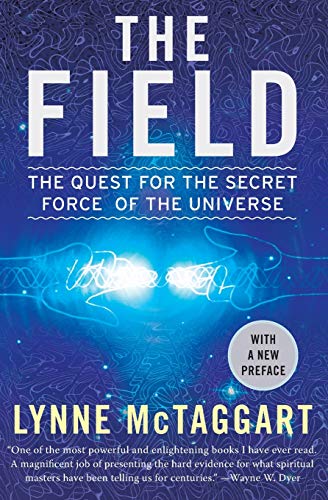
The Field by Lynne McTaggart presents evidence from frontier scientists that a vast quantum energy field, the Zero Point Field, connects all matter and consciousness in the universe. Drawing on research in quantum physics, biophysics, and consciousness studies, McTaggart argues that we are not isolated beings in a mechanical universe but participants in an interconnected web of energy and information that makes phenomena like distant healing and the power of intention scientifically plausible.
Table of Contents
- Overview and Significance
- Who Is Lynne McTaggart?
- The Zero Point Field: What It Is
- The Key Scientists and Their Research
- Biophoton Emission: Light from Life
- The Holographic Brain
- The Princeton PEAR Experiments
- Distant Healing and Intention
- The Water Memory Controversy
- A New Model of Interconnectedness
- Parallels with Spiritual Traditions
- Scientific Criticism and Limitations
- The Intention Experiment and Power of Eight
- Get The Field
- Frequently Asked Questions
Key Takeaways
- The Zero Point Field connects everything: McTaggart presents the quantum vacuum energy field as the medium through which all matter and consciousness are interconnected, providing a scientific basis for concepts of universal oneness.
- Consciousness is not confined to the brain: Research by Karl Pribram, Hal Puthoff, and others suggests the brain may function more like a receiver tuned to the field than a generator of consciousness.
- Living organisms emit light: Fritz-Albert Popp's research on biophoton emissions reveals that all living things radiate coherent light, suggesting a communication system that operates through the quantum field.
- Intention affects physical reality: The PEAR experiments and other research suggest that focused human intention can influence the behaviour of random systems, with implications for healing, prayer, and the nature of consciousness itself.
- A new paradigm is emerging: McTaggart argues that the collective weight of frontier research points toward a paradigm shift from the mechanistic, reductionist worldview to one in which consciousness, energy, and information are fundamental.
Overview and Significance
First published in 2001, The Field: The Quest for the Secret Force of the Universe was among the first books to bring together disparate strands of frontier scientific research into a coherent narrative about the nature of consciousness and reality. Lynne McTaggart, an investigative journalist, spent years tracking down scientists working at the margins of their fields, researchers whose findings suggested that the conventional materialist worldview was incomplete, and wove their work into a single, compelling story.
The book's central argument is that quantum physics has revealed something that materialist science has been reluctant to acknowledge: that at the most fundamental level, everything in the universe is connected through a vast energy field, the Zero Point Field (ZPF). This field, which exists even in the vacuum of space at absolute zero temperature, is not empty space but a seething ocean of quantum energy that links all matter, all life, and all consciousness in ways that conventional physics cannot fully explain.
The book became an international bestseller, translated into over 30 languages, and catalyzed McTaggart's subsequent career as a researcher and organizer of large-scale experiments in the power of intention. Whether one accepts McTaggart's conclusions or views them as speculative, the book raised questions about consciousness, interconnection, and the limits of materialist science that have only grown more urgent in the two decades since its publication.
Who Is Lynne McTaggart?
Lynne McTaggart is an American-born, UK-based investigative journalist, author, and lecturer. She is the editor of What Doctors Don't Tell You, a health newsletter, and has published several books exploring the frontier between science and consciousness, including The Intention Experiment (2007) and The Power of Eight (2017).
McTaggart's background in investigative journalism, rather than science or philosophy, gives her writing a distinctive quality: she approaches the Zero Point Field not as a theorist with a thesis to defend but as a reporter following a story. She interviews the scientists, visits their laboratories, examines their data, and presents their findings in the narrative form of a detective story. This makes the book accessible to non-specialists while occasionally drawing criticism from scientists who feel their work has been simplified or taken out of context.
The Zero Point Field: What It Is
The Zero Point Field is a well-established concept in quantum physics. According to quantum field theory, even in a perfect vacuum at absolute zero temperature (the lowest possible energy state), quantum fluctuations persist. These fluctuations produce a sea of virtual particles that constantly appear and disappear, generating an ocean of energy that permeates all of space.
The amount of energy in the Zero Point Field is, depending on the calculation method, either enormous or negligible. Some calculations suggest that the energy density is extraordinarily high, far exceeding the energy of all matter in the universe combined. Others, using different renormalization methods, arrive at much lower figures. This discrepancy is one of the unresolved problems of modern physics.
McTaggart takes the Zero Point Field beyond its standard physics definition. She argues that the ZPF is not merely a background energy phenomenon but an information field, a medium through which every particle in the universe is connected to every other particle, and through which consciousness can operate non-locally. This extension is where McTaggart's argument departs from established physics and enters the realm of speculation, though she grounds it in the research of scientists like Hal Puthoff, who has published peer-reviewed papers on the ZPF's potential role in inertia and gravity.
The Key Scientists and Their Research
McTaggart profiles several scientists whose work contributes to her argument:
Hal Puthoff: A physicist at the Institute for Advanced Studies in Austin, Texas, Puthoff has published research suggesting that inertia (the resistance of matter to acceleration) may be an effect of interaction with the Zero Point Field rather than an intrinsic property of matter. If correct, this would establish the ZPF as a fundamental feature of physical reality rather than a mere quantum curiosity. Puthoff also conducted controversial remote viewing experiments for the U.S. government's Stargate programme.
Fritz-Albert Popp: A German biophysicist who discovered that all living organisms emit extremely weak light (biophotons) and that the coherence of this emission is related to the health of the organism. Popp's research, published in peer-reviewed journals, suggests that biophoton emission may serve as a communication system within and between organisms, operating through quantum processes.
Karl Pribram: A neuroscientist at Stanford University who proposed the holographic brain theory, suggesting that the brain stores memories not in specific locations but as interference patterns distributed throughout neural tissue, similar to how a hologram encodes images. This model, developed in collaboration with physicist David Bohm, suggests that the brain may process information from a deeper order of reality that Bohm called the "implicate order."
Robert Jahn and Brenda Dunne: Directors of the Princeton Engineering Anomalies Research (PEAR) laboratory, which from 1979 to 2007 conducted rigorous experiments testing whether human consciousness could influence the output of random event generators. Their results, published in peer-reviewed journals, showed small but statistically significant effects, suggesting that consciousness can interact with physical systems at the quantum level.
Jacques Benveniste: A French immunologist whose controversial research on "water memory," the claim that water retains a memory of substances it has been in contact with even after extreme dilution, made him one of the most polarizing figures in modern science. His initial findings, published in Nature in 1988, were subsequently challenged, and his career suffered. McTaggart presents his later work on digital biology more sympathetically.
Biophoton Emission: Light from Life
One of the most compelling research strands in The Field is Fritz-Albert Popp's work on biophoton emission. All living organisms, from single-celled bacteria to human beings, emit extremely weak light at the cellular level. This light is not thermal radiation (heat) but is produced by the DNA molecule and has characteristics of laser light: it is coherent, meaning its waves are synchronized and organized.
Popp's research showed that the coherence of biophoton emission correlates with the health of the organism. Healthy organisms emit highly coherent light; diseased organisms emit chaotic light. Cancer cells, for example, show dramatically altered biophoton patterns compared to healthy cells. This suggests that biophoton emission may be part of the body's internal communication system, a light-based signalling network that coordinates cellular activity across the entire organism.
McTaggart connects this research to the Zero Point Field by arguing that biophoton emission and absorption are mediated by quantum processes that link the organism to the field. If the body communicates internally through coherent light, and if that light operates through quantum mechanisms connected to the ZPF, then the body is not an isolated system but is continuously exchanging information with the larger field.
The Holographic Brain
Karl Pribram's holographic brain model, developed over several decades of research, proposes that the brain does not store memories in specific locations (as the conventional model suggests) but as patterns of interference distributed throughout neural tissue. This would explain why localized brain damage does not destroy specific memories: if the information is stored holographically, every part of the brain contains information about the whole, just as every fragment of a hologram contains the entire image.
Pribram's model was developed in parallel with physicist David Bohm's theory of the implicate order, which proposes that the visible, manifest world (the "explicate order") unfolds from a deeper, hidden reality (the "implicate order") in which everything is interconnected. The holographic model of the brain and Bohm's implicate order together suggest that consciousness may be a non-local phenomenon, not generated by the brain but accessed by the brain from a deeper order of reality.
McTaggart connects this to the Zero Point Field, proposing that the ZPF may be the physical substrate of Bohm's implicate order, the medium in which holographic information is stored and from which the brain retrieves it. This would make the brain a receiver or transducer rather than a generator of consciousness, a view that has parallels in the "filter theory" of consciousness proposed by William James and Henri Bergson in the early 20th century.
The Princeton PEAR Experiments
The Princeton Engineering Anomalies Research (PEAR) laboratory, founded by Robert Jahn (Dean of Engineering at Princeton) in 1979, conducted experiments for nearly three decades testing whether human consciousness could influence the output of electronic random event generators (REGs). The results, accumulated over millions of trials, showed deviations from randomness that were small in magnitude but highly statistically significant.
The PEAR research was published in peer-reviewed journals and subjected to rigorous statistical analysis. The effect sizes were tiny (approximately 0.02% deviation from expected randomness) but consistent across thousands of experimental sessions. Critics argue that such small effects could result from subtle methodological flaws; proponents argue that the consistency of the results across different operators, different machines, and different time periods makes artefact explanations implausible.
McTaggart presents the PEAR experiments as evidence that consciousness can interact with physical systems at the quantum level, and that the Zero Point Field may be the medium through which this interaction occurs. Whether one accepts this interpretation or not, the PEAR data remains one of the most carefully collected datasets in consciousness research.
Distant Healing and Intention
McTaggart devotes significant attention to research on distant healing: the claim that focused intention can affect the health of a person at a distance. She profiles several studies, including research by Elisabeth Targ at the California Pacific Medical Center, which tested whether distant healing could improve outcomes for AIDS patients. The initial results were positive, though subsequent, larger studies produced mixed results.
The mechanism McTaggart proposes is that focused intention creates coherent signals in the Zero Point Field that can be received by the target organism, influencing its biophoton emission patterns and cellular processes. This would provide a scientific framework for phenomena that have been described in spiritual traditions for millennia: healing prayer, the transmission of energy from healer to patient, and the power of collective intention.
The Water Memory Controversy
Jacques Benveniste's water memory research is perhaps the most controversial material in the book. In 1988, Benveniste published a paper in Nature claiming that water retained a "memory" of biological substances it had been in contact with, even after being diluted to the point where no molecules of the original substance remained. The claim, if true, would provide a mechanism for homeopathy and would suggest that water can store information in ways that conventional chemistry cannot explain.
Nature published the paper but simultaneously sent a team (including magician James Randi) to investigate Benveniste's laboratory. The team reported they could not replicate the results under controlled conditions. Benveniste's reputation was damaged, and he spent the rest of his career defending his work.
McTaggart presents Benveniste's later research, which attempted to demonstrate that biological information could be transmitted digitally through electromagnetic signals, more sympathetically. She acknowledges the controversy but argues that the mainstream scientific establishment may have been too quick to dismiss research that challenged fundamental assumptions about the nature of matter and information.
A New Model of Interconnectedness
The collective weight of the research McTaggart presents points toward a model of reality in which:
- All matter is connected through the Zero Point Field
- Living organisms communicate through biophoton emissions mediated by quantum processes
- The brain accesses information from the field rather than generating consciousness from neural activity
- Focused intention can influence physical systems at a distance through field effects
- Information is stored holographically in the field and can be accessed non-locally
This model, if correct, would represent a fundamental shift from the mechanistic, reductionist worldview that has dominated Western science since the 17th century to a participatory, interconnected worldview in which consciousness is not an accidental byproduct of matter but a fundamental feature of reality.
Parallels with Spiritual Traditions
McTaggart draws connections between the Zero Point Field and concepts from multiple spiritual traditions:
The Akashic Field: In Hindu and Theosophical tradition, the Akasha is a universal medium that records all events, thoughts, and experiences. The philosopher Ervin Laszlo has explicitly identified the Zero Point Field with the Akashic Field in his book Science and the Akashic Field (2004).
Buddhist interdependence: The Buddhist concept of pratityasamutpada (dependent origination) teaches that nothing exists independently; everything arises in dependence on conditions and is interconnected with everything else. The Zero Point Field provides a physical model for this metaphysical insight.
Chinese qi: The concept of qi (chi), the life force that flows through all living things in Chinese medicine and philosophy, maps onto the idea of a universal energy field that connects and sustains all life.
Western esotericism: The concept of the ether or aether, a universal medium that fills all space, has been a feature of Western philosophy from Aristotle through the 19th century. While Einstein's special relativity eliminated the need for a luminiferous ether, the Zero Point Field reintroduces a similar concept at the quantum level.
Scientific Criticism and Limitations
It is important to read The Field with an awareness of its limitations:
Selection bias: McTaggart profiles scientists whose work supports her thesis while giving less attention to the many scientists whose work contradicts it. This is common in popular science writing but means the book presents a one-sided view of the scientific landscape.
Extrapolation beyond evidence: Many of the connections McTaggart draws between different research findings are speculative. That the Zero Point Field exists (established physics) does not necessarily mean it connects consciousness (unestablished claim). The leap from "interesting anomaly" to "new paradigm" is one that many of the scientists profiled might not make themselves.
Controversial sources: Several of the scientists McTaggart relies on (Benveniste, Puthoff) are controversial figures whose work has been questioned by mainstream scientists. Their research may prove to be ahead of its time, or it may prove to be flawed. The book does not always clearly distinguish between established science and frontier speculation.
The gap between correlation and causation: Even where the research findings are genuine, the interpretation McTaggart places on them goes beyond what the data strictly supports. Biophoton emission is real, but whether it constitutes a "communication system" connected to a universal field remains to be demonstrated.
These limitations do not invalidate the book's value as an exploration of frontier science and its implications for our understanding of consciousness. They do suggest that readers should treat its conclusions as hypotheses to be investigated rather than as established facts.
The Intention Experiment and Power of Eight
Following The Field, McTaggart organized large-scale experiments testing the power of group intention:
The Intention Experiment (2007): McTaggart recruited thousands of volunteers to direct focused intention at specific targets, including seeds (testing whether intention could accelerate growth), water (testing whether intention could change its crystalline structure), and individual patients (testing healing effects). The experiments produced mixed results, with some showing significant effects and others showing none.
The Power of Eight (2017): Based on her observation that small groups (approximately eight people) produced more consistent results than large groups, McTaggart developed a protocol for small-group intention practice. Participants reported not only effects on their targets but significant personal transformations, including healing of chronic conditions and improved relationships.
Get The Field
The Field is best read as an opening into a larger investigation. It raises questions that, two decades later, remain unanswered and increasingly urgent. Read it alongside more cautious treatments of the same territory for a balanced perspective.
As an Amazon Associate, Thalira earns from qualifying purchases.
Deepen Your Hermetic Practice
The Hermetic Synthesis Course guides you through all seven principles with structured daily practices.
Explore the CourseFrequently Asked Questions
What is The Field about?
An investigation into frontier scientific research suggesting that a quantum energy field (the Zero Point Field) connects everything in the universe, providing a framework for understanding consciousness, healing, and interconnection.
What is the Zero Point Field?
The quantum energy that persists even at absolute zero. McTaggart extends this to argue it is an information field linking all matter and consciousness.
Who is Lynne McTaggart?
An investigative journalist and author who has written several books on consciousness and physics, including The Intention Experiment and The Power of Eight.
Is The Field scientifically accurate?
It presents genuine research but draws speculative conclusions. The Zero Point Field is real physics; its role as a consciousness-connecting medium is unproven. Best read as exploration, not established science.
What scientists are featured?
Hal Puthoff (ZPF physicist), Fritz-Albert Popp (biophotons), Karl Pribram (holographic brain), Robert Jahn and Brenda Dunne (PEAR experiments), and Jacques Benveniste (water memory).
How does it relate to The Intention Experiment?
The Field provides the theory; The Intention Experiment tests it through large-scale group intention experiments. The Power of Eight focuses on small-group practice.
What is biophoton emission?
Weak coherent light emitted by all living organisms from the DNA molecule. Popp's research links its coherence to health status and suggests it serves as an internal communication system.
What is the holographic brain theory?
Karl Pribram's model suggesting the brain stores memories as distributed interference patterns rather than in specific locations, functioning like a hologram.
How does it connect to spiritual traditions?
Parallels with the Hindu Akashic field, Buddhist interdependence, Chinese qi, and Western esotericism's concept of the ether.
What are the PEAR experiments?
Princeton research (1979-2007) testing whether human consciousness could influence random event generators. Results showed small but statistically significant effects.
What is The Field by Lynne McTaggart about?
The Field is an investigative work that synthesizes research from frontier quantum physicists, biologists, and consciousness researchers to argue that a vast quantum energy field, the Zero Point Field, connects everything in the universe. McTaggart presents evidence that this field serves as the medium through which consciousness operates, providing a scientific framework for phenomena including distant healing, the power of intention, and the interconnectedness of all life.
What scientists are featured in The Field?
Key scientists include Hal Puthoff (physicist studying the Zero Point Field), Fritz-Albert Popp (biophysicist researching biophoton emissions), Jacques Benveniste (controversial researcher on water memory), Karl Pribram (neuroscientist proposing the holographic brain model), Robert Jahn and Brenda Dunne (Princeton researchers on consciousness and random event generators), and Edgar Mitchell (Apollo astronaut and consciousness researcher).
How does The Field relate to The Intention Experiment?
The Field provides the theoretical framework; The Intention Experiment (2007) describes McTaggart's attempt to test these ideas through large-scale experiments in which thousands of participants directed focused intention at specific targets. The Power of Eight (2017) further reports on group intention experiments with smaller groups. Together, the three books form a trilogy exploring the relationship between consciousness and physical reality.
What is the holographic brain theory in The Field?
Neuroscientist Karl Pribram proposed that the brain processes information holographically, storing memories not in specific locations but as interference patterns distributed throughout the brain, similar to how a hologram stores images. McTaggart connects this to the Zero Point Field, suggesting that the brain may be a receiver that accesses information from the field rather than a generator that creates consciousness from neural activity.
How does The Field connect to spiritual traditions?
McTaggart draws parallels between the Zero Point Field and concepts from various spiritual traditions: the Hindu Akashic field (a universal record of all events), the Buddhist concept of interdependence (pratityasamutpada), the Chinese concept of qi (life energy), and the Western esoteric tradition of the ether. She suggests these traditions intuited the reality of an interconnecting field that modern physics is now beginning to describe.
What are the Princeton PEAR experiments?
The Princeton Engineering Anomalies Research (PEAR) laboratory, directed by Robert Jahn and Brenda Dunne, conducted experiments from 1979 to 2007 testing whether human consciousness could influence the output of random event generators. Their results showed small but statistically significant deviations from randomness correlated with human intention. McTaggart presents this research as evidence that consciousness can influence physical reality through the Zero Point Field.
Sources and References
- McTaggart, L. (2001). The Field: The Quest for the Secret Force of the Universe. HarperCollins.
- McTaggart, L. (2007). The Intention Experiment. Free Press.
- McTaggart, L. (2017). The Power of Eight. Atria Books.
- Popp, F. A. (2003). "Properties of biophotons and their theoretical implications." Indian Journal of Experimental Biology, 41, 391-402.
- Jahn, R. G., & Dunne, B. J. (2005). "The PEAR proposition." Journal of Scientific Exploration, 19(2), 195-246.
- Pribram, K. H. (1991). Brain and Perception. Lawrence Erlbaum Associates.
- Laszlo, E. (2004). Science and the Akashic Field. Inner Traditions.