
Quick Answer
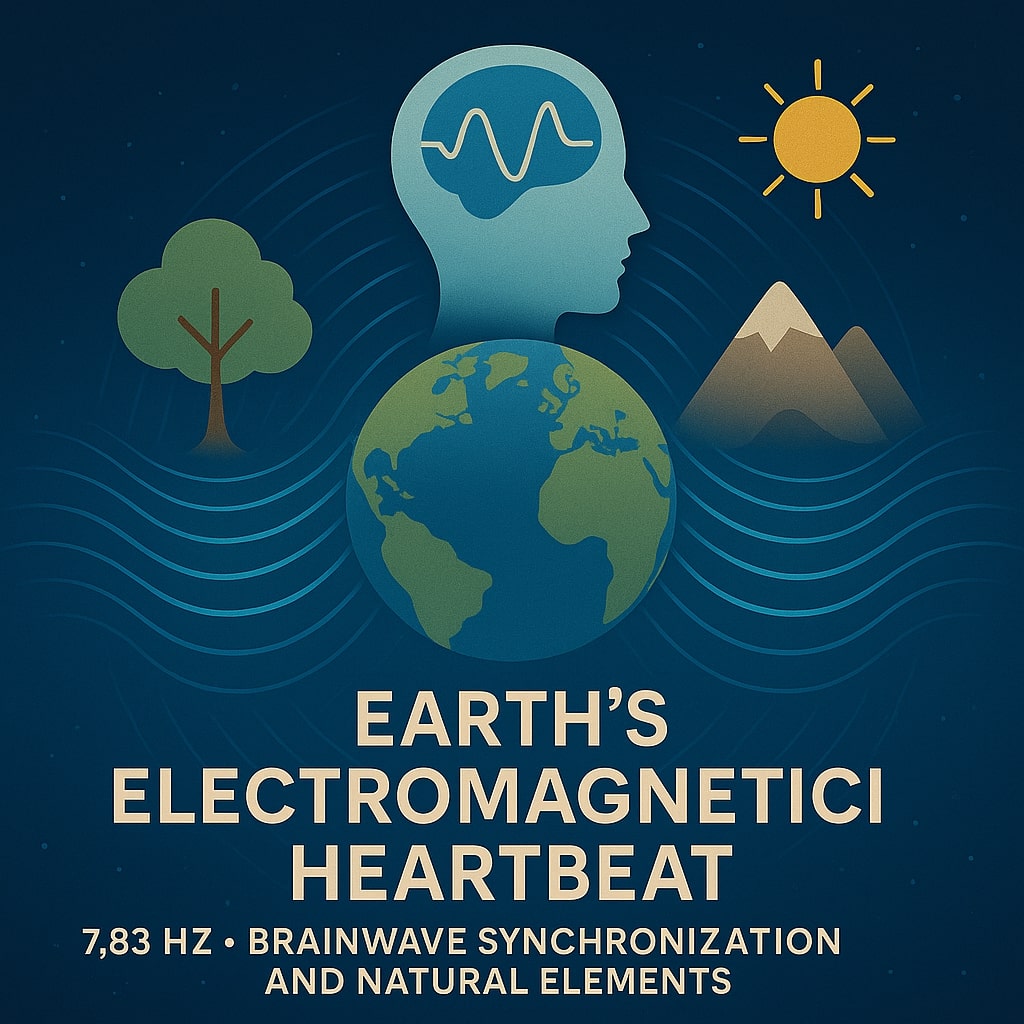
The Schumann resonance is a set of electromagnetic standing waves in the cavity between Earth's surface and the ionosphere, with a fundamental frequency of 7.83 Hz. This frequency overlaps precisely with human theta-alpha brainwaves associated with meditation and relaxed awareness. Billions of years of evolution in this electromagnetic environment shaped biological rhythms. Modern electromagnetic pollution disrupts this natural background, and practices like earthing and HeartMath coherence training are designed to restore the connection.
Table of Contents
- What Is the Schumann Resonance?
- The Physics of the Earth-Ionosphere Cavity
- The Brainwave Overlap: Why 7.83 Hz Matters
- Chronobiology: Halberg's Research and Biological Rhythms
- The Heart-Brain Connection and HeartMath Research
- Geomagnetic Activity and Human Health
- Modern Technology and Electromagnetic Disruption
- Earthing and Reconnection Practices
- The "Schumann Frequency Is Changing" Claim
- Frequently Asked Questions
Key Takeaways
- Natural Origin: The Schumann resonance arises from approximately 2,000 lightning strikes occurring globally at every moment, exciting electromagnetic waves in the Earth-ionosphere cavity. It is a natural geophysical phenomenon with a predictable fundamental frequency of 7.83 Hz.
- Evolutionary Resonance: Life on Earth evolved for billions of years within this electromagnetic environment. The overlap between the Schumann fundamental and human theta-alpha brainwaves is an evolutionary relationship, not a coincidence.
- Biological Sensitivity: Research by Halberg, Persinger, Cherry, and the HeartMath Institute has documented correlations between Schumann resonance fluctuations, geomagnetic activity, and human biological rhythms including heart rate variability, sleep quality, and mental health parameters.
- Modern Disruption: The natural Schumann frequencies are stable, but the modern electromagnetic environment adds enormous noise that makes it harder for biological systems to entrain to these natural signals.
- Restoration Practices: Earthing (bare-foot ground contact), time in natural environments, and HeartMath coherence training are evidence-supported methods for restoring the body's natural electromagnetic attunement.
What Is the Schumann Resonance?
In 1952, German physicist Winfried Otto Schumann was teaching electromagnetic theory at the Technical University of Munich when he made a simple mathematical observation with profound implications. The space between Earth's surface and the conducting layer of the ionosphere (approximately 60-100 km above the surface) forms a resonant cavity. Like any resonant cavity, it supports standing electromagnetic waves at specific frequencies determined by the cavity's dimensions.
Schumann calculated that the fundamental resonant frequency of this cavity should be approximately 10 Hz, later refined to 7.83 Hz. He published his prediction in 1952, and within a few years his student Herbert König confirmed the resonances experimentally by measuring the electromagnetic spectrum at the Earth's surface and finding consistent peaks at exactly the predicted frequencies: 7.83, 14.3, 20.8, 27.3, and 33.8 Hz.
The physical mechanism is elegant. Lightning strikes, which occur approximately 2,000 times per second globally, emit broad-spectrum electromagnetic radiation. This radiation spreads out in all directions within the Earth-ionosphere waveguide. Waves that circle the Earth and return to their starting point in phase with the original wave constructively interfere and build up into standing waves. Waves at other frequencies destructively interfere and cancel out. The result is that the global electromagnetic background contains persistent peaks precisely at the predicted Schumann frequencies.
The Schumann resonances are not a single fixed frequency. They fluctuate slightly with changes in ionospheric conditions, which vary with the 11-year solar cycle, solar flares, and seasonal changes in global lightning patterns. But the fundamental frequency has remained close to 7.83 Hz throughout the period of continuous measurement, which began in the late 1950s.
The Scale of Global Lightning
The 2,000 lightning strikes per second that drive the Schumann resonances represent approximately 100 lightning strikes per second in each of the three main global thunderstorm regions: the Americas (primarily Central Africa and the Americas tropical zones), Africa, and Southeast Asia. The total electromagnetic power released by global lightning is enormous, and it is this power that maintains the Schumann resonances as consistent background features of the Earth's electromagnetic environment. From the perspective of the Earth system, the Schumann resonances are as much a feature of the living Earth as ocean currents or atmospheric pressure gradients.
The Physics of the Earth-Ionosphere Cavity
The Earth-ionosphere waveguide is one of the most interesting natural electromagnetic structures known. Its lower boundary is the Earth's surface (a reasonably good electrical conductor, especially the oceans). Its upper boundary is the lower ionosphere, the conducting layer created by solar UV radiation ionising the upper atmosphere at altitudes between 60 and 100 km depending on time of day and solar activity.
The circumference of the Earth at the ionosphere level is approximately 40,000 km. An electromagnetic wave travelling at the speed of light (300,000 km/s) would circle this cavity in approximately 0.133 seconds, corresponding to a frequency of 7.5 Hz. The actual measured fundamental frequency of 7.83 Hz reflects this calculation adjusted for the actual electrical properties of the boundaries and the fact that the cavity is not a perfect conductor at either surface.
The harmonics arise because the cavity supports multiple standing wave modes simultaneously. The first harmonic requires two half-wavelengths to fit around the Earth's circumference; the second requires three; and so on. Each harmonic appears as a distinct peak in the electromagnetic spectrum measured at any point on or near the Earth's surface.
The width of the Schumann peaks reflects the cavity's losses: the ionosphere absorbs some of the electromagnetic energy, so the standing waves do not persist indefinitely. The quality factor (Q factor) of the Schumann resonances is relatively low compared to metal resonant cavities, meaning the peaks are broad and their exact frequency depends somewhat on the global distribution of lightning activity at any given moment.
The Brainwave Overlap: Why 7.83 Hz Matters
The human brain produces electrical oscillations across a continuous spectrum of frequencies, but neuroscientists have identified several frequency bands with distinct functional correlates. Delta waves (0.5-4 Hz) are associated with deep, dreamless sleep. Theta waves (4-8 Hz) are associated with light sleep, dreaming, deep meditation, creative insight, and the hypnagogic threshold. Alpha waves (8-12 Hz) are associated with relaxed, calm alert awareness, the wakeful resting state. Beta waves (12-30 Hz) are associated with active thinking, problem-solving, and ordinary waking cognition. Gamma waves (30-100 Hz) are associated with high-level cognitive processing and conscious perception.
The Schumann fundamental frequency at 7.83 Hz sits precisely at the theta-alpha boundary. The first harmonic at 14.3 Hz falls in the low beta range. The overlap between Schumann resonance frequencies and the brainwave frequencies associated with the most valued states of human consciousness, meditation, creativity, and calm alert awareness, is one of the most remarked features of this relationship.
Herbert König, Schumann's student, conducted the first systematic investigation of the biological significance of this overlap in the 1960s. König was also measuring the brain's electrical activity and noticed that human alpha and theta rhythms overlapped precisely with the Schumann resonances. He proposed that this overlap was not coincidental but reflected an evolutionary relationship: the human nervous system had been shaped by its electromagnetic environment over billions of years of evolution, and the brain's natural resonant frequencies had been tuned to match the dominant frequencies of the electromagnetic field in which biological life evolved.
This evolutionary hypothesis is plausible on its face. The Earth's electromagnetic environment, including the Schumann resonances, has been a constant feature of the biosphere for at least 600 million years, the period of multicellular animal evolution. Any biological structure that could benefit from resonating with or being entrained by this ambient signal would have had an evolutionary advantage, and structures that were disrupted by frequencies far from the Schumann range would have had a disadvantage. The result, after hundreds of millions of years of selection, would be nervous systems preferentially operating in the frequency ranges that match the Schumann resonances.
Schumann Resonance and Sleep
One of the most practically significant proposed connections between the Schumann resonance and human biology is its role in the regulation of sleep. The natural Schumann background during nighttime hours, when the ionosphere rises and the cavity deepens slightly, shifts very slightly toward lower frequencies. This shift corresponds to the known transition of healthy human sleep toward deeper delta and theta states as the night progresses. Research by Cherry and others has proposed that this natural nocturnal ELF shift serves as one of the environmental time cues (alongside light-dark cycles and temperature cycles) that entrain the biological sleep-wake cycle. If correct, the modern practice of sleeping in electrically noisy environments might subtly disrupt this natural entrainment.
Chronobiology: Halberg's Research and Biological Rhythms
Franz Halberg (1919-2013), a Romanian-American physician and researcher at the University of Minnesota, is generally regarded as the founder of chronobiology: the scientific study of biological time cycles. Over a career spanning more than six decades, Halberg and his colleagues documented the pervasive role of periodic temporal cycles in biology, from circadian (24-hour) rhythms to circaseptan (about-weekly) cycles to circannual (about-yearly) patterns.
Halberg's most significant finding for the Schumann resonance context was the demonstration that biological rhythms are not generated entirely by the organism's internal clock mechanisms but are partly entrained by external electromagnetic and geophysical cycles. He documented that changes in solar activity (which alter both the Schumann resonance amplitude and the Earth's geomagnetic field) were associated with changes in human cardiovascular parameters measured in long-term monitoring studies.
In particular, Halberg found correlations between solar activity cycles and the incidence of cardiovascular events, myocardial infarctions, and strokes. He proposed that the mechanism involved the influence of geomagnetic and Schumann resonance changes on the autonomic nervous system's regulation of heart rate and blood pressure. These correlations have been replicated in subsequent studies: a 2006 analysis in International Journal of Biometeorology examining 10 years of ambulatory blood pressure monitoring found significant correlations between geomagnetic disturbances and blood pressure variability in a cohort of over 500 individuals.
Halberg's broader concept of chronomes (the complete set of biological time structures in an organism) implies that the external electromagnetic environment, including the Schumann resonances, is one of the temporal scaffolds within which biological time organisation is maintained. Disrupting this scaffold, as modern electromagnetic environments may do, could have subtle but cumulative effects on biological temporal organisation: the synchronisation between different organ systems, the timing of hormone cycles, and the coherence between heart and brain rhythms.
The Heart-Brain Connection and HeartMath Research
The HeartMath Institute, founded in 1991 in Boulder Creek, California, has conducted some of the most systematic and practically accessible research on the relationship between heart rate variability, brainwave states, and the electromagnetic environment. Their findings are directly relevant to understanding the Schumann resonance's biological significance.
HeartMath's foundational research established that the heart generates the body's strongest electromagnetic field, approximately 60 times stronger than the brain's. This field is detectable several feet from the body. Critically, the field's structure reflects the pattern of heart rate variability: when heart rate variability is in a state of coherence (a smooth, ordered rhythmic pattern), the heart's electromagnetic field becomes more coherent, and this coherence is measurable externally.
Subsequent research showed that when a person achieves heart rate variability coherence, EEG measurements show corresponding synchronisation of brainwave patterns with the heart rhythm, particularly in the alpha and theta ranges. The heart is not simply a pump: it is a major node in a whole-body electromagnetic communication network, and its coherent oscillation entrains other biological systems including the brain.
The most speculative but intriguing aspect of HeartMath's framework is their proposal that the human heart-brain system, when in a state of coherence, can interact with the Earth's electromagnetic field including the Schumann resonances. They have measured correlations between states of heart-brain coherence and the Schumann frequency amplitude, suggesting a bidirectional relationship: the body's coherent electromagnetic activity may both respond to and contribute to the global Schumann resonance system.
The HeartMath Quick Coherence Technique
HeartMath's Quick Coherence technique is one of the most evidence-supported brief practices for inducing heart rate variability coherence, and by extension for cultivating the physiological state most receptive to Schumann resonance entrainment. The three-step technique: First, shift attention to the area around the heart and breathe as if breathing through the heart (five seconds in, five seconds out creates the heart-resonance frequency of 0.1 Hz). Second, as you breathe, activate a genuine feeling of appreciation, care, or gratitude for someone or something in your life. Third, maintain this heart-focused positive feeling for at least a minute. Biofeedback devices measuring heart rate variability can confirm when coherence has been achieved, but the technique is effective without them.
Geomagnetic Activity and Human Health
The Sun continuously emits a stream of charged particles (the solar wind) that interact with the Earth's magnetic field. During solar flares and coronal mass ejections, this emission intensifies dramatically, temporarily compressing the dayside magnetosphere and sending electromagnetic disturbances through the Earth's atmosphere. These geomagnetic storms alter the ionosphere's electrical properties and thereby change the Schumann resonance amplitude and spectral content.
The research on geomagnetic effects on human health is one of the more well-developed areas of bioelectromagnetics. A 2016 meta-analysis in Frontiers in Public Health examining 11 studies on geomagnetic activity and mental health found a consistent positive correlation between geomagnetic storm indices and hospital admissions for mental health emergencies, with an estimated relative risk increase of approximately 15-20% during periods of severe geomagnetic disturbance.
Research by Michael Persinger at Laurentian University found correlations between geomagnetic disturbances and seizure activity, the onset of psychiatric episodes, reports of anomalous experiences including felt presences, and disruptions of normal sleep patterns. Persinger proposed that the mechanism involved direct effects of the geomagnetic field on the temporal lobe's neural activity, given the temporal lobe's known sensitivity to electrical stimulation.
The positive health correlates of geomagnetic activity are also documented. Periods of very low geomagnetic activity are associated with improved mood, cognitive performance, and cardiovascular parameters in populations that show sensitivity to geomagnetic changes. This suggests that the Schumann resonance and geomagnetic environment is not simply a source of disturbance but a biological signal whose natural variation, within its normal range, is a part of the optimal electromagnetic environment for human function.
Modern Technology and Electromagnetic Disruption
The Schumann resonance frequencies themselves are stable and are not changed by modern technology. But the electromagnetic context in which they exist has been altered dramatically. In the pre-industrial electromagnetic environment, the Schumann resonances were the dominant signals in the ELF range: there was essentially nothing else emitting at 7.83 Hz except the natural Earth-ionosphere system.
The modern electromagnetic environment is radically different. Power line frequencies (50 Hz in Europe and Asia, 60 Hz in North America) and their harmonics create a persistent background that was not present before electrification. Mobile telephone networks operate at gigahertz frequencies but generate complex near-field and far-field electromagnetic profiles with components across a broad frequency range. WiFi, Bluetooth, and IoT devices contribute further to the ambient electromagnetic noise. Even fluorescent and LED lighting creates electromagnetic emissions in ranges that were not present in natural light sources.
The concern from a biological perspective is not that any single modern electromagnetic source is necessarily harmful, though that debate continues for specific frequency ranges and intensities. The concern is that the total electromagnetic noise environment makes it harder for biological systems to detect and entrain to the natural Schumann signals, analogously to how light pollution makes it harder to see stars without affecting the stars themselves. The signal-to-noise ratio for natural ELF signals has been dramatically reduced in most modern living environments.
Research by Neil Cherry reviewed dozens of studies on ELF electromagnetic exposure and biological effects, concluding that there is strong evidence for genotoxic, neurotoxic, and carcinogenic effects at ELF field intensities well within the range of modern residential exposure. The WHO has classified radiofrequency electromagnetic fields as a Group 2B possible carcinogen (2011). These findings, while contested and continuing to develop, suggest that the modern electromagnetic environment is not biologically neutral.
Earthing and Reconnection Practices
The earthing (grounding) movement represents a practical response to the recognition that modern humans have largely lost their direct electrical connection to the Earth. Wearing insulating shoes on insulating floors in insulating buildings means that the body's electrical potential is no longer coupled to the Earth's, and the body cannot receive the Earth's free electrons or entrain to the Earth's ELF field.
The 2012 systematic review by Chevalier et al. in the Journal of Environmental and Public Health examined 21 earthing studies and found consistent positive effects across multiple outcomes: improved sleep quality (10 of 10 studies showing improvement), reduced chronic pain, improved heart rate variability, reduced inflammatory markers (measured as decreased cortisol and reduced pro-inflammatory cytokines), and improved mood and subjective wellbeing. The effect sizes were generally moderate to large by Cohen's conventions, and the mechanism proposed involves both electron transfer (the Earth's surface carries a slight negative charge, and direct contact allows electrons to flow from Earth into the body, neutralising free radicals) and electromagnetic entrainment with the Earth's ELF field.
Beyond formal earthing research, the broader category of nature-contact research consistently shows beneficial effects on cognitive and emotional wellbeing. A 2015 study in PNAS by Bratman et al. found that a 90-minute walk in natural settings reduced ruminative thought patterns and prefrontal cortex activity associated with depression, compared to a walk in an urban environment. A 2019 meta-analysis of nature exposure studies found consistent reductions in cortisol, blood pressure, heart rate, and self-reported stress across 143 studies. These effects are likely mediated by multiple mechanisms including reduced ambient electromagnetic noise, natural light quality, aerosol phytoncides from trees, and the multisensory engagement with natural environments that evolved alongside our nervous systems.
The "Schumann Frequency Is Changing" Claim
A widespread claim in New Age and consciousness communities holds that the Schumann resonance frequency has been increasing from its baseline of 7.83 Hz, sometimes to values as high as 36 Hz or more, and that this increase indicates an acceleration of Earth's energetic state or an evolution of collective consciousness. This claim circulates widely on social media and in spiritual communities and is worth addressing directly.
The claim is not supported by peer-reviewed geophysical data. The fundamental Schumann resonance frequency is determined by the physical dimensions of the Earth-ionosphere cavity and the electrical properties of its boundaries. These factors do not change significantly on human timescales. The measured fundamental frequency has remained close to 7.83 Hz throughout the complete period of continuous monitoring, with variations of no more than about 0.5 Hz depending on ionospheric conditions.
What does vary are the amplitude (strength) of the Schumann resonances and the relative contributions of different harmonics. Periods of intense global lightning activity or solar events produce stronger resonance peaks. Some researchers have noted that the amplitudes of higher Schumann harmonics appear to have increased somewhat over recent decades, which may reflect genuine changes in global lightning patterns associated with climate change. These amplitude variations are real geophysical phenomena, but they are different from the frequency change that the popular claim describes.
The most honest assessment is that the claim about Schumann frequency increase is a misunderstanding or misrepresentation of real geophysical data, amplified through social media repetition. The genuine significance of the Schumann resonances for human consciousness and biology, which is substantial and scientifically documented, does not require this addition. The real story is interesting enough without embellishment.
Frequently Asked Questions
The Untethered Soul by Michael A. Singer
View on AmazonAffiliate link, your purchase supports Thalira at no extra cost.
What is the Schumann resonance?
The Schumann resonance is a set of extremely low frequency electromagnetic resonances in the cavity between Earth's surface and the ionosphere. Lightning strikes around the globe excite electromagnetic waves that circle the Earth, and at specific frequencies these waves create standing waves. The fundamental frequency is approximately 7.83 Hz, with harmonics at 14.3, 20.8, 27.3, and 33.8 Hz. These frequencies were predicted mathematically by physicist Winfried Otto Schumann in 1952 and confirmed by measurement.
Why does the Schumann resonance overlap with human brainwaves?
The Schumann fundamental at 7.83 Hz sits precisely at the theta-alpha brainwave boundary associated with deep meditation and relaxed awareness. Life on Earth evolved for billions of years within this electromagnetic environment, and the brain's oscillatory patterns may have been shaped by the ambient electromagnetic conditions in which biological evolution occurred. The overlap is an evolutionary relationship rather than a coincidence.
What did the pioneering research of Franz Halberg show about Schumann resonance and biology?
Halberg, the founder of chronobiology, found correlations between geomagnetic variations (which alter Schumann resonance patterns) and human biological rhythms including blood pressure, heart rate variability, and hormonal cycles. He argued that geomagnetic and electromagnetic environmental periodicities are among the external time cues that synchronise internal biological clocks, making the Schumann resonance environment part of the organism's temporal scaffold.
What is the biological significance of 7.83 Hz for the human body?
Human brainwaves in the theta-alpha transition zone (approximately 7-8 Hz) are associated with deep meditation, creativity, and the hypnagogic threshold. Heart rate variability studies show that the cardiac autonomic nervous system responds to ELF field exposures including Schumann-range frequencies. The 7.83 Hz frequency appears to be a natural attunement point for the human nervous system's most coherent and receptive states.
How does modern technology affect the Schumann resonance environment?
The Schumann resonances themselves are stable, but modern technology has dramatically increased electromagnetic noise in the environment where they exist. Power line frequencies, mobile networks, WiFi, and electrical equipment all contribute to an ambient electromagnetic environment many orders of magnitude more complex than what human biology evolved within. This noise may reduce the signal-to-noise ratio for natural ELF entrainment.
What is the heart-brain connection in relation to the Schumann resonance?
HeartMath Institute research shows that when heart rate variability enters a state of coherence, EEG measurements show corresponding synchronisation of brainwave patterns in the alpha and theta ranges that overlap with the Schumann resonances. They propose that the human heart-brain system acts as a resonating antenna that can entrain to external electromagnetic signals including the Schumann resonances, and that heart-brain coherence makes this entrainment more effective.
What is earthing or grounding and does it connect to Schumann resonance?
Earthing refers to maintaining direct physical contact with the Earth's surface to allow the body to receive the Earth's free electrons and entrain to its electromagnetic field including the Schumann resonances. A 2012 systematic review of 21 earthing studies found consistently positive effects on sleep, pain, inflammation, heart rate variability, and mood, with proposed mechanisms including both electron transfer and electromagnetic entrainment.
Do Schumann resonance fluctuations affect human health and mood?
Research by Persinger, Cherry, and others has found correlations between periods of elevated geomagnetic activity (which alter the Schumann resonance pattern) and increased hospital admissions, traffic accidents, and mental health crises. A 2016 Frontiers in Public Health study found statistically significant correlations between geomagnetic storm indices and mental health emergency admissions. These correlations suggest the brain is genuinely sensitive to its electromagnetic environment.
How can practitioners consciously engage with Schumann resonance effects?
Bare-foot contact with natural ground (earthing) is the most direct method. Spending time in natural settings with minimal artificial electromagnetic interference allows the nervous system to operate in the electromagnetic environment it evolved within. Binaural beats at 7.83 Hz or related frequencies deliberately cultivate the associated brainwave states. HeartMath coherence training builds heart rate variability coherence, enhancing the heart-brain system's receptivity to environmental electromagnetic entrainment.
What is the significance of the Schumann resonance frequency changing?
The claim that the Schumann resonance frequency has been increasing from 7.83 Hz is not supported by peer-reviewed geophysical data. The fundamental frequency is determined by the Earth-ionosphere cavity's physical dimensions, which do not change significantly on human timescales. What does vary are the resonance amplitudes. Some researchers have noted increased amplitudes of higher harmonics in recent decades, possibly reflecting changes in global lightning patterns associated with climate change, but this is different from a fundamental frequency change.
Sources and References
- Schumann, W.O. "Uber die strahlungslosen Eigenschwingungen einer leitenden Kugel, die von einer Luftschicht und einer Ionospharenhulle umgeben ist." Zeitschrift fur Naturforschung A 7a (1952): 149-154.
- Cherry, N.J. "Schumann Resonances, a plausible biophysical mechanism for the human health effects of Solar/Geomagnetic Activity." Natural Hazards 26.3 (2002): 279-331.
- McCraty, Rollin, et al. "The global coherence initiative: creating a coherent planetary standing wave." Global Advances in Health and Medicine 1.1 (2012): 64-77.
- Chevalier, Gaetan, et al. "Earthing: health implications of reconnecting the human body to the Earth's surface electrons." Journal of Environmental and Public Health 2012 (2012).
- Halberg, Franz, et al. "Transdisciplinary unifying implications of circadian findings in the 1950s." Journal of Circadian Rhythms 1.1 (2003): 2.
- Bratman, Gregory N., et al. "Nature experience reduces rumination and subgenual prefrontal cortex activation." PNAS 112.28 (2015): 8567-8572.
- Persinger, Michael A. "ELF and VLF electromagnetic field effects." Bulletin of Environmental Contamination and Toxicology 28.3 (1982): 299-308.
- McCraty, Rollin. The Energetic Heart: Bioelectromagnetic Interactions Within and Between People. HeartMath Research Center, 2003.