
How to Measure Biofield Coherence
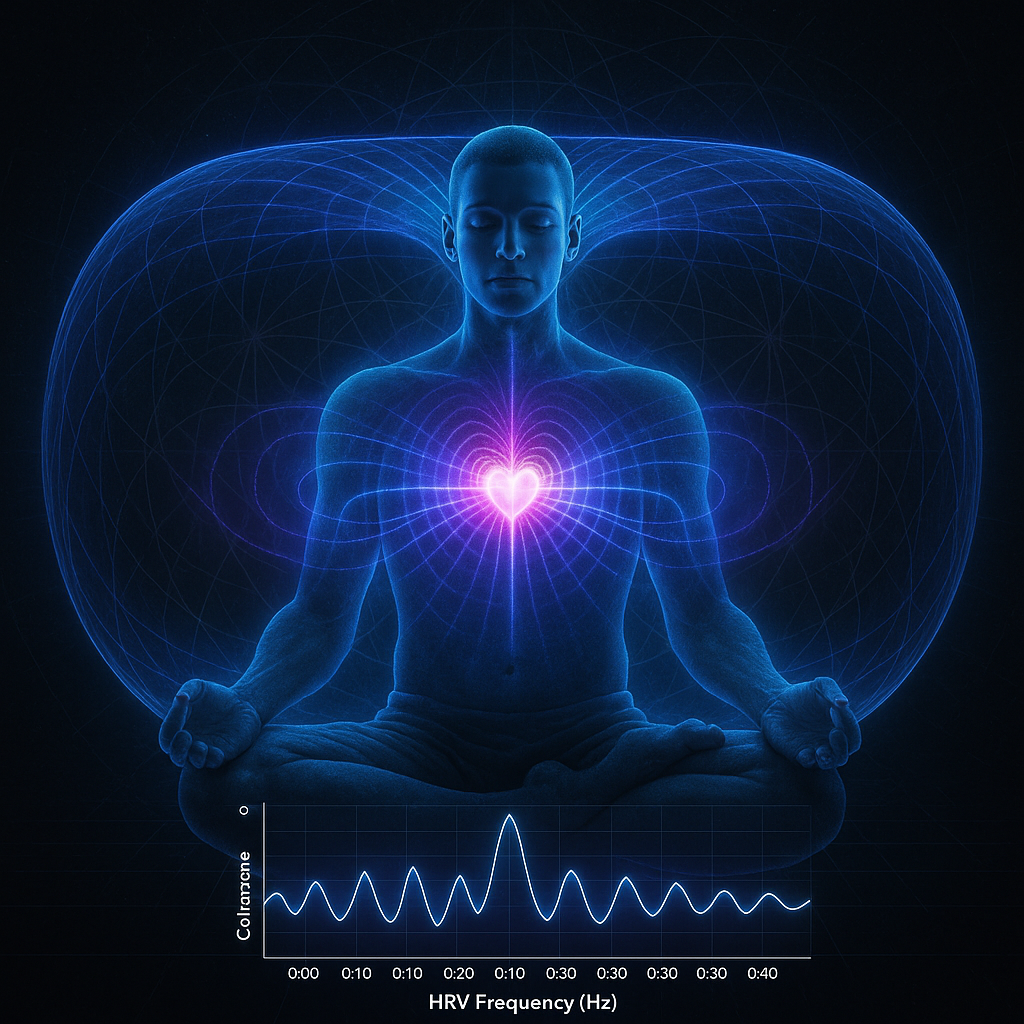
Biofield coherence refers to the degree of ordered, synchronized activity in the electromagnetic and bioelectric fields of the body. The most accessible and scientifically grounded measurement is heart rate variability (HRV) coherence, trackable with consumer devices including the HeartMath Inner Balance sensor, smartwatch HRV monitors, and chest strap sensors. High coherence states are associated with optimal autonomic balance, reduced stress markers, and improved cognitive and immune function. Gas Discharge Visualization (GDV/Kirlian), EEG coherence measurement, and biophoton emission analysis provide additional measurement dimensions for researchers and advanced practitioners.
Key Takeaways
- The biofield encompasses all electromagnetic, bioelectric, biophotonic, and other field-based emissions from living organisms, from the well-established cardiac and neural fields to more subtle emissions under active research.
- Coherence in the biofield refers to ordered, synchronized, wave-like patterns rather than chaotic or random emissions. HRV coherence is the most accessible and well-studied measure.
- Consumer HRV monitoring technology makes individual biofield coherence measurement accessible and affordable.
- Slow rhythmic breathing (5-6 breaths per minute), meditation, and positive emotional activation are the most consistently effective coherence-building practices in published research.
- The HeartMath Institute's research base (300+ peer-reviewed papers) provides the strongest scientific foundation for biofield coherence as a measurable and improvable state.
What Is the Biofield?
The term "biofield" was formally introduced in 1994 by a committee at the US National Institutes of Health convened to develop terminology for what was then called "alternative medicine." The committee defined the biofield as the complex regulatory field produced by and surrounding a living organism. This definition was deliberately broad, encompassing both well-established bioelectromagnetic phenomena and more hypothetical subtler fields.
On the established science side, the biofield includes: the electrical fields generated by the nervous system (measurable as the electroencephalogram, EEG), the electrical fields generated by the heart (the electrocardiogram, ECG, detectable at several feet from the body), the magnetic fields generated by both heart and brain (measurable with superconducting quantum interference devices, SQUIDs), and thermal emissions from metabolic processes. These fields are not controversial; their measurement is standard biomedical practice.
Beyond these established fields, biofield research increasingly investigates biophoton emission (coherent light emitted by living cells), acoustic fields generated by cellular activity, the field properties of structured water in biological tissue, and the possibility of longer-range field interactions between organisms. This research sits at the boundary between mainstream biophysics and what is sometimes called energy medicine, and its interpretation is a matter of active scientific debate.
Key researchers in biofield science include James Oschman, whose work "Energy Medicine: The Scientific Basis" (2000) synthesized the bioelectromagnetics literature for a broader audience; Beverly Rubik, a biophysicist who has studied the biofield in relation to energy healing; and the HeartMath Institute, which has produced the most extensive peer-reviewed research base on cardiac biofield properties and coherence.
Understanding Coherence in Biological Systems
Coherence is a term from physics describing a specific quality of wave-like systems. A coherent signal is one where the waves are correlated: their peaks and troughs align in predictable patterns rather than being random. Laser light is the classic example: unlike ordinary light, which contains many wavelengths in random phase relationships, laser light is a single wavelength with all the waves in phase, producing its characteristic intensity and directedness.
In biological systems, coherence refers to the degree of order and synchronization between different components. A coherent heart produces a smooth, rhythmic variation in beat-to-beat timing. A coherent brain shows specific patterns of synchronized oscillation across different regions. A coherent organism, in the broader biofield framework, has all its regulatory systems working in coordinated, synergistic relationship.
The significance of coherence in biology extends well beyond aesthetics. In the framework developed by HeartMath and others, coherence is a marker of optimal physiological function and resilience. A coherent autonomic nervous system responds to stress effectively and recovers quickly. Coherence between the heart's rhythm and the brain's activity is associated with improved cognitive performance, emotional stability, and immune function. Reducing coherence, as occurs during chronic stress, is associated with increased risk of cardiovascular disease, immune dysfunction, and mental health problems.
For practitioners in the energy and consciousness traditions, coherence has a broader resonance: it represents the condition in which the multiple levels of the organism (physical, energetic, mental, emotional, spiritual) are aligned and working in harmony, which is itself a description of health and wellbeing found across many healing traditions.
Heart Rate Variability (HRV) Coherence
Heart rate variability is the variation in time between consecutive heartbeats. Despite what intuition might suggest, greater variability (within normal ranges) indicates better cardiovascular health. A heart that beats with metronomic regularity is actually showing signs of autonomic dysfunction; a healthy heart continuously adjusts its rate in response to the body's changing demands, producing a characteristic variability pattern.
The frequency components of HRV carry specific physiological information. Low-frequency HRV (0.04-0.15 Hz) reflects a combination of sympathetic and parasympathetic activity and baroreflex function. High-frequency HRV (0.15-0.4 Hz) reflects respiratory sinus arrhythmia, primarily parasympathetic activity. The ratio of these components (LF/HF) is one measure of autonomic balance.
HeartMath's coherence measure focuses on a specific pattern: a smooth, sine-wave-like oscillation at approximately 0.1 Hz (corresponding to about one complete respiratory cycle every 10 seconds, or 6 breaths per minute). This pattern, which they call heart coherence, reflects synchronized activity between the heart's intrinsic nervous system, the autonomic nervous system, and the brain's electrical activity. High coherence scores on the HeartMath system correspond to this smooth rhythmic pattern; low coherence corresponds to chaotic, incoherent HRV patterns.
RMSSD (root mean square of successive differences), a standard HRV metric calculated from consecutive beat-to-beat intervals, is the most commonly used single-number HRV measure and correlates well with parasympathetic activity. Higher RMSSD values generally indicate better autonomic health, and RMSSD is the primary metric tracked by most consumer HRV devices.
HeartMath Institute Research
The HeartMath Institute (HMI), founded in Boulder Creek, California in 1991, has produced arguably the most extensive peer-reviewed research base in biofield science. The Institute's research focuses on the relationship between the heart's electromagnetic field, HRV coherence, and psychological and physiological wellbeing.
Key findings from HMI research include: the heart's electromagnetic field is approximately 60 times greater in amplitude than the brain's field and can be detected several feet outside the body; the heart possesses its own intrinsic nervous system (the "heart brain") containing approximately 40,000 neurons capable of processing information, making and implementing decisions, and learning and remembering independently of the cranial brain; and HRV coherence training produces measurable improvements in emotional regulation, cognitive performance, and immune markers including salivary IgA levels.
Research by HMI scientists including Rollin McCraty and Dana Tomasino has also explored what they call "global coherence," the hypothesis that local electromagnetic environments, solar activity, and the Earth's magnetic field may influence human physiological coherence, and vice versa. This research extends the biofield concept from the individual organism to the Earth-human system, connecting with longstanding intuitions in many spiritual traditions about the relationship between human inner states and the health of the planetary field.
The HeartMath coherence techniques, including Quick Coherence (focused heart breathing combined with positive emotional recall) and the Heart Lock-In (a sustained version of the same technique), have been validated in workplace, clinical, and educational settings and are used by organizations ranging from hospitals to military units for stress management and performance optimization.
Gas Discharge Visualization (GDV)
Gas Discharge Visualization is a technology developed by Russian biophysicist Konstantin Korotkov at St. Petersburg State Technical University. The system applies a brief high-frequency electrical field to fingertips, generating a corona discharge (related to Kirlian photography) whose characteristics are analyzed by computer software to produce what Korotkov describes as a map of the body's biofield.
In GDV analysis, each of the ten fingertips is associated with specific organ systems and energy meridians in traditional Chinese medicine. The brightness, completeness, and fractal character of the corona discharge from each fingertip is used to generate a visual representation of the body's energy state. GDV has been used in research settings in Russia and Europe to monitor changes associated with meditation, healing interventions, acupuncture, and various environmental influences.
The scientific status of GDV is debated. The corona discharge itself is a real and measurable phenomenon; the question is whether its specific pattern carries the information about organ system status and biofield state that GDV practitioners claim. Research has shown that GDV measurements change in response to meditation, emotional states, and physical interventions in ways that correlate with practitioners' expectations, but whether this reflects genuine biofield information or other sources of variation (moisture on the fingertips, pressure of contact, respiratory cycle) has not been definitively resolved.
Biophoton Emission Research
Biophotons are extremely weak emissions of visible and near-UV light from living cells. First systematically studied by the German biophysicist Fritz-Albert Popp in the 1970s, biophoton emission has been documented across a wide range of organisms, from bacteria to plants to human tissue. Popp proposed that biophoton emission is coherent, meaning that it shares the correlated phase properties of laser light, and that this coherence reflects the quantum optical properties of cellular DNA, which he theorized functions as a "biological laser" or light-emitting diode at the cellular scale.
If Popp's coherence hypothesis is correct, biophoton fields would represent an extremely rapid information communication system in biological organisms, complementing the slower electrochemical signalling of the nervous system. Cellular biophoton emissions have been measured to vary with physiological state, increasing during cell division and decreasing during disease, and to show correlations between cells that are not in chemical contact, suggesting a field-based communication mechanism.
The implications for biofield research are significant. A coherent biophoton field would provide a physical basis for the kind of rapid, integrated biological information processing that the concept of a holistic biofield implies, without requiring forces or phenomena outside established quantum optics. Research by Popp, Wijk, Cifra, and others has established biophoton emission as a real phenomenon; the interpretation of its functional role in biological regulation remains an active research question.
EEG Coherence Measurement
EEG coherence refers to the degree of synchronized activity between different regions of the brain, measured through electroencephalography. High inter-regional coherence in specific frequency bands is associated with integrated brain function, and coherence patterns change characteristically with different mental and meditative states.
Research on meditators has shown that specific practices produce characteristic EEG coherence changes. Transcendental Meditation (TM) research, one of the most extensively studied meditation traditions in neuroscience, has reported that TM practice produces high alpha coherence across the frontal cortex, associated with the subjective experience of "transcendence" or pure awareness. Tibetan Buddhist loving-kindness practice produces high-amplitude gamma coherence. Theta coherence between frontal and posterior regions is associated with states of intuitive knowing and creative insight.
Consumer EEG headbands (Muse, Neurosity) make basic EEG monitoring accessible, though with fewer electrodes and lower spatial resolution than research-grade systems. These devices are adequate for tracking general trends in alpha and beta activity and can provide useful feedback for meditation practice, but do not provide the multi-site coherence data that the research literature describes.
How to Measure Your Own Biofield Coherence
The most accessible, affordable, and scientifically grounded approach to personal biofield coherence measurement is HRV monitoring. Here is a practical protocol.
Equipment Selection
For basic tracking, a wrist-based smartwatch (Apple Watch, Garmin Forerunner, Polar) provides overnight HRV data automatically. These devices are convenient but less accurate than chest strap sensors. For more precise measurement, a chest strap sensor (Polar H10 is the standard for consumer accuracy) paired with an HRV analysis app provides reliable beat-to-beat data. For specifically measuring HeartMath-defined cardiac coherence, the HeartMath Inner Balance sensor (an ear clip photoplethysmography device) paired with the HeartMath app is the most direct option.
Establishing a Baseline
Measure for at least 14 days before introducing any intervention. Morning measurements taken immediately after waking, before rising from bed, and before consuming caffeine or food, provide the most consistent baseline. Measure for at least 3-5 minutes for reliable HRV metrics. Note your morning HRV alongside sleep quality, stress level (subjective 1-10 scale), and exercise from the previous day, as all of these significantly affect HRV and will help you interpret your data.
What to Track
Key metrics: RMSSD (milliseconds) reflects parasympathetic activity and short-term HRV; higher is generally better, with 30-100 ms being typical for healthy adults (with significant individual and age variation). SDNN (standard deviation of all NN intervals) reflects overall HRV including both frequency components. If using HeartMath, the coherence ratio (0-16, with higher scores reflecting more coherent HRV patterns) provides a direct measure of the specific coherence pattern HeartMath research describes.
Tracking Interventions
Introduce one intervention at a time and measure for at least two weeks before adding another. Compare your average RMSSD or coherence score across the two weeks before and after the intervention. Common interventions to test include: coherence breathing (5-6 breaths/minute for 10 minutes daily), loving-kindness meditation, cold water immersion, specific dietary changes, or crystal work practices.
Practices That Build Biofield Coherence
Resonance Frequency Breathing
Slow, rhythmic breathing at the individual's resonance frequency (typically 4.5-7 breaths per minute, with the sweet spot at approximately 6 for most adults) produces high-amplitude, high-coherence HRV patterns more reliably than any other single practice. The resonance frequency produces baroreflex-mediated amplification of the HRV oscillation, creating the smooth sine-wave pattern that HeartMath calls cardiac coherence. Practice daily for 5-20 minutes; the HeartMath Inner Balance sensor provides real-time coherence feedback during practice.
Heart-Focused Meditation
Meditation practices that focus awareness on the heart area and activate positive emotional states (gratitude, love, appreciation) produce coherence through a different mechanism than breathing alone: they engage the heart's intrinsic nervous system and the emotional processing systems of the limbic brain in a synchronized manner. The HeartMath Quick Coherence technique combines these two approaches: breathe slowly as if through the heart area, while deliberately activating a feeling of gratitude or appreciation. Sustained positive affect amplifies the coherence effect of slow breathing.
Physical Practices
Regular moderate aerobic exercise consistently increases baseline HRV and improves autonomic balance. Cold water exposure (cold showers or cold water immersion) activates the vagus nerve and has been shown to increase HRV in the hours following exposure. Yoga and tai chi, which combine movement, breath, and sustained attention, have both been studied for HRV effects with generally positive results.
Sleep and Recovery
Sleep quality is the single strongest predictor of morning HRV. Consistent sleep timing, darkness, coolness, and sufficient duration (7-9 hours for most adults) have larger effects on HRV than any active intervention. Managing chronic stress, limiting alcohol (which suppresses HRV significantly), and maintaining regular meal timing all contribute to stable baseline coherence.
Crystals for Biofield Support
Within the energy work tradition, specific crystals are used to support and strengthen the biofield. Practitioners work with these stones during meditation, carry them throughout the day, or place them in sleeping and working environments.
Clear quartz is the most commonly used stone for biofield work, valued for its perceived ability to amplify, clarify, and organize field energy. Its piezoelectric properties (it generates voltage when subjected to mechanical stress) give it a physical basis for bioelectric interaction. Amethyst is associated with calm, clarity, and the higher vibrational states associated with meditative coherence. Many practitioners use amethyst during coherence-building meditation practice.
For protection of the biofield against external disturbance (electromagnetic pollution, environmental stress), protection crystals including black tourmaline, shungite, and obsidian are commonly used. For grounding the field, which brings coherence by connecting the body's electrical system to the Earth's, grounding crystals such as black tourmaline, hematite, and smoky quartz are standard choices.
Labradorite, associated with the auric field specifically, is used by practitioners who work with the broader biofield beyond the physical body. Its striking optical phenomenon (labradorescence) reflects the light-bending properties that give it its energetic association with the subtle field. Lepidolite, containing lithium, is valued for emotional balance and is often used in coherence work where emotional regulation is a priority.
Energy Medicine: The Scientific Basis by Oschman PhD, James L.
View on AmazonAffiliate link, your purchase supports Thalira at no extra cost.
Frequently Asked Questions
What is the biofield?
The biofield is a term introduced in 1994 by a National Institutes of Health committee to describe the complex regulatory fields produced by and surrounding living organisms. These include electrical, magnetic, acoustic, thermal, and photonic (biophoton) emissions from cells, tissues, and organs. The concept encompasses both well-established bioelectromagnetic fields (ECG, EEG) and subtler fields hypothesized to carry biological information. Biofield research bridges conventional bioelectromagnetics with alternative and energy medicine frameworks.
What is biofield coherence and why does it matter?
Coherence in a physical system means that its components are correlated, synchronized, and working in ordered relationship. A coherent biofield is characterized by a smooth, rhythmic pattern in heart rate variability, reflecting optimal coordination between the autonomic nervous system, the heart, and the brain. High coherence states are associated with reduced stress, improved emotional regulation, enhanced cognitive performance, and better immune function in published studies.
What is heart rate variability (HRV) and how does it measure coherence?
Heart rate variability (HRV) is the variation in time between consecutive heartbeats. Higher HRV generally indicates better cardiovascular health. Coherence, as measured by HeartMath, refers to the degree of order and sine-wave-like smoothness in the HRV rhythm. A coherent HRV pattern shows a specific frequency around 0.1 Hz with high amplitude, reflecting synchronized activity between the heart's nervous system, the autonomic nervous system, and brain activity.
What is Gas Discharge Visualization (GDV)?
Gas Discharge Visualization (GDV), developed by Russian biophysicist Konstantin Korotkov, measures the biophoton and electron emissions from fingertips using a high-frequency electrical field. The resulting corona discharge produces images that GDV practitioners interpret as reflecting the energy state of the biofield. GDV is used in some integrative medicine settings in Europe and Russia. While the corona discharge is real, its interpretation as reflecting a broader biofield state is scientifically debated.
Can meditation and breathwork improve biofield coherence?
Yes, within the HRV coherence framework. Slow, rhythmic breathing at approximately 5-6 breaths per minute has been consistently shown to produce high-coherence HRV patterns. HeartMath's Quick Coherence technique, combining focused heart breathing with positive emotional activation, produces measurable coherence shifts within minutes. Meditation practices involving sustained positive affect (loving-kindness, gratitude) also consistently improve HRV coherence.
What devices can I use to measure my own biofield coherence at home?
The HeartMath Inner Balance sensor specifically measures cardiac coherence. Standard smartwatches (Apple Watch, Garmin, Fitbit) provide HRV data, and dedicated HRV straps (Polar H10) offer high-accuracy measurement. For GDV at home, portable GDV camera systems are available from Korotkov's research group. EEG coherence measurement requires consumer EEG headbands (Muse, Neurosity) with analysis software.
How does biofield research relate to energy healing practices?
Biofield research provides a scientific framework for some claims of energy healing traditions (Reiki, Therapeutic Touch, Qigong healing). Research has measured changes in receiver physiology during healing sessions and demonstrated neural activation effects consistent with energy healing claims. Whether these effects are mediated by the practitioner's biofield or by other mechanisms (suggestion, neurobiological entrainment) remains an open research question.
What does HeartMath Institute research show about heart coherence?
The HeartMath Institute has produced over 300 peer-reviewed publications. Key findings: the heart's electromagnetic field is 60 times greater in amplitude than the brain's field; the heart has its own intrinsic nervous system with approximately 40,000 neurons; and HRV coherence training improves emotional regulation, cognitive function, and immune markers. The heart's field extends several feet outside the body and influences others nearby.
What are biophotons and how do they relate to the biofield?
Biophotons are ultra-weak photon emissions from living cells, first systematically studied by Fritz-Albert Popp in the 1970s. Cells emit coherent light at extremely low intensities in the visible and near-UV range. Popp proposed this coherent emission reflects quantum optical properties of cellular DNA and plays a role in cellular communication. A coherent biophoton field would represent an extremely rapid biological information communication system complementing electrochemical signalling.
How can I track changes in my biofield coherence over time?
Use HRV monitoring with a consistent protocol: measure for 5 minutes in the morning after waking, before rising, before caffeine. Establish a 14-day baseline before introducing any intervention. Track RMSSD (the primary HRV metric) and note sleep quality, stress level, and previous day's exercise. Compare averages across two-week periods before and after introducing a new practice.
Sources and Further Reading
- McCraty, R., & Shaffer, F. (2015). Heart Rate Variability: New Perspectives on Physiological Mechanisms, Assessment of Self-regulatory Capacity, and Health Risk. Global Advances in Health and Medicine, 4(1), 46-61.
- Oschman, J.L. (2000). Energy Medicine: The Scientific Basis. Churchill Livingstone.
- Popp, F.A. (2003). Properties of biophotons and their theoretical implications. Indian Journal of Experimental Biology, 41(5), 391-402.
- Rubik, B. (2002). The biofield hypothesis: Its biophysical basis and role in medicine. Journal of Alternative and Complementary Medicine, 8(6), 703-717.
- Korotkov, K., Williams, B., & Wisneski, L.A. (2004). Assessing biophysical energy transfer mechanisms in living systems: The basis of life processes. Journal of Alternative and Complementary Medicine, 10(1), 49-57.
- Lehrer, P.M., & Gevirtz, R. (2014). Heart rate variability biofeedback: how and why does it work? Frontiers in Psychology, 5, 756.