
Quick Answer
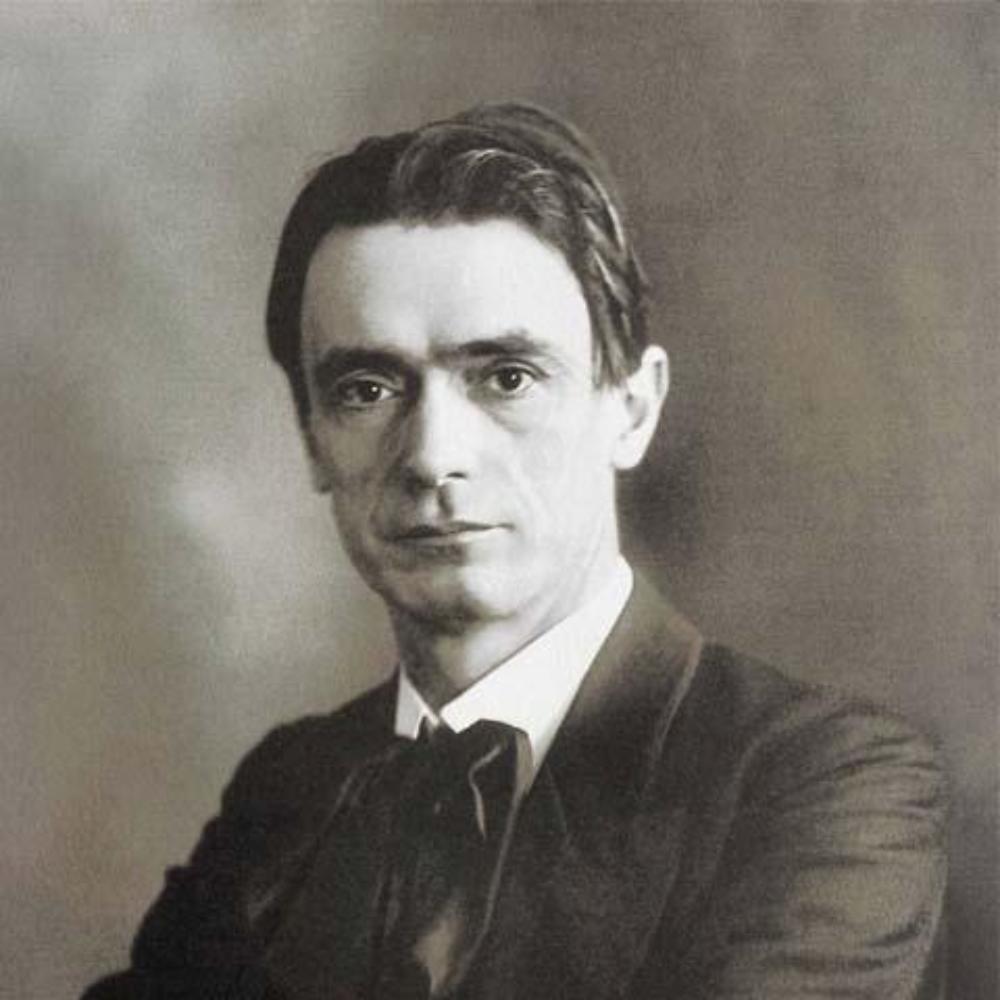
Rudolf Steiner (1861-1925) was an Austrian philosopher, spiritual scientist, educator, and social reformer who founded Anthroposophy (a rigorous path of spiritual investigation), Waldorf education (over 1,200 schools worldwide), biodynamic agriculture, and Anthroposophical medicine. He gave over 6,000 lectures across all fields of human inquiry, leaving a comprehensive vision of human and cosmic evolution that continues to influence education, farming, medicine, and the arts.
Table of Contents
- Early Life and Formation
- The Philosophy of Freedom
- Theosophy and the Break
- What Is Anthroposophy
- Spiritual Science: Method and Claims
- Waldorf Education
- Biodynamic Agriculture
- Medicine, Architecture, and Eurythmy
- Karma and Reincarnation
- Steiner and Christ
- Legacy and Controversy
- Frequently Asked Questions
Key Takeaways
- Comprehensive thinker: Steiner applied his Anthroposophical framework to virtually every field of human inquiry, from agriculture to architecture, medicine to music, leaving detailed practical systems in each area that continue to be practised today.
- Waldorf education is his most widespread legacy: With over 1,200 schools in more than 75 countries, the Waldorf approach to child-centred education is one of the largest independent school movements in the world.
- He sought to bridge science and spirituality: Rather than positioning spiritual knowledge against natural science, Steiner insisted that spiritual realities could be investigated with comparable rigour, developing a methodology he called spiritual science.
- His racial ideas are seriously problematic: Steiner's cosmological writings contain statements about race and ethnicity that reflect the worst biases of 19th-century European esotericism and deserve critical examination rather than acceptance.
- His practical applications are separable from his cosmology: Many people engage productively with Waldorf education, biodynamic farming, or Anthroposophical medicine without endorsing the full cosmological system in which Steiner embedded them.
Early Life and Formation
Rudolf Steiner was born on February 27, 1861, in Kraljevec, then part of the Austrian Empire (now in Croatia), to a railway official and his wife. His childhood in rural Austria gave him early exposure to both the natural world and the emerging industrial modern world of railways and telegraphs, a tension that would characterise his intellectual life.
As a young child, Steiner described experiences of the spiritual world that were as real to him as physical perceptions. He wrote in his autobiography that he had experienced, from early childhood, a world of spiritual beings and forces that others did not appear to see. This private inner certainty of spiritual reality stood in tension with his rigorous scientific training and his immersion in the cutting-edge materialist philosophy of his era.
He studied natural sciences, mathematics, and philosophy at the Vienna Institute of Technology from 1879, and became the editor of Goethe's scientific writings for the Sophia edition of Goethe's collected works in 1883. His deep engagement with Goethe's approach to nature, which Goethe called a delicate empiricism in which the observer participates in what is observed rather than standing apart from it, profoundly shaped his approach to both science and spiritual investigation.
Steiner completed his PhD at Rostock University in 1891 with a dissertation on the limits of knowledge, published as Truth and Knowledge. His philosophical magnum opus, The Philosophy of Freedom, appeared in 1894 and laid out his case for moral freedom grounded in individual ethical intuition.
The Philosophy of Freedom
The Philosophy of Freedom (sometimes translated as The Philosophy of Spiritual Activity) is Steiner's foundational philosophical work, written before his explicitly spiritual period. It addresses two central questions: whether humans are free beings, and whether ethics can be founded on purely individual grounds.
Steiner argued that ordinary human consciousness is split: we perceive the world through the senses and we think about it through concepts, but these two activities feel separate. True freedom, he argued, requires overcoming this split through what he called intuitive thinking, a form of thinking in which the thinker is fully present in the thinking activity rather than passively observing thought content arise.
His ethical position, which he called ethical individualism, holds that moral actions arise from individual moral intuitions rather than external rules or imperatives. A truly free moral act comes from a person who loves the act itself, who understands the situation fully and acts from inner moral perception. This position has been influential in existentialist and personalist philosophy.
The book remains in print and is considered by many Anthroposophists as the philosophical foundation that, if truly understood, leads organically into the spiritual investigations described in his later work.
Theosophy and the Break
In 1900, Steiner gave a series of lectures at the Theosophical Society in Berlin and was subsequently invited to lead the German Section of the Theosophical Society. He spent several years within the Theosophical framework, drawing on concepts like karma, reincarnation, and the spiritual constitution of the human being that had been developed by Madame Blavatsky and other Theosophists.
However, Steiner's approach differed fundamentally from mainstream Theosophy in several ways. He insisted that spiritual knowledge must be grounded in Western philosophical tradition and in a specifically Christocentric understanding of spiritual evolution, rather than drawing primarily on Eastern sources as Theosophy tended to do. He also rejected the Theosophical Society's acceptance of Jiddu Krishnamurti as a potential new world teacher, a major point of conflict.
In 1913, Steiner and most of the German Section broke away from the Theosophical Society to found the Anthroposophical Society. The break was relatively clean and productive: Steiner took the Goetheanum building project in Dornach, Switzerland as the physical centre for the new organisation, and proceeded to develop Anthroposophy in his own direction with increasing speed and scope for the remaining twelve years of his life.
What Is Anthroposophy
Anthroposophy, from the Greek anthropos (human) and sophia (wisdom), is the path of knowledge Steiner developed as his life's central work. He described it as a spiritual philosophy that seeks to bring the spiritual in the human being into relationship with the spiritual in the universe.
Several key features distinguish Anthroposophy from other spiritual movements of its era. First, Steiner insisted on the possibility and necessity of rigorous investigation of spiritual realities rather than faith-based acceptance. He presented his spiritual teachings as the results of spiritual scientific investigation that could, in principle, be verified by others who developed the necessary inner capacities.
Second, Anthroposophy is deeply concerned with the evolution of consciousness. Steiner taught that humanity as a whole, and the Earth as a cosmic entity, are undergoing a long process of spiritual evolution that can be traced through specific cultural epochs. Understanding where humanity is in this process, and what the current age demands, was central to all of his practical work.
Third, Anthroposophy places the human being at the centre of the cosmos rather than at its periphery. Steiner taught that the human being is the most complex entity in the cosmos because it contains within itself the full range of cosmic forces and substances, from the mineral through the plant, animal, and higher human kingdoms. Human development is therefore of cosmic significance.
Spiritual Science: Method and Claims
Steiner distinguished between ordinary scientific method, which investigates the physical world through the senses and instruments, and spiritual science, which he claimed could investigate spiritual realities through developed inner capacities.
He described a specific path of inner development outlined in his book How to Know Higher Worlds (1904). This path involves cultivation of specific qualities: control of thinking, feeling, and willing; development of equanimity and positive regard toward all phenomena; and specific meditation practices. Through sustained practice of these exercises, Steiner claimed that three higher cognitive capacities could develop: imaginative cognition (perception of spiritual images), inspirative cognition (understanding the spiritual beings behind phenomena), and intuitive cognition (direct identification with spiritual realities).
The claims Steiner made on the basis of his spiritual investigations are extensive and specific. He described in detail the constitution of the human being (physical body, etheric body, astral body, and ego, each with further subdivisions), the nature of repeated earth lives and the processes between death and rebirth, the spiritual history of Earth and humanity across vast time periods, and the inner constitution of plants, animals, and minerals.
These claims are not verifiable through conventional scientific methods, and Steiner acknowledged this while insisting that they were not therefore false, but that they required a different method of verification that the reader themselves could develop.
Waldorf Education
Steiner's most widespread practical legacy is the system of education he developed in 1919. Emil Molt, owner of the Waldorf-Astoria cigarette factory in Stuttgart, asked Steiner to develop a school for the children of his workers. The first Waldorf School opened in September 1919 and quickly attracted students from families beyond the factory.
Waldorf education is founded on Steiner's understanding of child development in seven-year phases. In the first seven years (birth to age 7), the child learns primarily through imitation and the senses; the curriculum focuses on play, artistic activity, and the physical environment. From 7 to 14, the child learns best through imagination, emotion, and relationship with an authority figure; the classroom teacher ideally stays with the same class for eight years. From 14 onward, the young person is developing capacity for abstract thought and critical judgment.
This developmental understanding leads to specific curriculum choices: no formal reading instruction before age 7, heavy emphasis on arts and crafts throughout the curriculum, seasonal celebrations connected to the natural year, integration of movement (including eurythmy) into daily school life, and the absence of competitive grading in early years.
Today over 1,200 Waldorf schools and 2,000 Waldorf kindergartens operate in more than 75 countries, making it one of the largest independent educational movements in the world. Research studies on Waldorf graduates have generally found strengths in creativity, social development, and intrinsic motivation.
Biodynamic Agriculture
In June 1924, Steiner gave eight lectures to a group of farmers at Koberwitz in what is now Poland, responding to their concerns about soil degradation and the declining vitality of crops and livestock. These lectures, published as the Agriculture Course, founded biodynamic farming.
Steiner's approach treated the farm as a living organism embedded in cosmic rhythms. He advocated for farm self-sufficiency, recycling of organic matter, avoidance of synthetic fertilisers, and the use of specific biological preparations made from herbs, minerals, and animal sheaths that he claimed enhanced soil vitality. He also emphasised planting by astronomical rhythms, noting that different cosmic conditions favour root, leaf, flower, and fruit crops at different times.
Biodynamic farming is now practised on over 160,000 hectares worldwide and is certified by Demeter International. It is widely considered one of the most holistic and ecologically sophisticated forms of organic agriculture, and independent research has found that biodynamically farmed soils typically show higher biological activity and soil carbon content than conventionally farmed soils.
Medicine, Architecture, and Eurythmy
The range of Steiner's practical applications was extraordinary. In medicine, he worked with physicians to develop Anthroposophical medicine, an integrative approach that adds Anthroposophical understanding of the human constitution to conventional medical practice. Mistletoe preparations for cancer treatment (marketed as Iscador) developed from his work and have been studied in dozens of clinical trials.
In architecture, Steiner developed organic forms based on Goethe's morphological principles. The first and second Goetheanums in Dornach, Switzerland (the first burned in a suspected arson on New Year's Eve 1922, the second completed after his death) are among the most remarkable buildings of the 20th century, their concrete forms flowing in curves that echo natural organic forms.
Eurythmy, the art of movement Steiner developed with Marie von Sivers from around 1912, makes audible speech and music visible through the movement of the whole body. It is practised as performance art, as therapeutic movement (curative eurythmy), and as a daily exercise in Waldorf schools. Steiner described it as a visible speech that reveals the spiritual gestures underlying language and music.
Karma and Reincarnation
Steiner's teaching on karma and reincarnation is one of the most detailed and specific in the Western esoteric tradition. He accepted the basic framework from Theosophy but developed it in his own direction, with a specifically Christocentric understanding of how the process unfolds.
He taught that the human being passes through a sequence of conditions between death and rebirth. Immediately after death, the consciousness experiences a panoramic review of the life just completed. This is followed by a period of purification in what he called the soul world (Kamaloca in Theosophical terminology), during which the soul lives through the effects of its actions on others in reversed sequence. Then a more extended period in the spiritual world where the experiences of the past life are processed and the intentions for the next life are formed.
Karma, in Steiner's understanding, is not punishment but the soul's own intelligence at work: the soul chooses the conditions of its next incarnation precisely those conditions that will allow it to resolve unfinished karmic business and develop the capacities it needs. Understanding this principle transforms how one relates to life's difficulties.
Steiner and Christ
The Christ event occupies a central and distinctive place in Steiner's cosmology. He described the incarnation of Christ as the single most significant event in the spiritual history of Earth and humanity: a cosmic Being, the Sun Spirit, who had been guiding humanity's development from the spiritual realm chose to incarnate physically in a human being for the first and only time in cosmic history.
Through the Mystery of Golgotha (the crucifixion and resurrection), Steiner taught that the Christ Being united with the Earth itself at a cosmic level, transforming the entire spiritual trajectory of humanity. Before this event, the after-death consciousness of individual souls returned to the spiritual world; after it, a new possibility opened for the development of individual consciousness and freedom that was not possible before.
This understanding is neither conventional Christianity (he rejected dogma and sacramentalism in their ordinary forms) nor secular spirituality. It occupies its own distinctive ground that has attracted both dedicated Christian Anthroposophists and critics who find it too idiosyncratic to accept.
Legacy and Controversy
Steiner died on March 30, 1925, having worked himself to exhaustion in the final years of his life. He had given over 6,000 lectures, many of them preserved in shorthand transcripts that now fill over 350 volumes in the collected works.
His legacy is genuinely mixed. The practical fruits of his work, Waldorf education, biodynamic agriculture, Anthroposophical medicine, eurythmy, and his architectural contributions, continue to influence thousands of practitioners and millions of beneficiaries around the world. These practical applications are generally evaluated on their own merits, independent of the cosmological system that generated them.
The problematic aspects of his legacy deserve honest acknowledgment. His writings contain racial and ethnic hierarchies that reflect the worst tendencies of 19th-century European esotericism: statements about root races and sub-races, about the different spiritual development of different ethnic groups, and about the spiritual superiority of European Aryan culture. These elements have been extensively documented and debated within the Anthroposophical movement itself, with some communities making genuine efforts to address them and others minimising or defending them.
Waldorf schools have also faced criticism for sometimes transmitting Anthroposophical beliefs implicitly rather than teaching secular subjects clearly, and for approaches to child health (including vaccine scepticism in some communities) that have public health implications.
None of these concerns negate the genuine value that many people find in Steiner's work. But they do require honest engagement rather than wholesale acceptance of his teachings as infallible spiritual science.
How to Know Higher Worlds: A Modern Path of Initiation (Classics in Anthroposophy) by Rudolf Steiner
View on AmazonAffiliate link, your purchase supports Thalira at no extra cost.
Frequently Asked Questions
Who was Rudolf Steiner?
Rudolf Steiner (1861-1925) was an Austrian philosopher, spiritual scientist, educator, and social reformer. He founded Anthroposophy, a spiritual philosophy he described as a path of knowledge that brings the spiritual in the human being into contact with the spiritual in the universe. He also founded Waldorf education, biodynamic agriculture, Anthroposophical medicine, and eurythmy, and gave over 6,000 lectures in his lifetime.
What is Anthroposophy?
Anthroposophy is the spiritual philosophy and path of knowledge developed by Rudolf Steiner. It holds that the human being has both physical and spiritual dimensions, that spiritual realities can be investigated with rigour, and that developing higher cognitive faculties allows direct perception of spiritual worlds. Steiner positioned it as a complement to rather than rejection of natural science.
What is Waldorf education and how does it connect to Steiner?
Waldorf education was founded by Rudolf Steiner in 1919 when he developed a school for children of factory workers in Stuttgart. Based on his understanding of child development in seven-year phases, the curriculum emphasises arts, crafts, movement, and imagination alongside academic subjects. Today there are over 1,200 Waldorf schools in over 75 countries, making it one of the largest independent school movements in the world.
What did Rudolf Steiner say about reincarnation and karma?
Steiner taught a detailed system of karma and reincarnation. He held that the human being reincarnates repeatedly, building karma through consequences of actions and intentions. Between death and rebirth, the soul passes through specific spiritual conditions he described in detail. He taught that souls choose the conditions of their next incarnation to resolve karmic business and develop needed capacities.
What is biodynamic farming and does it come from Steiner?
Yes. Biodynamic agriculture originated in eight lectures Steiner gave in 1924 at the request of farmers concerned about soil degradation. He described the farm as a living organism that should be treated holistically, with attention to cosmic rhythms, specific biological preparations to enhance soil vitality, and farm biodiversity. Demeter International certifies biodynamic farms today in over 60 countries.
How did Steiner relate to Theosophy?
Steiner was a member of the Theosophical Society for several years in the early 1900s. However, he eventually broke with Theosophy over fundamental differences, particularly the society's acceptance of a new world teacher and his insistence on grounding spiritual knowledge in European philosophical tradition with a Christocentric framework. He founded the Anthroposophical Society in 1913 as a separate organisation.
What are Steiner's ideas about Christ and Christianity?
Steiner described the Christ event as the central moment in Earth's spiritual evolution, in which a cosmic spiritual being (the Christ) incarnated in a physical human being and through the crucifixion and resurrection transformed the entire spiritual trajectory of humanity. He understood this as a unique once-only event in cosmic history, not as doctrine of any particular church.
Are Steiner's ideas controversial?
Yes. His racial theories in particular, reflecting 19th-century European esotericism's hierarchies of root races and ethnic spiritual development, have been widely criticised. Waldorf schools have faced scrutiny over implicit transmission of Anthroposophical beliefs. Many people find genuine value in specific areas (education, agriculture, medicine) without endorsing his full cosmological system.
What were Rudolf Steiner's most important books?
Key foundational works include: How to Know Higher Worlds (1904, primary text on spiritual practice), The Philosophy of Freedom (1894, foundational philosophical argument), Theosophy (1904, introducing the human being's spiritual constitution), An Outline of Esoteric Science (1910, his most comprehensive cosmological work). His collected lectures fill over 350 volumes.
What is eurythmy and why did Steiner create it?
Eurythmy is an art of movement developed by Steiner from around 1912 that makes audible speech and music visible through movement of the whole body. It is practised therapeutically (curative eurythmy), as performance art, and as a daily exercise in Waldorf schools. Steiner described it as visible speech revealing the spiritual gestures underlying language and music.
Rudolf Steiner left behind one of the most ambitious and comprehensive attempts to bridge spiritual knowledge and practical life in modern history. His work rewards careful, critical engagement rather than wholesale acceptance or dismissal. The practical fruits of his vision, schools that nurture children as whole beings, farms that work with natural rhythms, medicine that sees the person behind the symptom, and an art of movement that connects body and spirit, continue to offer genuine value to those who encounter them thoughtfully.
Sources & References
- Steiner, R. (1894). The Philosophy of Freedom. Rudolf Steiner Press.
- Steiner, R. (1904). How to Know Higher Worlds. Anthroposophic Press.
- Steiner, R. (1910). An Outline of Esoteric Science. Anthroposophic Press.
- Steiner, R. (1924). Agriculture Course (Agriculture: An Introductory Reader). Sophia Books.
- Heiner, H. (2002). Waldorf Education: A Family Guide. Michaelmas Press.
- Staudenmaier, P. (2014). Between Occultism and Nazism: Anthroposophy and the Politics of Race in the Fascist Era. Brill. (Critical scholarly analysis of Steiner's racial ideas).