

Quick Answer
The Psychedelic Experience by Leary, Metzner, and Alpert reframes the Tibetan Book of the Dead as a map of psychedelic consciousness: the three bardos correspond to ego dissolution (the Clear Light), visionary states, and re-entry into ordinary awareness. The book pioneered the concepts of set and setting and directly influenced modern psychedelic-assisted therapy protocols.
Table of Contents
- What Is The Psychedelic Experience?
- Who Are Leary, Metzner, and Alpert?
- The Tibetan Book of the Dead Connection
- The Three Bardos
- The Clear Light
- Ego Death and Liberation
- Set and Setting
- The Guide's Practice
- Influence on Modern Psychedelic Therapy
- Spiritual and Philosophical Context
- Related Books
- Frequently Asked Questions
Key Takeaways
- Bardo Map of Consciousness: The three bardos of the Tibetan tradition (Clear Light, visionary states, re-entry) map directly onto the phases of psychedelic experience - both involve the same fundamental movements of dissolving and reconstituting ego-bound consciousness.
- The Clear Light as Goal: The peak of the psychedelic journey - pure, undifferentiated consciousness prior to ego filtering - corresponds to the liberation moment in the Tibetan tradition; the challenge in both contexts is recognizing it rather than contracting away in fear.
- Set and Setting: The book popularized the understanding that mindset (set) and environment (setting) are the primary determinants of psychedelic experience quality - concepts now central to modern therapeutic protocols.
- Founding Document of Transpersonal Psychology: The book established that altered states of consciousness are genuine psychological phenomena worthy of serious study within a cross-cultural spiritual framework.
- Historical Significance: Written in 1964 at the beginning of the 1960s psychedelic movement, the book represents the most intellectually serious early attempt to integrate psychedelic experience into a coherent spiritual and psychological framework.
What Is The Psychedelic Experience?
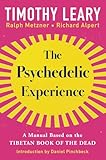
The Psychedelic Experience: A Manual Based on the Tibetan Book of the Dead was published by University Books in 1964, written by Timothy Leary, Ralph Metzner, and Richard Alpert during their Harvard Psilocybin Project research. It remains one of the most historically significant and philosophically interesting documents of the 1960s psychedelic movement - a genuine attempt to understand and systematize the states of consciousness accessible through psilocybin and LSD by mapping them onto the most sophisticated ancient framework for navigating extreme states of consciousness: the Tibetan Bardo Thodol.
The book has three parts: a theoretical introduction presenting the authors' interpretation of the Bardo Thodol as a map of psychedelic consciousness; a practical guide to preparation, set, setting, and the guide's role; and a rewritten version of key passages from the Tibetan text adapted for reading during a psychedelic session. The writing is clear, serious, and occasionally beautiful - this is not a countercultural manifesto but a genuine attempt at a psychology of extreme states informed by Tibetan Buddhist contemplative tradition.
Its historical importance is enormous. It crystallized the concepts of set and setting that now define psychedelic therapy research. It established the legitimacy of cross-cultural spiritual frameworks for interpreting non-ordinary states of consciousness. And it directly influenced the development of transpersonal psychology as a field - Stanislav Grof, who would develop the most sophisticated scientific account of non-ordinary states, was directly influenced by this early work.
The Context of Its Writing
The Psychedelic Experience was written in 1963 and published in 1964, after Leary and Alpert had been dismissed from Harvard for their controversial research with psilocybin and their advocacy of student participation in psychedelic sessions. The book represents their attempt to establish a rigorous theoretical and practical framework for psychedelic research that could command intellectual respect. Its use of the Tibetan Book of the Dead was not a countercultural provocation but a serious philosophical choice: the Tibetan tradition was the most developed existing framework for navigating extreme states of consciousness, and the authors believed their research confirmed its applicability to psychedelic experience.
Who Are Leary, Metzner, and Alpert?
Timothy Leary (1920-1996) received his PhD in psychology from Berkeley and taught clinical psychology at Harvard before his involvement with psychedelic research changed the direction of his career permanently. His Harvard Psilocybin Project (1960-1963) was a serious scientific research program studying the therapeutic and consciousness-expanding effects of psilocybin, with projects including prison rehabilitation, treatment of alcoholism, and enhancement of creativity in artists and writers. His dismissal from Harvard in 1963 (officially for missing classes, actually for the controversial nature of his research) marked the beginning of his public career as the most prominent advocate of psychedelic consciousness in America.
After The Psychedelic Experience, Leary became increasingly a cultural rather than scientific figure - his "Turn on, tune in, drop out" slogan of 1967, his arrests and prison escapes, his political and countercultural activities - but his early Harvard work, including The Psychedelic Experience, represents genuine scientific and philosophical seriousness that his later reputation sometimes obscures.
Ralph Metzner (1936-2019) had a long and distinguished career in transpersonal psychology, founding the Green Earth Foundation and teaching at the California Institute of Integral Studies. His books include The Well of Remembrance (on Norse mythology and consciousness), Green Psychology (on ecological consciousness), and The Toad and the Jaguar (on psychedelic healing traditions). He remained engaged with the scientific study of psychedelics throughout his life and lived to see the resurgence of clinical research he had helped inspire.
Richard Alpert's transformation into Ram Dass is one of the most extraordinary spiritual biographies of the twentieth century. After his dismissal from Harvard, Alpert traveled to India in 1967 where he met the Hindu guru Neem Karoli Baba (Maharaj-ji) and underwent a profound spiritual transformation. He returned to America as Ram Dass and wrote Be Here Now (1971), one of the most widely read spiritual books of the twentieth century, which introduced millions of Western readers to Hindu devotional practice, meditation, and the guru tradition. He continued teaching until his death in 2019, his work encompassing psychedelic research, devotional practice, meditation instruction, and service to the dying.
The Tibetan Book of the Dead Connection
The Bardo Thodol - literally "liberation through hearing in the intermediate state," known in the West as the Tibetan Book of the Dead - is attributed to Padmasambhava (8th century CE) and was allegedly concealed as a terma (hidden treasure text) to be discovered at an appropriate future time, when it was needed. It was discovered in the 14th century and has been a central text of the Nyingma school of Tibetan Buddhism since.
The text describes the experiences of consciousness in the bardo - the intermediate state between death and rebirth in the Tibetan Buddhist understanding. It provides detailed instructions for the dying and dead person (read aloud by a lama or experienced practitioner) guiding them to recognize the nature of consciousness at various stages of the bardo journey and thereby achieve liberation from the cycle of rebirth rather than unconscious re-entry into another life.
The text was first translated into English by W.Y. Evans-Wentz in 1927, with a psychological commentary by Carl Jung that introduced it to Western intellectual audiences. Leary, Metzner, and Alpert worked from the Evans-Wentz translation in developing The Psychedelic Experience, though their reinterpretation differs substantially from both the traditional Tibetan understanding and Jung's psychological reading.
Their core claim is that the states of consciousness described in the Bardo Thodol as occurring after death are not unique to the dying process but are available in life through the practice of meditation and, more immediately and dramatically, through high-dose psychedelic experiences. The dissolution of ego-bound consciousness, the revelation of pure awareness, the arising of visions - all these are experiences that psychedelics reliably produce, and the Tibetan framework provides the most sophisticated existing guidance for navigating them.
The Three Bardos
The Bardo Thodol describes three bardos or intermediate states that the deceased consciousness passes through. Leary, Metzner, and Alpert reinterpret these as phases of the psychedelic journey:
The First Bardo: Chikhai Bardo. In the Tibetan text, this corresponds to the moment of death when the Dharmakaya - the primordial, undifferentiated consciousness, the Clear Light of the Void - shines for the deceased. If the dying person recognizes this Clear Light and rests in it, liberation is immediate. If they fail to recognize it (out of habitual ego-grasping) and contract away from it, they pass into the second bardo.
In the psychedelic context, Leary, Metzner, and Alpert map this to the peak of the experience, when the ego dissolves and pure, undifferentiated awareness reveals itself - what they call "complete transcendence beyond game and form, light and sound, transcendence of ordinary game reality." The instruction is identical: recognize this state as your natural condition rather than contracting away in fear.
The Second Bardo: Chonyid Bardo. If the Clear Light is not recognized, the deceased enters the second bardo in which various peaceful and wrathful visions arise - the Peaceful Deities (week one of the Tibetan reckoning, representing pure psychological functions) and the Wrathful Deities (week two, representing the same functions in frightening form). The traditional guidance is to recognize all these visions as projections of one's own mind rather than external realities, and thereby achieve liberation at this stage.
In the psychedelic context, this corresponds to the middle phase of the experience when visions arise - the kaleidoscopic imagery, the encounter with archetypal figures, the emotional intensity that characterizes the middle period of a high-dose session. The instruction is the same: recognize what arises as your own mind rather than recoiling or grasping.
The Third Bardo: Sidpa Bardo. In the Tibetan understanding, if liberation has not occurred in the first two bardos, the consciousness enters the third bardo in which it begins the process of selecting a new birth. The visions become more specific, more personal, more bound to individual karma. The guidance becomes more urgent as the opportunities for liberation narrow.
In the psychedelic context, this corresponds to the re-entry phase when ordinary consciousness begins to reconstitute itself as the substance is metabolized. The ego begins to reassemble its usual patterns and perspectives. The instruction is to let this process occur naturally, without either clinging to the peak states that are passing or resisting the return of ordinary consciousness.
The Clear Light
The Clear Light is the central concept of The Psychedelic Experience and one of the most important ideas in the book's contribution to understanding altered states of consciousness. It refers to the state of pure, undifferentiated awareness that is revealed when the filtering, contracting activity of the ego temporarily ceases - in deep meditation, at the moment of death, or at the peak of a high-dose psychedelic experience.
Leary, Metzner, and Alpert describe the Clear Light as "the void, the ground of being, consciousness itself, the energy that underlies all created forms." It is not a vision of something - not a color, a form, or a specific experience - but the condition of awareness prior to the arising of any content. It is what remains when all the mental constructions that ordinarily occupy consciousness - thoughts, memories, perceptions, self-concept - temporarily dissolve.
The encounter with the Clear Light is, in the Tibetan understanding and in the authors' psychedelic interpretation, the most important event of the entire journey. Recognition of the Clear Light as one's own nature - as the ground of what one actually is rather than an alien void threatening the ego - is the moment of potential liberation. Failure to recognize it (recoiling from the dissolution of familiar self-sense into a state of terror or confusion) results in the consciousness contracting back into ego-bound experience and the journey continuing into the second bardo visions.
The Clear Light experience is described across contemplative traditions in strikingly similar terms: the Buddhist sunyata (emptiness), the Hindu Brahman (the absolute), the Christian mystic's experience of the divine ground, the Sufi's fana (annihilation in God). This cross-cultural convergence suggests that the Clear Light is not merely a pharmacological artifact but a genuine and fundamental state of consciousness accessible through multiple paths.
The Clear Light in Non-Psychedelic Practice
Leary, Metzner, and Alpert were clear that the states they describe are not exclusive to psychedelic experience. Advanced meditation - particularly the Tibetan practices of dzogchen and mahamudra - pursues recognition of the Clear Light consciousness through sustained contemplative training. The Zen kensho, the Vedantic samadhi, the Christian mystical union - all represent encounters with the same ground of consciousness. The psychedelic experience, in their view, offers a rapid and direct (if often overwhelming) access to states that contemplative practice cultivates more gradually and sustainably. The book is relevant to contemplatives of all traditions, not only to those interested in psychedelics.
Ego Death and Liberation
Ego death is perhaps the most discussed and most feared aspect of the psychedelic experience that The Psychedelic Experience addresses. Leary, Metzner, and Alpert treat it not as a pathological event to be avoided but as the central opportunity of the psychedelic journey - the moment when the usual self temporarily dissolves and the possibility of genuine liberation arises.
The ordinary sense of self - the "I" that plans, worries, remembers, and anticipates - is, in Buddhist and Hindu understanding, not the ultimate reality but a construction: a habitual pattern of identification with a particular body, history, and set of thoughts and feelings. This construction is useful for navigating ordinary social reality but it contracts consciousness, filtering out the vastness of what awareness actually is when it is not identified with this particular pattern.
Ego death is the temporary dissolution of this contracted sense of self. When it happens suddenly and unexpectedly, it is experienced as terrifying - as actual death, as madness, as the dissolution of everything. When it happens in a context of preparation, support, and intention, with the conceptual framework of the Tibetan bardo teaching available, it can be recognized as what it actually is: not the destruction of the self but its expansion beyond the usual contracted form.
The authors' guidance for navigating this state is consistent throughout the book: do not resist, do not try to hold onto the dissolving ego-structures, do not reach for familiar anchors in ordinary reality. Let the dissolution be complete. Trust that what remains when the ego dissolves is not nothing but something larger - the Clear Light, the ground of consciousness itself. This is the meaning of the Tibetan instruction to "recognize the Clear Light."
Set and Setting
One of the most lasting contributions of The Psychedelic Experience to the understanding of altered states of consciousness is the articulation of set and setting as the two most important variables determining the character of a psychedelic experience. This framework, now universally accepted in psychedelic research, was developed by Leary and his colleagues on the basis of their research at Harvard and at the Millbrook Estate in New York.
Set refers to the mindset the participant brings to the experience: their intentions, fears, expectations, psychological state, and level of psychological integration and preparation. A person who approaches a psychedelic experience with fear, unresolved psychological material, or without clear intention will have a different experience than one who approaches with openness, psychological stability, and clear intention. The set is not merely background context but shapes the fundamental character of the experience.
Setting refers to the physical and social environment: the space itself (comfortable, safe, aesthetically chosen, familiar), the people present (trusted, experienced, peaceful), the music (if any), the lighting, the temperature. A hospital setting with white walls and clinical equipment produces a different experience than a carefully prepared ceremonial space or a natural outdoor setting. The setting is not neutral background but an active participant in shaping what arises.
Leary, Metzner, and Alpert provide specific practical guidance on preparing both dimensions. For set: approach with gratitude, humility, and clear intention; prepare psychologically in the weeks before; resolve what can be resolved in ordinary consciousness; establish what you are seeking to understand or experience. For setting: choose a comfortable, familiar, physically safe environment; be with trusted people; prepare music, natural beauty, objects of beauty or spiritual significance; arrange not to be interrupted.
This framework has been directly integrated into modern clinical psychedelic research. The therapeutic protocols at Johns Hopkins, NYU, and Imperial College London all pay careful attention to set (therapeutic preparation sessions, clear intention-setting) and setting (custom-designed therapy rooms, carefully selected music, experienced therapists as guides).
The Guide's Practice
A significant section of The Psychedelic Experience is devoted to the role of the guide - the experienced person who accompanies someone through a psychedelic session. This role, which directly foreshadows the therapist role in modern psychedelic-assisted therapy, is treated with seriousness and specificity.
The guide, in the authors' framework, should be someone who has personal experience with psychedelic states and understands the territory being navigated. They should be psychologically stable, free from agenda or need to direct the experience, and capable of being genuinely present without interfering. Their primary tools are calm presence, appropriate music, and when needed, reading passages from The Psychedelic Experience aloud in a slow, clear, gentle voice.
The book provides specific passages for each phase of the journey: orienting passages for the beginning, guiding passages for the Clear Light phase, reassuring passages for the second bardo visions if they become frightening, and grounding passages for re-entry. These are not commands but invitations - reminders of the framework that help the traveler orient themselves when the intensity of the experience makes ordinary orientation impossible.
The guide's most important qualities are those that cannot be scripted: genuine equanimity in the face of the intense states they witness, deep trust in the person's capacity to navigate their own experience, and the wisdom to intervene only when genuinely needed. The book's guidance on the guide's role - embodying calm presence, providing orientation without control - remains directly applicable in contemporary therapeutic settings.
Influence on Modern Psychedelic Therapy
The Psychedelic Experience stands at the beginning of what has become, sixty years later, one of the most active and promising areas of clinical psychiatry. The resurgence of psychedelic-assisted therapy research in the 21st century - with multiple Phase 2 and Phase 3 clinical trials showing significant efficacy for treatment-resistant depression, PTSD, addiction, and end-of-life anxiety - has vindicated the basic framework Leary, Metzner, and Alpert established.
The specific contributions that have been incorporated into modern protocols include: the primacy of set and setting; the value of an experienced guide or therapist; the use of music to support the journey; the importance of preparation and integration; and the understanding that difficult experiences during a session may be therapeutically valuable rather than adverse events to be suppressed.
The book's specific Tibetan Buddhist framework has not been directly adopted in clinical settings, which need to be culturally neutral and scientifically credible. But the therapeutic protocols' emphasis on surrendering to the experience rather than fighting it, on trusting the process rather than directing it, and on the guide providing presence rather than direction - all of these are direct descendants of the approach Leary, Metzner, and Alpert articulated.
Stanislav Grof, who developed the most comprehensive scientific and cartographic account of non-ordinary states of consciousness, was directly influenced by this early work and acknowledged it as foundational. His COEX (Systems of Condensed Experience) theory and the holotropic model of the psyche are in many respects elaborations and systematizations of insights the Tibetan framework provided for understanding the structure of non-ordinary states.
Spiritual and Philosophical Context
The Psychedelic Experience belongs within a broader intellectual and spiritual context that is important to understand. The authors were not advocating recreational drug use but a genuinely contemplative approach to consciousness exploration: the book emphasizes intention, preparation, the necessity of experienced guidance, and the integration of what arises into ongoing life and practice.
Their use of the Tibetan Book of the Dead placed psychedelic research within a tradition of several thousand years of systematic investigation of altered states of consciousness through contemplative practice. This was a deliberate philosophical choice: they were arguing that what psychedelics produce is not mere pharmacological noise but genuinely meaningful contact with dimensions of consciousness that contemplative traditions have navigated and mapped.
Aldous Huxley had already made a similar argument in The Doors of Perception (1954), where he compared his mescaline experience to the Beatific Vision of the Christian mystics and argued that the "reducing valve" function of ordinary consciousness that psychedelics temporarily remove is the same faculty that meditation gradually trains. The Psychedelic Experience extended this argument with more systematic use of a specific contemplative framework.
The philosophical question the book raises - are psychedelic states genuinely revealing deeper dimensions of reality, or merely disrupting the brain's ordinary pattern-making in ways that feel profound? - remains open and is now being addressed with the tools of modern neuroscience, phenomenology, and clinical psychology. The answer emerging from contemporary research supports Leary, Metzner, and Alpert's basic intuition: these states are genuinely meaningful and potentially meaningful, not merely pharmacological artifacts.
Related Books
The most important companion to The Psychedelic Experience is the Evans-Wentz translation of The Tibetan Book of the Dead (1927) on which it is based. Reading the original alongside the reinterpretation illuminates both texts and reveals the extent and the limits of the authors' adaptation.
Aldous Huxley's The Doors of Perception (1954) and Heaven and Hell (1956) remain the most elegantly written explorations of psychedelic experience as potentially mystical in character. Huxley's literary intelligence and wide cultural knowledge produce comparisons and reflections that complement the more systematic approach of The Psychedelic Experience.
Ram Dass's Be Here Now (1971) is the direct spiritual successor to The Psychedelic Experience, documenting what Richard Alpert found when he took the framework of the book seriously and followed it to its logical conclusion: a journey to India, encounter with a living Hindu guru, and the transformation from psychologist to devotee. It is one of the most important spiritual documents of the 20th century.
Stanislav Grof's Realms of the Human Unconscious (1975) and The Holotropic Mind provide the most scientifically systematic account of non-ordinary states of consciousness informed by psychedelic research, providing the empirical and theoretical framework that The Psychedelic Experience pointed toward but did not itself develop.
Get The Psychedelic Experience on AmazonConsciousness Beyond Ordinary Limits
The Hermetic Synthesis Course explores altered states of consciousness through the hermetic tradition's structured approach to inner transformation, providing tools for safely navigating expanded awareness.
Explore the CourseFrequently Asked Questions
What is The Psychedelic Experience about?
The Psychedelic Experience reinterprets the Tibetan Book of the Dead as a map of psychedelic consciousness, arguing that the three bardos (Clear Light, visions, re-entry) correspond directly to the phases of a high-dose psychedelic session. It provides guidance for preparation, set and setting, the guide's role, and navigating ego dissolution toward potentially liberating insight.
What is the Clear Light in this book?
The Clear Light is pure, undifferentiated awareness revealed when the ego temporarily dissolves - the natural state of consciousness prior to the filtering, contracting activity of the ordinary self. It corresponds to the Tibetan tradition's liberation moment at death, and the book's central guidance is to recognize it as one's own nature rather than recoiling in fear.
What are set and setting?
Set is the mindset, intention, and psychological preparation the participant brings. Setting is the physical and social environment: the space, the companions, the music, the safety. These are the two primary variables determining the character of a psychedelic experience, a framework now universally adopted in clinical psychedelic research.
How did this book influence modern psychedelic therapy?
Directly. The primacy of set and setting, the value of an experienced guide, music use, preparation and integration, and the understanding that difficult experiences may be therapeutically valuable - all of these are core elements of modern clinical protocols at Johns Hopkins, NYU, and Imperial College London, drawn directly from the framework Leary, Metzner, and Alpert established.
Who is Richard Alpert and what happened to him?
Richard Alpert was a Harvard psychologist who co-wrote this book. After his Harvard dismissal he traveled to India in 1967, met the guru Neem Karoli Baba, and became Ram Dass, one of the most influential spiritual teachers in America and author of Be Here Now. His journey represents the most fully developed personal consequence of taking the framework of The Psychedelic Experience seriously.
Is this book relevant if I'm interested in meditation rather than psychedelics?
Yes. The states of consciousness the book describes - ego dissolution, the Clear Light, visions, re-entry - are accessible through deep meditation and are described in the same terms across contemplative traditions. The book's Tibetan Buddhist framework is directly relevant to meditation practitioners, and its insights about navigating extreme states of consciousness apply regardless of the path used to reach them.
What is The Psychedelic Experience by Leary, Metzner, and Alpert about?
The Psychedelic Experience: A Manual Based on the Tibetan Book of the Dead (1964) is Timothy Leary, Ralph Metzner, and Richard Alpert's guide to navigating high-dose psychedelic experiences, structured as a reinterpretation of the Bardo Thodol (Tibetan Book of the Dead) in terms of states of consciousness accessible through psilocybin and LSD. The book argues that the bardos described in the Tibetan text correspond to recognizable stages of psychedelic experience and that the guidance given in the original for navigating the after-death state applies equally to navigating the dissolution and re-integration of ego during a psychedelic session.
Who are Timothy Leary, Ralph Metzner, and Richard Alpert?
Timothy Leary (1920-1996) was a Harvard psychologist who became the most famous advocate of psychedelic consciousness in the 1960s. Ralph Metzner (1936-2019) was a German-American psychologist and writer who collaborated with Leary at Harvard and later developed his own career in transpersonal psychology and ecological consciousness. Richard Alpert (1931-2019) was a Harvard psychologist who, after his experiences with psychedelics and a journey to India, became Ram Dass, one of the most influential spiritual teachers in America and author of Be Here Now.
What is the Tibetan Book of the Dead and how is it used in The Psychedelic Experience?
The Bardo Thodol (Liberation Through Hearing in the Intermediate State), known in the West as the Tibetan Book of the Dead, is a Tibetan Buddhist text describing the experiences of consciousness in the bardo - the intermediate state between death and rebirth. It provides guidance for the dying and dead person to recognize the nature of consciousness at various stages and achieve liberation rather than unconscious rebirth. Leary, Metzner, and Alpert reinterpreted it as a map of the dissolution and reintegration of the ego during psychedelic states, arguing that both experiences involve the same fundamental movements of consciousness.
What are the three bardos described in The Psychedelic Experience?
Following the Bardo Thodol, Leary, Metzner, and Alpert describe three phases: the Chikhai Bardo (the First Bardo), corresponding to the peak of the psychedelic experience in which the ego dissolves and pure consciousness is revealed - what the Tibetan text calls the Clear Light; the Chonyid Bardo (the Second Bardo), corresponding to the middle phase in which various visions, both peaceful and wrathful, arise as projections of the dissolving ego; and the Sidpa Bardo (the Third Bardo), corresponding to re-entry into ordinary consciousness as the ego reconstructs itself.
What is the 'Clear Light' in The Psychedelic Experience?
The Clear Light is the term Leary, Metzner, and Alpert use for the state of pure, undifferentiated consciousness revealed at the peak of the psychedelic experience (and, in the Tibetan view, at the moment of death). It is described as the natural state of consciousness prior to the ego's filtering and contracting activity - vast, luminous, empty of content yet fully awake. The goal of the psychedelic journey, in their framework, is to recognize and rest in the Clear Light rather than contracting back into ego-bound consciousness through fear. The Tibetan text's guidance for the dead person is identical: recognize the Clear Light when it appears.
How should The Psychedelic Experience be used as a guide?
The book was intended to be read before a psychedelic session to familiarize the participant with the stages they might encounter, and to be read aloud (in a slow, clear voice) by a guide to someone in the midst of a session when they appeared to need orientation or reassurance. The authors provide specific passages designed for each phase of the journey. This practice of using a guide who reads or speaks orienting passages during the experience is one of the predecessors of modern psychedelic-assisted therapy protocols.
What is ego death in the context of The Psychedelic Experience?
Ego death refers to the temporary dissolution of the ordinary sense of being a separate, bounded self - the experience of the usual 'I' dissolving into a much larger field of consciousness. Leary, Metzner, and Alpert treat this as the central event of the psychedelic experience and the moment of greatest potential for genuine spiritual insight. The challenge, following the Tibetan guidance, is to recognize this dissolution as liberation rather than death, to rest in the resulting open awareness rather than contracting back through fear into ego-bound consciousness.
How has The Psychedelic Experience influenced modern psychedelic therapy?
The book's framework - the importance of set (mindset) and setting, the value of an experienced guide, the use of maps of consciousness to orient participants, the interpretation of difficult experiences as potentially meaningful rather than pathological - directly influenced the development of psychedelic-assisted therapy. Modern clinical research programs at Johns Hopkins, NYU, and Imperial College London use therapeutic protocols that embody these principles, though in a more medically controlled and scientifically documented form than Leary's Harvard Psilocybin Project.
What is the importance of set and setting in The Psychedelic Experience?
Set (the participant's mindset, intention, and psychological preparation) and setting (the physical and social environment in which the experience takes place) are two of the most important variables determining the character of a psychedelic experience. Leary popularized these concepts, which were originally articulated by the psychedelic researcher Timothy Leary himself along with his colleagues. The Psychedelic Experience provides extensive guidance on preparation of both set and setting, emphasizing the importance of clear intention, physical comfort, trusted companions, and freedom from interruption.
Is The Psychedelic Experience a how-to manual for drug use?
The book's content is educational and historical, not a contemporary how-to guide. It is a document of a specific historical moment in 1960s consciousness research and psychedelic culture, embedded in a Buddhist philosophical framework. The experiences it describes and the states of consciousness it maps are relevant to anyone interested in the psychology of consciousness, transpersonal psychology, contemplative traditions, or the history of the psychedelic movement, regardless of whether they are interested in or have access to the substances themselves.
How does The Psychedelic Experience connect to transpersonal psychology?
The Psychedelic Experience is one of the founding documents of transpersonal psychology, the field that studies states of consciousness beyond ordinary ego-bound experience and their implications for human development and understanding. The book's insistence that psychedelic states reveal genuine dimensions of consciousness rather than mere drug effects, its use of cross-cultural spiritual frameworks (the Tibetan Book of the Dead) to interpret these states, and its collaborative authorship by professional psychologists all contributed to establishing the intellectual seriousness of this new field.
What other books should I read alongside The Psychedelic Experience?
The most important companion books are Aldous Huxley's The Doors of Perception (1954), which provided the initial intellectual framework for psychedelic experience as mystical in character; Ram Dass's Be Here Now (1971), Richard Alpert's spiritual memoir and teaching text that grew directly from his psychedelic experiences and subsequent Indian journey; Stanislav Grof's The Holotropic Mind and Realms of the Human Unconscious, which developed the most systematic scientific account of non-ordinary states of consciousness; and the Evans-Wentz translation of The Tibetan Book of the Dead (1927) on which Leary, Metzner, and Alpert directly based their work.
Sources and References
- Leary, Timothy, Metzner, Ralph, and Alpert, Richard. The Psychedelic Experience: A Manual Based on the Tibetan Book of the Dead. University Books, 1964.
- Evans-Wentz, W.Y., ed. The Tibetan Book of the Dead. Oxford University Press, 1927.
- Huxley, Aldous. The Doors of Perception and Heaven and Hell. Harper and Row, 1963.
- Ram Dass. Be Here Now. Hanuman Foundation, 1971.
- Grof, Stanislav. Realms of the Human Unconscious. Viking Press, 1975.
- Pollan, Michael. How to Change Your Mind. Penguin Press, 2018.
- Carhart-Harris, Robin et al. "Psilocybin for treatment-resistant depression: fMRI-measured brain mechanisms." Scientific Reports, 7, 2017.
- Davis, Alan K. et al. "Effects of psilocybin-assisted therapy on major depressive disorder." JAMA Psychiatry, 78(5), 2021.