

Quick Answer
The Practice of the Presence of God by Brother Lawrence is a 17th-century spiritual classic that teaches the art of maintaining continuous awareness of God during every moment of daily life. Written by a humble Carmelite kitchen worker in Paris, it demonstrates that the deepest communion with God requires no special technique, no formal education, and no extraordinary circumstances, only a habitual turning of loving attention toward the divine presence in every activity.
Table of Contents
- Overview and Significance
- Who Was Brother Lawrence?
- The Bare Tree: A Conversion Story
- Structure of the Book
- The Practice: What It Actually Involves
- The Four Conversations
- The Letters
- Kitchen Spirituality: Sacred in the Ordinary
- No Distinction: Prayer and Work as One
- The Dark Years: Ten Years of Struggle
- Love, Not Technique
- Cross-Traditional Connections
- Modern Psychological Perspectives
- How to Begin Practicing
- Get the Book
- Frequently Asked Questions
Key Takeaways
- Every moment is an occasion for God: Brother Lawrence dissolved the boundary between sacred and secular, finding as much communion with God while washing dishes as during formal prayer in the chapel.
- Simplicity is the method: The practice requires no special technique, posture, or training. It is simply a habitual, loving redirection of attention toward God's presence throughout daily life.
- Love sustains the practice, not willpower: Brother Lawrence insisted that the practice is maintained by desire for God rather than by discipline. When it becomes a duty rather than a delight, something has gone wrong.
- Ten years of darkness preceded the breakthrough: Brother Lawrence spent a decade in spiritual darkness and self-doubt before the practice became natural. His honesty about this difficulty makes the teaching credible.
- Ordinariness is the context: The most profound spiritual life the book describes belonged to a kitchen worker with no education, no priestly ordination, and no mystical credentials, only a persistent love for God.
Overview and Significance
The Practice of the Presence of God is a posthumous compilation of the conversations and letters of Brother Lawrence of the Resurrection (born Nicolas Herman, c. 1614-1691), a Carmelite lay brother who spent approximately thirty years working in the kitchen and repair shop of the Carmelite monastery on the Rue Vaugirard in Paris. The book was assembled by Abbe Joseph de Beaufort, vicar general to the Archbishop of Paris, who had visited Brother Lawrence several times and been deeply impressed by his spiritual depth.
The book is tiny, seldom exceeding eighty pages. It consists of four conversations (recorded from memory by de Beaufort after his visits), sixteen letters written by Brother Lawrence to various correspondents, and in some editions, maxims and supplementary material. Despite its brevity, it has become one of the most widely read spiritual classics in Christianity, translated into dozens of languages and continuously in print for over three centuries.
Its enduring appeal lies in its radical simplicity. Where most contemplative traditions prescribe specific techniques, postures, and progressive stages of development, Brother Lawrence offers something that seems almost too simple to be true: just keep turning your attention to God, lovingly and habitually, during everything you do. The sophistication lies not in the method but in the consistency of its application and the depth of love that sustains it.
Who Was Brother Lawrence?
Nicolas Herman was born around 1614 in Herimenil, a village in the Lorraine region of northeastern France. His early life was marked by the devastation of the Thirty Years' War (1618-1648), which ravaged the Lorraine particularly severely. As a young man, he served as a soldier in the French army and was seriously wounded, leaving him with a permanent limp that would affect him for the rest of his life.
After his military service, Nicolas worked as a footman (household servant) for a nobleman. In his mid-twenties, he felt called to the religious life and entered the Carmelite monastery in Paris, not as a choir monk (who would participate in the full liturgical life of the community, study theology, and potentially be ordained) but as a lay brother, the lowest rank in the religious hierarchy.
Lay brothers were the manual labourers of the monastery: they cooked, cleaned, did laundry, repaired buildings, and performed whatever practical tasks were needed to keep the community functioning. Brother Lawrence was assigned to the kitchen, a post he found "naturally disagreeable" but which became the unlikely setting for one of the most extraordinary spiritual lives in Christian history.
He spent approximately thirty years in the kitchen before being transferred to the sandal repair shop when age and his old war injury made kitchen work too difficult. He died on February 12, 1691, at approximately 77 years of age, having attracted a steady stream of visitors, including clergy, religious, and laypeople, who came seeking his spiritual counsel.
The Bare Tree: A Conversion Story
Brother Lawrence's spiritual awakening came through one of the simplest observations imaginable. At age 18, during winter, Nicolas Herman looked at a bare tree and was struck by the thought that the tree, now stripped of leaves and apparently dead, would soon be renewed with leaves, blossoms, and fruit by the same providence that sustained all creation.
"This view had perfectly set him free from the world," de Beaufort reports, "and had given him such a love for God that he could not say it had increased in the more than forty years that had since passed." The insight was not theological in any technical sense. It was a direct perception of the goodness and presence of God in the simplest fact of nature, and it was sufficient to reorient an entire life.
The simplicity of this conversion experience is itself a teaching. Brother Lawrence did not need a burning bush, a voice from heaven, or a dramatic crisis. He needed only to look at a tree with open eyes. The implication is that the divine presence is always available, in every moment and every circumstance, for anyone who has the attention to notice it.
Structure of the Book
The book is typically organized into three sections:
The Conversations (4): Recorded by Abbe de Beaufort after his visits to Brother Lawrence in 1666-1667. These are not verbatim transcripts but summaries written from memory, which gives them a slightly polished quality while preserving the substance of Brother Lawrence's teaching.
The Letters (16): Written by Brother Lawrence to various correspondents, including religious sisters, laypeople, and fellow monks who had sought his advice. The letters are more personal and less systematic than the conversations, and they reveal the warmth, humour, and practical common sense that characterized Brother Lawrence's approach to spiritual direction.
Maxims and supplementary material: Some editions include additional maxims, reflections, and biographical details that provide context for the conversations and letters.
The Practice: What It Actually Involves
Brother Lawrence's practice is disarmingly simple. It consists of maintaining a continuous, loving awareness of God's presence during every activity of daily life. The method has four essential elements:
Habitual attention: Throughout the day, turn your mind toward God. This is not a concentrated effort of meditation but a gentle, repeated act of attention, like a lover who thinks of the beloved throughout the day without strain or compulsion.
Loving intention: The attention is directed by love, not by duty. Brother Lawrence insisted that the practice should be a delight, not a burden. When it becomes burdensome, it has become ego-driven ("I must be holy") rather than love-driven ("I want to be with God").
Gentle return: When you notice that your attention has wandered from God (which it will, constantly), simply redirect it without anxiety, self-reproach, or dramatic gestures. "When he had failed in his duty, he only confessed his faults, saying to God, 'I shall never do otherwise if you leave me to myself; it is you who must hinder my falling and mend what is amiss.'"
No distinction between prayer and work: This is perhaps the most radical element. Brother Lawrence did not experience a difference between the time of formal prayer in the chapel and the time of work in the kitchen. Both were occasions for the same communion with God. "The time of business does not with me differ from the time of prayer; and in the noise and clatter of my kitchen, while several persons are at the same time calling for different things, I possess God in as great tranquillity as if I were upon my knees at the blessed sacrament."
Practice: Beginning the Presence of God
Set a gentle reminder (a phone alert, a note on your desk, or simply the act of walking through a doorway) to pause briefly and redirect your attention to God's presence. Do not try to hold any particular thought or feeling. Simply notice: God is here. Then continue with whatever you were doing. The goal is not a dramatic spiritual experience but a quiet, background awareness that gradually becomes habitual. Start with a few reminders per day and gradually increase.
The Four Conversations
The four conversations recorded by de Beaufort progress from biographical background to the mature teaching:
First Conversation: Brother Lawrence describes his conversion at 18, his entry into the monastery, and his initial struggles with the practice. He reveals that for the first ten years, he experienced severe spiritual darkness and doubt, believing himself damned. He persisted in the practice not because it produced good feelings but because he was resolved to serve God regardless of consequences.
Second Conversation: He describes the practice itself in greater detail, emphasizing that it requires neither advanced methods nor intellectual sophistication. "We need only to recognize God intimately present with us, to address ourselves to Him every moment."
Third Conversation: He addresses the question of suffering and temptation. His approach is characteristically direct: when suffering comes, present it to God. Do not analyze it, fight it, or dramatize it. Simply offer it and return to the practice of presence. This is not denial of suffering but a refusal to be consumed by it.
Fourth Conversation: The final conversation, recorded shortly before Brother Lawrence's death, summarizes the mature fruit of fifty years of practice. He speaks of a continuous, unbroken awareness of God that has become as natural as breathing. He is not a man who has achieved something extraordinary; he is a man who has become what he always was, by removing the obstacles to what was always present.
The Letters
The letters provide a more intimate window into Brother Lawrence's spiritual life than the conversations. Several themes emerge:
Encouragement in difficulty: Many correspondents wrote to Brother Lawrence in states of spiritual struggle. His advice is consistently gentle: do not be discouraged by failures. The practice is maintained by love, and love does not give up. "Let us not grow tired of doing little things for the love of God, who regards not the greatness of the work, but the love with which it is performed."
Practical counsel: Brother Lawrence's advice is resolutely practical. He does not recommend elaborate methods, special retreats, or extraordinary penances. He recommends the simple, repeated act of turning toward God in the midst of ordinary activities. When asked for his "secret," he replies that there is no secret: "I do nothing else but abide in His holy presence, and I do this by a simple attention and an habitual, loving turning of my eyes to God."
The uselessness of anxiety: A recurring theme is the futility of worrying about one's spiritual state. Brother Lawrence advises his correspondents to stop monitoring their progress, stop comparing themselves to others, and stop constructing elaborate spiritual programmes. "Many do not advance in the Christian progress because they stick in penances and particular exercises, while they neglect the love of God, which is the end."
Kitchen Spirituality: Sacred in the Ordinary
Brother Lawrence's kitchen has become one of the most powerful symbols in Christian spiritual literature. It represents the radical claim that the most ordinary, unglamorous circumstances of daily life are fully adequate as a setting for the deepest communion with God.
The kitchen was hot, noisy, demanding, and without prestige. The work was repetitive and physically exhausting. Brother Lawrence had a permanent limp from his war wound. He was surrounded not by contemplative silence but by the "noise and clatter" of a working monastery kitchen where "several persons are at the same time calling for different things."
And yet, in these circumstances, Brother Lawrence experienced a quality of communion with God that attracted the attention of some of the most spiritually sophisticated people in 17th-century Paris. The Abbe de Beaufort, a man of education and theological refinement, came away from his visits convinced that this uneducated kitchen worker possessed a spiritual knowledge that surpassed anything available in books.
The teaching implicit in this situation is clear: if Brother Lawrence can practice the presence of God in a noisy kitchen with a bad leg, then no circumstance of life can serve as an excuse for not practicing. The divine presence is not reserved for cathedrals, monasteries, or meditation retreats. It is available in kitchens, offices, commutes, and hospital rooms. The only requirement is attention directed by love.
No Distinction: Prayer and Work as One
Brother Lawrence's most radical contribution is his dissolution of the boundary between formal prayer and daily work. In the traditional monastic framework, the day is divided between the opus Dei (the divine office, prayed in the chapel) and manual labour. These two activities occupy different spaces, different times, and are generally experienced as qualitatively different states of consciousness.
Brother Lawrence collapsed this distinction entirely. "The time of business does not with me differ from the time of prayer," he stated. This is not a theoretical claim but an experiential report: he actually experienced the same quality of divine communion whether kneeling in the chapel or standing at the stove.
This teaching anticipates and parallels developments in other contemplative traditions. The Zen concept of samu (work practice) holds that manual labour, performed with full attention, is meditation. The Sufi practice of dhikr (remembrance of God) is designed to be maintained during all activities, not only during formal prayer. The Bhagavad Gita's teaching on karma yoga (the yoga of action) describes a state in which action is performed as an offering to the divine without attachment to results. Brother Lawrence arrived at the same place through the simplest of methods: loving attention, habitual and persistent.
The Dark Years: Ten Years of Struggle
Brother Lawrence's teaching would be inspirational but unconvincing if it presented only the fruit and not the struggle. His honesty about the difficulty of the early years is one of the book's most valuable features.
He describes spending approximately ten years in a state of spiritual suffering that included persistent doubts about his salvation, a sense of God's absence rather than presence, and the conviction that he was destined for damnation. During this period, the practice of turning toward God felt not like communion but like shouting into a void.
And yet he persisted. His resolution was remarkable in its simplicity: "I engaged in a religious life only for the love of God, and I have endeavoured to act only for Him; whatever becomes of me, whether I be lost or saved, I will always continue to act purely for the love of God." This is surrender in its most radical form: continuing the practice without any assurance of reward, purely because love wills it.
After approximately ten years, the darkness lifted. What replaced it was not ecstatic experience but a quiet, continuous sense of God's presence that became as natural as his own breathing. He did not attribute this shift to anything he had done but to God's grace responding, in its own time, to his persistent love.
The ten-year darkness is significant for several reasons. It demonstrates that spiritual practice does not always produce immediate results. It shows that the absence of consolation is not the absence of God. And it establishes that the mature fruit of the practice, continuous awareness of the divine presence, is not something that can be manufactured by technique but something that emerges through sustained faithfulness.
Love, Not Technique
Brother Lawrence consistently refused to reduce his practice to a technique. When asked for his method, he deflected the question toward the motivation behind it: love. "We must not be surprised at falling frequently into faults; but we should be more surprised at not falling into more, considering the weakness of our nature. When we fall, we have only to turn to God with confidence and say, 'Lord, I cannot do better without your help.'"
This emphasis on love over technique distinguishes Brother Lawrence from many contemplative traditions that prescribe detailed methods, progressive stages, and measurable benchmarks. His approach is more like learning to love a person than learning to play an instrument. You do not become intimate with someone through technique but through attention, presence, and desire. The "method" is simply to keep showing up.
This has made Brother Lawrence's teaching attractive to people who find more structured contemplative practices intimidating or inaccessible. There is nothing to master, no posture to perfect, no Sanskrit term to learn, no stage to identify. There is only the repeated, gentle act of turning toward God with love. The simplicity is both the practice's greatest strength and its greatest challenge: there is nowhere to hide behind complexity.
Cross-Traditional Connections
Brother Lawrence's practice has deep resonances across contemplative traditions:
Eastern Orthodox hesychasm: The Jesus Prayer tradition, documented in the Philokalia and The Way of a Pilgrim, shares the same goal of continuous prayer. The structural difference is that hesychasm uses a specific prayer formula as its anchor, while Brother Lawrence uses a more free-form turning of attention. The experiential destination, unceasing communion with God, is the same.
Buddhist mindfulness: The practice of maintaining continuous awareness during daily activities is the core of sati (mindfulness) in the Buddhist tradition, particularly in the Zen and Theravada schools. Thich Nhat Hanh's teaching on "washing the dishes to wash the dishes" is structurally identical to Brother Lawrence's kitchen spirituality, though framed within a non-theistic context.
Sufi dhikr: The Sufi practice of dhikr (remembrance or invocation of God) aims at the same continuous awareness of the divine presence. The Sufi masters, like Brother Lawrence, teach that this remembrance should permeate every moment of daily life, not only the times of formal worship.
Hindu bhakti: The devotional traditions of Hinduism, particularly the smarana (constant remembrance) practices associated with Vishnu and Krishna worship, share the same emphasis on love as the motive force and continuous awareness as the goal.
Modern Psychological Perspectives
Brother Lawrence's practice anticipates several findings of modern psychology:
Flow states: Mihaly Csikszentmihalyi's research on optimal experience describes a state of complete absorption in an activity that produces intrinsic satisfaction, loss of self-consciousness, and altered time perception. Brother Lawrence's description of his kitchen work, performed with full attention and offered to God, matches the phenomenological profile of the flow state (Csikszentmihalyi, 1990).
Mindfulness-based interventions: The clinical benefits of mindfulness practice, documented in Mindfulness-Based Stress Reduction (MBSR) and Mindfulness-Based Cognitive Therapy (MBCT), are well established. Brother Lawrence's practice, while theistically framed, employs the same mechanism: a sustained, non-judgmental attention to present-moment experience that reduces anxiety, increases well-being, and improves emotional regulation.
Self-determination theory: Edward Deci and Richard Ryan's research on intrinsic motivation shows that behaviour sustained by internal desire (autonomy) is more effective and more persistent than behaviour driven by external pressure (duty). Brother Lawrence's insistence that the practice be motivated by love rather than obligation aligns with this finding precisely (Deci & Ryan, 2000).
How to Begin Practicing
Practice: The Gentle Return
Choose one routine daily activity (washing dishes, walking to work, preparing a meal). During this activity, gently turn your attention to the awareness that God is present. Do not strain for a special experience. Simply notice: God is here. When your mind wanders (which it will), gently return your attention without self-criticism. Brother Lawrence compared this to a lover whose thoughts naturally return to the beloved: it requires no effort because it is powered by desire.
Practice: The Breath of Remembrance
Several times during the day, pause for a single conscious breath. During that breath, silently say: "Lord, I am here. You are here." This is not a prayer in the formal sense but a moment of re-orientation, a brief turning of the compass needle back to north. Over weeks and months, these moments begin to accumulate, creating a background awareness of the divine presence that persists between the deliberate pauses.
Practice: Offering the Activity
Before beginning any task, silently offer it to God: "Lord, I do this for you." This shifts the quality of the action from self-referential ("I am doing this because I have to") to relational ("I am doing this as an expression of love"). Brother Lawrence found that this simple offering transformed even the most disagreeable tasks into occasions of joy.
Get the Book
At under 80 pages, The Practice of the Presence of God can be read in an afternoon. But its simplicity is deceptive: the teaching penetrates deeper with each rereading, and the practice it describes is a lifetime's work.
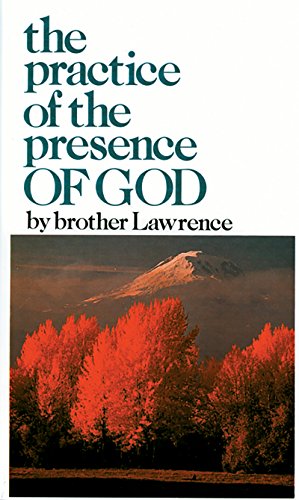
Get The Practice of the Presence of God on Amazon
As an Amazon Associate, Thalira earns from qualifying purchases.
Deepen Your Hermetic Practice
The Hermetic Synthesis Course guides you through all seven principles with structured daily practices.
Explore the CourseFrequently Asked Questions
What is The Practice of the Presence of God about?
A collection of conversations and letters by Brother Lawrence describing his method of maintaining continuous awareness of God's presence during every moment of daily life, including mundane tasks like kitchen work.
Who was Brother Lawrence?
A 17th-century French Carmelite lay brother (born Nicolas Herman, c. 1614-1691) who worked in the monastery kitchen in Paris. Despite his humble position, his extraordinary spiritual life attracted visitors from across France.
How do you practice the presence of God?
Maintain a continuous, loving awareness of God throughout all activities. When attention wanders, gently redirect it without anxiety. Do not distinguish between prayer and work; both are occasions for communion.
Is this book only for Christians?
While Brother Lawrence's language is Christian, the practice of maintaining continuous sacred awareness has parallels in Buddhist mindfulness, Sufi dhikr, Hindu smarana, and Jewish devekut. Readers of all backgrounds find value in it.
How does this relate to mindfulness?
Both involve maintaining continuous, non-distracted awareness during daily activities. The difference is in the object: secular mindfulness focuses on sensory experience, while Brother Lawrence directs attention toward God's presence.
What was Brother Lawrence's conversion experience?
At age 18, he looked at a bare winter tree and was struck by the realization that it would be renewed by the same God who sustained all life. This simple perception of divine providence never left him.
How long is the book?
Typically 60-80 pages. It consists of four conversations, sixteen letters, and sometimes supplementary material. It can be read in a single sitting.
Did Brother Lawrence struggle with the practice?
Yes. He spent approximately ten years in spiritual darkness and doubt before the practice became natural. His persistence through difficulty is one of the book's most valuable teachings.
Why is this book so popular?
Radical simplicity (no special training needed), universality (applies to any circumstance), and authenticity (a humble kitchen worker, not a theologian, achieved extraordinary depth).
What is the difference between formal prayer and practicing the presence of God?
Brother Lawrence's most radical teaching was that there should be no difference. He found no distinction between the time of prayer and any other time. Whether washing dishes, cooking meals, or repairing sandals, he maintained the same awareness of God that he experienced during formal prayer in the chapel. This dissolved the barrier between sacred and secular, making every moment an occasion for communion.
What did Brother Lawrence do before becoming a monk?
Nicolas Herman served as a soldier in the Thirty Years' War, where he was seriously wounded. After recovering, he worked as a footman (household servant) for a nobleman. At around age 26, he entered the Carmelite monastery in Paris as a lay brother, the lowest rank in the religious community, responsible for cooking, cleaning, and manual labour rather than scholarly or priestly duties.
How does practicing the presence of God relate to mindfulness?
Both practices involve maintaining continuous, non-distracted awareness during daily activities. The structural similarity is significant: both redirect attention from mental chatter to present-moment experience. The difference is in the object of attention: mindfulness as typically taught in secular contexts focuses awareness on sensory experience or breath, while Brother Lawrence directs awareness toward the presence of God. The quality of attention, however, is remarkably similar.
Sources and References
- Brother Lawrence of the Resurrection. (c. 1692/various). The Practice of the Presence of God. Compiled by Abbe Joseph de Beaufort.
- Csikszentmihalyi, M. (1990). Flow: The Psychology of Optimal Experience. Harper & Row.
- Deci, E. L., & Ryan, R. M. (2000). "The 'What' and 'Why' of Goal Pursuits." Psychological Inquiry, 11(4), 227-268.
- Kabat-Zinn, J. (1994). Wherever You Go, There You Are. Hyperion.
- Thich Nhat Hanh. (1975). The Miracle of Mindfulness. Beacon Press.