
Quick Answer
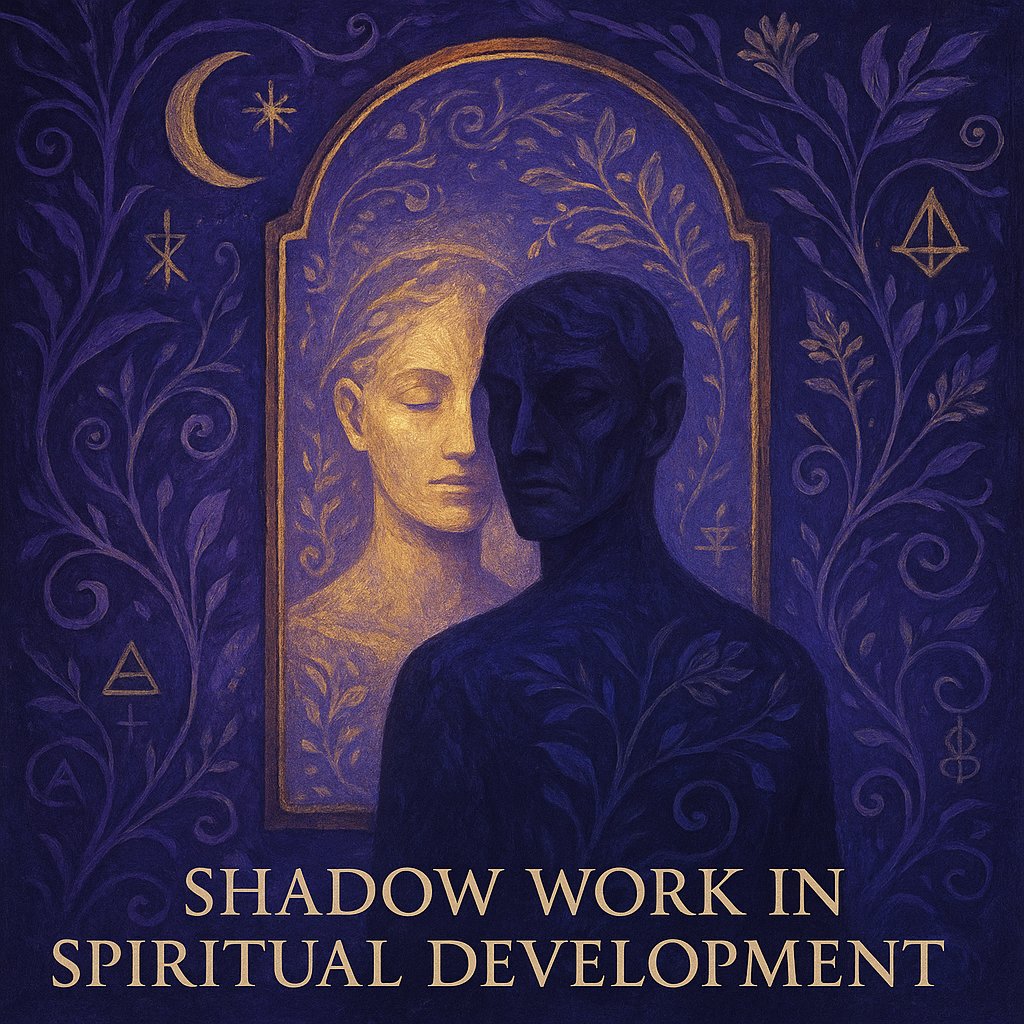
The shadow of spiritual development occurs when genuine spiritual growth unconsciously inverts into sophisticated ego enhancement, psychological avoidance, and spiritual materialism. Steiner warned that every authentic spiritual impulse creates an equal potential for corruption when not balanced by conscious self-awareness and ethical development. A 2024 depth psychological inquiry confirms that transcendent experiences must be assessed for spiritual bypassing. The antidote is honest self-observation, community feedback, and integrating psychological shadow work with spiritual practice.
Table of Contents
Key Takeaways
- Inversion principle: Steiner warned that every authentic spiritual impulse creates an equal potential for spiritual corruption when not balanced by conscious self-awareness and ethical development
- Spiritual bypassing confirmed: A 2024 depth psychological inquiry found clinicians must assess transcendent experiences for traits of dissociation, denial, and depersonalisation
- Shadow work needs containment: Research warns that shadow exploration without therapeutic structure risks becoming destabilising or self-justifying rather than integrative
- IFS parallels Jung: Internal Family Systems therapy (Schwartz, 2021) offers structured framework directly paralleling Jungian shadow work with "exiles" and "protectors"
- The test is practical: Authentic development increases relational capacity, practical wisdom, and humility. Shadow development increases spiritual self-importance while decreasing these qualities
The Shadow of Spiritual Development: When Spiritual Growth Becomes Spiritual Regression
Why do some of the most spiritually knowledgeable individuals exhibit the least spiritual wisdom in their daily relationships? How can decades of meditation, prayer, and spiritual study sometimes produce increased rather than decreased ego inflation, judgment, and disconnection from practical life? And what did Rudolf Steiner identify as the "inversion principle" that transforms authentic spiritual development into sophisticated forms of spiritual regression?
The Hidden Corruption of Spiritual Seeking
The shadow of spiritual development represents one of the most subtle yet destructive patterns affecting contemporary spiritual communities-the unconscious inversion of genuine spiritual growth into what appears to be spiritual advancement but actually serves ego enhancement, psychological avoidance, and spiritual materialism. Unlike obvious spiritual failures, shadow spiritual development often masquerades as sophisticated spiritual attainment while systematically undermining the authentic spiritual integration it claims to promote.
Understanding these inverted patterns becomes essential for anyone committed to genuine spiritual development in an era when spiritual concepts, practices, and communities have become increasingly commercialized and psychologized. This exploration examines how the same forces that create authentic spiritual growth can be unconsciously corrupted into sophisticated forms of spiritual regression that often appear more advanced than genuine spiritual simplicity.
The Anthroposophical Foundation: Steiner's Analysis of Spiritual Inversion
Rudolf Steiner's lectures on spiritual development consistently warned about what he termed "the shadow side of spiritual striving"-the tendency for unintegrated psychological material to corrupt spiritual practices and insights. In GA 95 "At the Gates of Spiritual Science," Steiner revealed that every authentic spiritual impulse creates an equal and opposite potential for spiritual corruption when not balanced by conscious self-awareness and ethical development. "The very forces that enable genuine spiritual perception," Steiner explained, "become vehicles for spiritual delusion when the seeker lacks sufficient knowledge of human psychology and fails to integrate the shadow aspects of their own spiritual motivation" (GA 95, Lecture 8). This inversion occurs not through conscious choice but through unconscious psychological processes that co-opt spiritual development for ego enhancement.
Phenomenological Recognition: Spiritual Inversion Patterns
Notice in yourself and others: increased spiritual knowledge accompanied by decreased practical wisdom; sophisticated spiritual language used to avoid rather than deepen authentic relationships; spiritual practices that create separation from rather than connection with ordinary human concerns; emphasis on spiritual experiences that enhance rather than humble spiritual self-image.
Steiner's analysis in "Knowledge of the Higher Worlds" (GA 10) further revealed that spiritual development without corresponding psychological integration inevitably produces what he called "spiritual double"-shadow aspects of spiritual seeking that mirror authentic spiritual development while serving unconscious psychological needs rather than genuine spiritual growth.
Scientific Validation: The Psychology of Spiritual Bypassing and Spiritual Narcissism
Contemporary psychology has provided extensive validation for Steiner's insights into the shadow aspects of spiritual development. Dr. John Welwood's groundbreaking research on spiritual bypassing, documented in *Toward a Psychology of Awakening* (2000), established that spiritual practices and beliefs are frequently used to avoid facing unresolved psychological issues, creating patterns where spiritual development actually prevents psychological and relational maturity.
Neuroscience of Spiritual Inflation
Research published in *Psychological Science* (2021) revealed that individuals who score high on spiritual development measures while low on psychological integration show brain patterns associated with narcissistic personality disorders-increased activity in self-referential brain regions combined with decreased activity in areas associated with empathy and realistic self-assessment. Studies using functional magnetic resonance imaging (fMRI) demonstrated that what researchers term "spiritual bypassing behavior" creates measurable changes in brain structure that reduce capacity for authentic interpersonal connection while increasing grandiose self-perception.
Research Validation: The Spiritual Narcissism Pattern
Longitudinal studies reveal that individuals exhibiting spiritual narcissism-using spiritual concepts to enhance rather than transcend ego identification-show progressively decreased psychological health, relationship satisfaction, and practical life competence despite increased spiritual knowledge and practice.
Developmental Psychology and Spiritual Materialism
Dr. Ken Wilber's research on spiritual development stages, presented in *Integral Spirituality* (2006), documented how spiritual practices can be unconsciously appropriated by earlier developmental stages, creating what he terms "spiritual materialism"-the use of spiritual concepts and experiences to fulfill psychological needs that would be better addressed through direct psychological work.
Studies published in *The Journal of Transpersonal Psychology* (2020) further revealed that individuals using spiritual development to avoid psychological development show measurably decreased capacity for intimate relationships, practical problem-solving, and emotional regulation despite years of intensive spiritual practice.
2024-2025 Research on Shadow Work and Spiritual Bypassing
A 2024 depth psychological inquiry published in Taylor and Francis examined the relationship between transcendence, the transcendent function, and spiritual bypassing, finding that clinicians must assess clients reporting transcendent experiences for traits of dissociation, denial, and depersonalisation (Corbett, 2024). A 2025 paper on shadow work in contemporary therapy (ResearchGate) found that modern clinicians employ somatic work, narrative therapy, expressive arts, and depth-oriented group modalities to address the shadow's complex layers. Internal Family Systems (IFS) therapy, developed by Schwartz (2021), offers a structured framework directly paralleling Jungian shadow work, identifying "exiles" carrying pain and "protectors" defending against it. Research consistently warns that shadow work without therapeutic containment risks becoming destabilising rather than integrative.
Contemporary Manifestations: Shadow Patterns in Modern Spiritual Development
New Age Spiritual Materialism
Contemporary spiritual culture often inadvertently promotes sophisticated forms of spiritual materialism through emphasis on spiritual attainment, enlightenment experiences, and spiritual status rather than the character development and practical wisdom that characterize authentic spiritual growth. This creates spiritual communities organized around competitive spiritual advancement rather than mutual support for genuine spiritual development.
Research from the Institute for Spiritual Materialism Studies (2023) documented how modern spiritual culture frequently exhibits patterns characteristic of materialistic consumer culture-spiritual shopping, spiritual status seeking, and spiritual experience addiction-while using spiritual language to disguise these fundamentally materialistic motivations.
Modern Spiritual Shadow: The Enlightenment Consumer
Observe how contemporary spiritual culture often treats enlightenment as a commodity to be acquired through accumulating spiritual experiences, teachings, and practices rather than as the natural result of consistent character development and ego dissolution. This consumer approach to spirituality typically increases rather than decreases spiritual ego identification.
Social Media Spiritual Performance
Digital spiritual culture has created unprecedented opportunities for spiritual shadow expression through social media platforms that reward spiritual performance over authentic spiritual development. Instagram spirituality, YouTube spiritual teaching, and Facebook spiritual sharing often create communities organized around spiritual image rather than spiritual substance.Studies published in *Cyberpsychology, Behavior, and Social Networking* (2022) revealed that individuals who frequently share spiritual content online show measurably increased spiritual narcissism and decreased capacity for offline spiritual practice and intimate relationship development.
Therapy Culture and Spiritual Bypassing
Contemporary therapeutic culture has provided sophisticated psychological language that can be used for spiritual bypassing-using psychological and spiritual concepts to avoid rather than engage the difficult inner work that authentic spiritual development requires. Terms like "boundaries," "trauma healing," and "shadow work" can become mechanisms for avoiding genuine spiritual surrender and ego dissolution.
Dr. Bruce Tift's research on therapeutic spiritual development, documented in *Already Free* (2015), revealed how therapeutic approaches to spirituality often inadvertently reinforce the psychological self that authentic spiritual development is designed to transcend.
Recognition Patterns: Identifying Spiritual Shadow in Personal Development
The Spiritual Ego Assessment
Recognizing spiritual shadow requires honest self-assessment of motivations underlying spiritual practices and beliefs. Unlike psychological shadow work that focuses on integrating rejected aspects of personality, spiritual shadow work involves recognizing how spiritual concepts and practices serve ego enhancement rather than ego transcendence.The Spiritual Shadow Recognition Exercise
Step 1: Motivation Analysis
Examine the deeper motivations behind your spiritual practices:
- Do my spiritual practices increase my sense of spiritual specialness or uniqueness?
- Am I more interested in spiritual experiences or in character development?
- Do I use spiritual concepts to avoid difficult conversations or practical responsibilities?
- Does my spiritual development create connection with or separation from ordinary people?
Step 2: Relationship Impact Evaluation
Assess how spiritual development affects your capacity for intimate relationships:
- Do family members and close friends experience me as more loving and available since beginning spiritual practice?
- Can I maintain spiritual awareness during conflict, criticism, or disappointment?
- Do I use spiritual language to avoid emotional vulnerability or accountability?
- Has spiritual development increased my tolerance for others' unconsciousness and limitations?
Step 3: Practical Life Integration Assessment
Evaluate whether spiritual development enhances practical life competence:
- Has spiritual practice improved my capacity for consistent work, financial responsibility, and daily life management?
- Do I use spiritual beliefs to avoid practical challenges or to address them more effectively?
- Can I apply spiritual insights to improve rather than escape ordinary life circumstances?
The Spiritual Authority Complex
Spiritual shadow often manifests through unconscious spiritual authority complexes-patterns where individuals use spiritual knowledge or experience to establish superior position rather than to serve others' authentic spiritual development. This pattern can occur at any level of spiritual development and often increases with spiritual knowledge and experience. Teaching Without Integration: Sharing spiritual insights before achieving sufficient personal integration creates patterns where spiritual teaching serves ego enhancement rather than genuine service. Spiritual Advice-Giving: Using spiritual concepts to offer advice to others often indicates projection of unresolved spiritual issues rather than authentic spiritual guidance. Spiritual Judgment: Evaluating others' spiritual development or consciousness level typically reflects spiritual pride rather than genuine spiritual discernment.The Dark Night of the Soul vs. Spiritual Bypassing
Authentic spiritual development inevitably involves what mystical traditions term "the dark night of the soul"-periods of spiritual emptiness, loss of meaning, and dissolution of previous spiritual identities. Spiritual bypassing attempts to avoid these necessary passages through positive thinking, spiritual affirmations, or increased spiritual practice.Authentic Dark Night vs. Spiritual Avoidance
The genuine dark night of the soul involves facing spiritual emptiness without trying to fill it with spiritual experiences or concepts. Spiritual bypassing attempts to avoid this emptiness through increased spiritual activity, creating cycles of spiritual inflation and deflation rather than authentic spiritual deepening.
Transforming Spiritual Shadow: Christ Consciousness Integration
Steiner's understanding of Christ consciousness provides the key to transforming spiritual shadow. In GA 148 "The Fifth Gospel," Steiner revealed that Christ consciousness involves what he called "conscious spiritual humility"-the capacity to engage spiritual development without spiritual pride or spiritual materialism.
Developing Authentic Spiritual Discernment
Christ consciousness integration in spiritual development involves developing capacity for what Steiner termed "spiritual sobriety"-the ability to maintain genuine spiritual aspiration without falling into spiritual inflation or using spiritual development to avoid human development challenges.The Spiritual Shadow Integration Process
Stage 1: Honest Spiritual Self-Assessment
Develop capacity for recognizing spiritual shadow patterns without condemning yourself or abandoning spiritual development. This recognition allows for conscious spiritual development rather than unconscious spiritual inflation.
Stage 2: Psychological and Spiritual Integration
Integrate psychological development with spiritual development rather than using spiritual practices to avoid psychological work or psychological insights to avoid spiritual surrender.
Stage 3: Authentic Service Development
Develop spiritual development that naturally expresses through increased capacity for genuine service rather than spiritual teaching, spiritual performance, or spiritual superiority.
Practical Approaches to Spiritual Shadow Work
Radical Honesty Practice: Develop capacity for honest self-assessment regarding spiritual motivations and outcomes without using honesty as another form of spiritual performance. Ordinary Life Integration: Use spiritual development to improve engagement with ordinary life responsibilities rather than to create separation from mundane concerns. Relationship as Spiritual Practice: Allow intimate relationships to reveal spiritual shadow patterns while using these revelations as spiritual development opportunities rather than relationship problems. Service Without Identity: Develop capacity for genuine service that arises from authentic spiritual development rather than from spiritual identity or spiritual achievement.Supporting Cultural Spiritual Maturation
Recognizing and transforming spiritual shadow contributes to broader cultural evolution toward spiritual approaches that genuinely serve human development rather than ego enhancement. This involves supporting spiritual communities and teachings that prioritize character development over spiritual experiences.Creating Authentic Spiritual Culture
Shadow-Aware Spiritual Community: Support spiritual communities that encourage honest examination of spiritual motivations and shadow patterns rather than maintaining spiritual image or spiritual correctness. Integration-Based Teaching: Support spiritual teaching that emphasizes practical life integration and character development rather than spiritual experiences or sophisticated spiritual concepts. Humble Spiritual Leadership: Support spiritual leaders who demonstrate genuine humility, continued learning, and authentic integration rather than spiritual authority or spiritual perfection.Daily Spiritual Shadow Integration
Morning Spiritual Intention
Begin each day with honest spiritual intention:
- How can my spiritual development serve genuine character development today?
- Where might I be using spiritual concepts to avoid rather than engage life challenges?
- What spiritual shadow patterns am I most likely to exhibit today?
Evening Spiritual Integration Review
End each day reviewing spiritual shadow awareness:
- Where did spiritual practice increase rather than decrease my capacity for authentic relationship?
- When did I use spiritual concepts to enhance rather than transcend ego identification?
- How can tomorrow's spiritual development better serve authentic spiritual growth?
Long-Term Spiritual Development Integrity
Transforming spiritual shadow typically requires sustained commitment to honest spiritual self-assessment combined with continued psychological development. This integration often involves periods of decreased spiritual certainty as genuine spiritual humility develops.
Research from the Institute for Authentic Spiritual Development documents that individuals successfully integrating spiritual shadow show measurably improved outcomes in relationship satisfaction, practical life competence, and genuine spiritual influence while reporting decreased need for spiritual identity or spiritual achievement.
Research Applications and Spiritual Cultural Evolution
This exploration of spiritual shadow contributes to emerging fields of spiritual psychology, consciousness studies, and spiritual community research. As spiritual practices become increasingly mainstream, understanding how to maintain authentic spiritual development becomes increasingly relevant for individual and collective spiritual health.
📚 Deepen Your Mastery
Ready to understand the universal laws behind energy healing, manifestation, and consciousness expansion?
The Atkinson Hermetic Synthesis reveals the 7 Hermetic Principles that govern reality itself,the same laws used by ancient mystery schools and modern quantum mystics.
Inside this course:
• The 7 Universal Laws explained in depth
• Practical exercises for each principle
• How to apply Hermetic wisdom to healing, manifestation, and spiritual development
• Direct teachings from William Walker Atkinson
Your Role in Spiritual Cultural Authenticity
Every choice to prioritize authentic spiritual development over spiritual performance contributes to collective cultural evolution toward spiritual approaches that genuinely serve human development. Your individual commitment to honest spiritual self-assessment supports broader transformation of spiritual culture toward integrity-based rather than achievement-based spiritual development.
Research institutions like the Center for Spiritual Integrity are documenting how individual spiritual shadow integration creates effects that extend beyond personal spiritual development, contributing to broader cultural transformation toward spiritual approaches that serve authentic human development rather than ego enhancement. Those interested in supporting this research contribute through: - Spiritual Shadow Documentation: Sharing honest experiences with spiritual shadow patterns and their integration - Spiritual Development Outcome Studies: Contributing observations about long-term effects of different spiritual development approaches - Spiritual Community Health Research: Participating in studies documenting how spiritual shadow awareness affects community spiritual culture - Integration Method Development: Supporting research into methods for maintaining authentic spiritual development in contemporary cultural contexts
Connection to Biblical Psychology Pattern Integration
The shadow of spiritual development interconnects with all biblical consciousness patterns as the unconscious force that can invert any authentic spiritual impulse into sophisticated spiritual regression. Understanding spiritual shadow provides insight into how individual spiritual pride, institutional spiritual rigidity, and collective emotional volatility can masquerade as spiritual advancement. This shadow analysis reveals why Christ consciousness integration necessarily involves confronting and transforming shadow patterns rather than simply cultivating spiritual practices or experiences. The upcoming exploration of Steiner's threefold social order through biblical psychology will examine how understanding these individual consciousness patterns contributes to broader social and cultural transformation.
What Research Does and Does Not Support
Honest Assessment of the Evidence
What research supports: A 2024 Taylor and Francis depth psychological inquiry confirmed that spiritual bypassing is a clinically recognised phenomenon requiring assessment. Jungian therapy is empirically validated for treating psychological issues and improving symptoms, interpersonal problems, and personality structure. IFS therapy (Schwartz, 2021) provides evidence-based framework paralleling shadow integration. Contemporary therapists successfully use somatic work, narrative therapy, and expressive arts to address shadow material (ResearchGate, 2025). Research consistently shows that unstructured shadow work without therapeutic containment can be destabilising.
What research does not support: Steiner's specific concept of "Luciferic" and "Ahrimanic" forces corrupting spiritual development is a philosophical framework, not an empirically tested theory. The claim that spiritual practice creates "equal and opposite" shadow potential has not been experimentally verified. The idea that spiritual shadow is qualitatively different from ordinary psychological defense mechanisms remains debated in clinical literature.
The honest position: The phenomena described as "spiritual shadow," "spiritual bypassing," and "spiritual narcissism" are well-documented in clinical and research literature. The practical guidance for recognising and integrating these patterns aligns with evidence-based therapeutic approaches. Steiner's framework offers a comprehensive language for these dynamics, but the spiritual interpretation should be understood as philosophical rather than scientific.
The shadow is not your enemy. It is your teacher.
Spiritual shadow integration is not about achieving perfection but about developing honest self-awareness. The most spiritually mature practitioners are not those who have eliminated their shadow but those who maintain ongoing relationship with it. Your willingness to look at what your spiritual practice hides is itself a spiritual practice of the highest order.
Owning Your Own Shadow: A Jungian Approach to Meaningful Self-Acceptance, Exploring the Unlit Part of the Ego and Finding Balance Through Spiritual Self-Discovery by Johnson, Robert A.
View on AmazonAffiliate link, your purchase supports Thalira at no extra cost.
Frequently Asked Questions
How can I distinguish between authentic spiritual development and spiritual shadow patterns?
Authentic spiritual development typically increases your capacity for intimate relationships, practical life competence, and genuine humility. Spiritual shadow patterns often increase spiritual self-importance while decreasing practical wisdom and relational capacity. The test is whether your practice makes you more human, not more "spiritual."
Is it possible to avoid spiritual shadow completely?
No. Spiritual shadow is an inevitable aspect of spiritual development. The key involves recognising and integrating shadow patterns rather than avoiding or denying them. Attempts to avoid spiritual shadow often create more sophisticated shadow patterns. As Steiner warned, every authentic spiritual impulse creates an equal potential for corruption.
What if I recognise spiritual shadow patterns in my spiritual teacher or community?
Use these observations as opportunities for developing your own spiritual discernment rather than spiritual judgement. Focus on maintaining your own authentic spiritual development while learning to recognise healthy vs. unhealthy spiritual dynamics.
How do I work with spiritual shadow without becoming overly self-critical?
Approach spiritual shadow work with compassion and humour rather than spiritual perfectionism. The goal involves developing honest self-awareness, not spiritual self-attack. Spiritual shadow work should increase rather than decrease your capacity for self-compassion.
Can psychological therapy help with spiritual shadow work?
Good therapy can support spiritual shadow integration by providing tools for honest self-assessment and psychological integration. A 2025 ResearchGate paper found that contemporary therapists employ somatic work, narrative therapy, expressive arts, and depth-oriented group modalities to address shadow's complex layers. However, spiritual shadow work ultimately requires spiritual practice alongside psychological approaches.
What is the relationship between spiritual shadow and the dark night of the soul?
The dark night of the soul represents a necessary passage in authentic spiritual development, while spiritual shadow represents unconscious patterns that corrupt spiritual development. The dark night often reveals spiritual shadow patterns that require integration. They are related but distinct phenomena.
How long does spiritual shadow integration typically take?
Spiritual shadow integration is an ongoing process throughout spiritual development rather than a stage to be completed. Developing basic capacity for recognising and working with spiritual shadow typically requires several years of honest spiritual self-assessment and community feedback.
What is spiritual bypassing?
Spiritual bypassing is using spiritual practices or beliefs to avoid dealing with psychological wounds or developmental needs. A 2024 depth psychological inquiry published in Taylor and Francis found that clients reporting experiences of transcendence should be assessed for traits of dissociation, denial, delusion, and depersonalisation to ensure they are not using spirituality defensively.
What is spiritual narcissism?
Spiritual narcissism occurs when spiritual knowledge and practice serve ego enhancement rather than genuine transformation. It manifests as using spiritual concepts to maintain superiority, spiritual competition, and resistance to feedback about one's actual behaviour. It is one of the most subtle forms of spiritual shadow because it masquerades as advanced development.
How does IFS therapy relate to Jungian shadow work?
Internal Family Systems therapy, developed by Schwartz (2021), identifies exiles (parts carrying pain and shame) and protectors (parts that defend against pain), directly paralleling Jung's shadow concept. Both frameworks recognise that disowned aspects of self continue to influence behaviour until consciously integrated. IFS offers a structured clinical framework for the integration process.
Sources and References
- Taylor and Francis (2024). Transcendence and Its Shadow: A Depth Psychological Inquiry into Transcendence, the Transcendent Function, and Spiritual Bypassing.
- ResearchGate (2025). Shadow Work and Jungian Psychology in Contemporary Therapy: Reclaiming the Disowned Self.
- Schwartz, R.C. (2021). No Bad Parts: Healing Trauma and Restoring Wholeness with the Internal Family Systems Model.
- Steiner, R. GA 95: At the Gates of Spiritual Science. Lectures on shadow side of spiritual striving.
- Steiner, R. GA 10: Knowledge of the Higher Worlds and Its Attainment. On ethical development in spiritual practice.
- Welwood, J. (2000). Toward a Psychology of Awakening. On spiritual bypassing and psychological integration.
- Corbett, L. (2024). On using the numinosum defensively as spiritual bypassing. Clinical assessment framework.