

Table of Contents
Chakra Meaning: The Seven Energy Centres
Have you ever felt energy in your body - a warmth in your heart, a tightness in your throat, a heaviness in your stomach? The chakra system offers a map for understanding these sensations. Originating in ancient India, this subtle anatomy describes seven primary energy centres that govern physical, emotional, and spiritual well-being.
Quick Answer
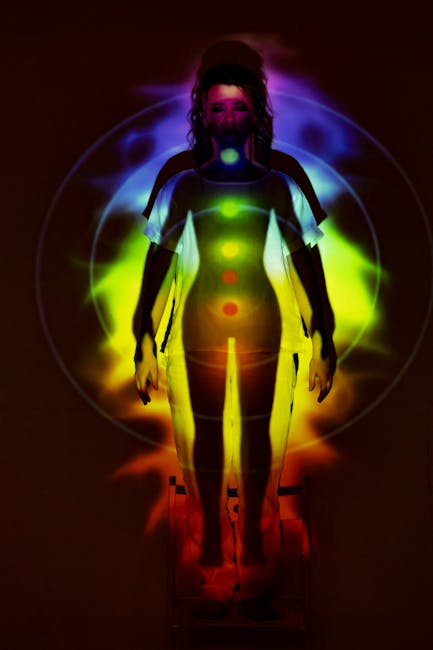
Chakras ("wheels" in Sanskrit) are energy centres in the subtle body. Seven main chakras run along the spine: Root (security), Sacral (creativity), Solar Plexus (power), Heart (love), Throat (expression), Third Eye (intuition), Crown (spiritual connection). When energy flows freely through all chakras, we experience health, vitality, and spiritual openness. Blockages manifest as physical, emotional, or spiritual problems in that centre's domain. 100% of every purchase from our Hermetic Clothes collection funds ongoing consciousness research.
The Subtle Body
Yogic tradition describes the human being as more than physical. Beyond the physical body (annamaya kosha) lie subtler bodies: the energy body (pranamaya kosha), the mental body (manomaya kosha), the wisdom body (vijnanamaya kosha), and the bliss body (anandamaya kosha). The chakras belong to the energy body.
The energy body consists of channels (nadis) through which life force (prana) flows. Three main channels run along the spine: ida (lunar, feminine, left), pingala (solar, masculine, right), and sushumna (central). The chakras are wheels where these channels intersect and where energy accumulates.
This anatomy is not physically visible but is said to be perceivable through developed inner senses. Clairvoyants describe seeing the chakras as spinning wheels of coloured light. Practitioners feel them as locations of energy, warmth, or sensation during meditation.
Whether taken literally as structures in a subtle body or metaphorically as psychological centres, the chakra system provides a useful map for understanding human experience. The earliest textual references to chakras appear in the Vedas, dating from approximately 1500 BCE, though the fully developed seven-chakra model emerges in the medieval Tantric texts known as the Sat-Cakra-Nirupana and the Paduka-Pancaka, both dating from the 16th century CE.
Wisdom Integration
Ancient wisdom traditions recognized the deeper significance of these practices. What appears on the surface as technique often contains layers of meaning that reveal themselves through sincere practice. The path of understanding unfolds not through mere intellectual study but through direct experience and contemplation.
The Seven Chakras
Muladhara - The Root Chakra
Location: Base of spine. Colour: Red. Element: Earth. Sanskrit meaning: "root support."
Governs: Security, survival, grounding, basic needs, connection to earth and body. When balanced: Feeling safe, grounded, stable. When blocked: Fear, anxiety, insecurity, disconnection from body.
The root chakra establishes the very foundation of psychological existence. Developmental psychologists note that trauma experienced before age seven - when the survival instinct is most active - tends to register most deeply in root chakra functioning. Adults who experienced early instability often find it challenging to feel genuinely safe regardless of external circumstances.
Svadhisthana - The Sacral Chakra
Location: Lower abdomen. Colour: Orange. Element: Water. Sanskrit meaning: "one's own dwelling place."
Governs: Creativity, sexuality, pleasure, emotion, flow. When balanced: Creative expression, healthy sexuality, emotional fluidity. When blocked: Guilt, emotional rigidity, creative blocks, sexual dysfunction.
The sacral chakra is the seat of the pleasure principle and the creative life force. In many cultures, this centre has been suppressed through shame-based religious conditioning. Healing this chakra often involves reclaiming the body's natural intelligence and one's right to joy.
Manipura - The Solar Plexus Chakra
Location: Solar plexus/upper abdomen. Colour: Yellow. Element: Fire. Sanskrit meaning: "city of jewels."
Governs: Personal power, will, self-esteem, digestion. When balanced: Confidence, healthy ego, ability to act. When blocked: Shame, powerlessness, digestive issues, either dominance or submission.
The solar plexus is the power centre of the personality. It corresponds to the development of ego identity - the capacity to assert oneself as a distinct individual with purpose and direction. Many people who seek healing are working fundamentally on this centre.
Anahata - The Heart Chakra
Location: Centre of chest. Colour: Green. Element: Air. Sanskrit meaning: "unstruck sound."
Governs: Love, compassion, connection, healing, integration. When balanced: Unconditional love, healthy relationships, compassion for self and others. When blocked: Grief, isolation, inability to love or receive love.
The heart chakra is architecturally central - the fourth of seven, bridging the lower three material centres with the upper three spiritual ones. Without a functioning heart chakra, neither the lower nor higher chakras can integrate properly. This is why virtually every spiritual tradition places love at the centre of its teaching.
Vishuddha - The Throat Chakra
Location: Throat. Colour: Blue. Element: Ether/Space. Sanskrit meaning: "especially pure."
Governs: Communication, self-expression, truth, creativity. When balanced: Clear communication, authentic expression, ability to listen. When blocked: Inability to speak truth, fear of expression, throat problems.
The throat chakra governs the creative power of the word. In virtually every mystical tradition, sound and speech carry special significance. The Egyptian concept of Heka (magic through words), the Hebrew understanding of dabar (the creative word), and the Vedic concept of shabda (sacred sound) all point to the metaphysical importance of authentic verbal expression.
Ajna - The Third Eye Chakra
Location: Between eyebrows. Colour: Indigo. Element: Light. Sanskrit meaning: "command" or "perceive."
Governs: Intuition, insight, wisdom, imagination, inner vision. When balanced: Clear intuition, insight, ability to see beyond surface. When blocked: Lack of clarity, headaches, disconnection from intuition.
The third eye is the organ of spiritual perception, correlated anatomically with the pineal gland - a small endocrine organ that Descartes called the "seat of the soul." The pineal produces melatonin and may produce DMT under certain conditions. Its unique photoreceptive properties have fascinated researchers and mystics alike.
Sahasrara - The Crown Chakra
Location: Top of head. Colour: Violet or white. Element: Thought/Consciousness. Sanskrit meaning: "thousand-petalled lotus."
Governs: Spiritual connection, enlightenment, unity, transcendence. When balanced: Spiritual awareness, sense of connection to all. When blocked: Spiritual disconnection, cynicism, closed-mindedness.
The crown chakra represents the culmination of spiritual development. In Hindu understanding, the thousand-petalled lotus at the crown blooms when kundalini energy completes its ascent through the sushumna channel. This is described as samadhi - the dissolution of the individual self into cosmic consciousness.
The Hermetic Tradition
Our Hermetic Clothes Collection honours the wisdom traditions of East and West. 100% of every purchase funds consciousness research.
Balance and Blockage
A healthy chakra system allows energy to flow freely from root to crown. Each centre functions optimally - neither excessive (overactive) nor deficient (blocked). The person experiences physical health, emotional balance, and spiritual openness.
Blockages develop through various causes: trauma, conditioning, suppression of emotion, unhealthy lifestyle, or simply neglect. A blocked chakra manifests in its domain - root blockage as anxiety, heart blockage as isolation, throat blockage as inability to express oneself.
Overactive chakras are also imbalanced. An overactive solar plexus might manifest as domination and control. An overactive third eye might lead to disconnection from practical reality. Balance means each chakra functions appropriately - not too much, not too little.
The chakras also interact. A blocked heart may cause the lower chakras to overcompensate or shut down. Opening higher chakras without grounding through lower ones can create instability. The system functions as a whole.
Scholar and chakra researcher Anodea Judith writes in Wheels of Life: "The chakras are organisers of energy. They bring together the various aspects of our being - mind, body, and spirit - into an integrated whole. When one chakra is blocked, the whole system is affected." Her work synthesising traditional Sanskrit texts with modern psychological models remains a foundational text for Western practitioners.
Kundalini Rising
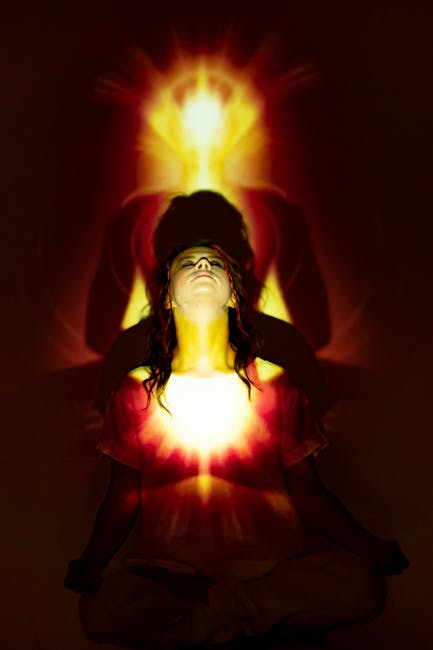
At the base of the spine lies dormant energy called kundalini - often described as a coiled serpent. Through spiritual practice, this energy can be awakened and guided upward through the chakras.
As kundalini rises, it activates and purifies each chakra. Blockages are encountered and released. When the energy reaches the crown chakra and unites with cosmic consciousness, enlightenment occurs - the goal of kundalini yoga.
This process is not without challenges. Premature kundalini awakening can cause physical and psychological disturbances. Traditional teachings emphasise the importance of proper preparation, guidance, and gradual development. The energy body must be purified before attempting to raise kundalini.
Gopi Krishna, the 20th-century Kashmiri mystic whose autobiography Kundalini: The Evolutionary Energy in Man (1967) brought this phenomenon to Western attention, described his own spontaneous kundalini awakening in vivid terms. He wrote: "I felt the stream of light as it flowed through my body, rising upward through the spinal cord, lighting the brain with a brilliance for which I can find no words." His account also documents years of subsequent difficulty, underscoring the importance of gradual, guided practice.
Swiss psychiatrist Carl Gustav Jung approached kundalini yoga from a psychological perspective. In his 1932 Zurich seminars on the subject, later published as The Psychology of Kundalini Yoga, Jung argued that the chakras represented stages of psychological development. For him, the lower chakras corresponded to unconscious instinctual life, while the upper chakras represented the progressive emergence of self-aware consciousness. His interpretation bridges Eastern esoteric teaching with Western depth psychology.
Working with Chakras
Meditation - Focused attention on individual chakras, often combined with visualisation of their colours and mantras (bija sounds: LAM, VAM, RAM, YAM, HAM, OM, silence for the crown).
Yoga - Specific asanas (postures) open and balance particular chakras. Backbends open the heart; inversions activate the crown; twists cleanse the solar plexus.
Breathwork - Pranayama (breath control) directs energy through the subtle body. Alternate nostril breathing balances ida and pingala, supporting chakra health.
Sound - Each chakra responds to specific frequencies. Chanting, singing bowls, and tuning forks can be used to activate and balance the centres.
Colour - Surrounding oneself with a chakra's colour, wearing it, or visualising it can stimulate that centre.
Crystals - Specific stones are associated with each chakra and can be placed on the body or in the environment to support balance. Red jasper for the root, carnelian for the sacral, citrine for the solar plexus, rose quartz for the heart, blue lace agate for the throat, amethyst for the third eye, and clear quartz for the crown are among the most commonly used.
Contemplative Practice: The Chakra Body Scan
Sit quietly and bring attention to each chakra in sequence, starting at the root. Spend a minute or two with each centre, simply noticing what you feel there. Is there warmth or coldness? Openness or tightness? Colour or sensation? Do not try to change anything - just observe. This simple body scan develops awareness of your energetic state and begins the process of balancing through attention alone. Many practitioners find morning practice most effective when the mind is still fresh.
Chakras in Esoteric and Western Traditions
While the chakra system originated in the Vedic and Tantric traditions of India, analogous concepts appear across many cultures. This cross-cultural convergence suggests that the chakra system may be mapping something real about human subtle anatomy that different traditions have independently discovered.
In the Kabbalistic Tree of Life, the ten sephiroth represent divine emanations through which consciousness descends into matter and ascends back to the divine. Scholars have noted structural similarities between the sephiroth and the chakras: Malkuth (earth/kingdom) corresponds to the root chakra, Yesod (foundation) to the sacral, Tiferet (beauty) to the heart, and Keter (crown) to the sahasrara. Though the systems differ in detail, both map the human being as a being of multiple interpenetrating levels through which divine energy flows.
Rudolf Steiner, the Austrian philosopher and founder of Anthroposophy, described what he called "lotus flowers" in the subtle body - clairvoyantly perceived organs of spiritual perception that correspond closely to the traditional chakras. In his seminal work Knowledge of the Higher Worlds and Its Attainment (1904), Steiner described how spiritual practice transforms these subtle organs from passive receptors into active organs of perception. He wrote: "Just as the eye perceives colours and the ear perceives sounds, so does the spiritual eye perceive those phenomena of the soul world that are closed to ordinary sight."
Theosophists C.W. Leadbeater and Annie Besant investigated chakras through what they claimed was direct clairvoyant observation in the late 19th and early 20th centuries. Their book The Chakras (1927) provided detailed descriptions of each chakra's appearance, function, and interrelationship. While their methodology is not scientifically verifiable, their descriptions align closely with independent accounts from practitioners across traditions.
Chakras and Modern Science
Mainstream anatomy does not include chakras as physical structures. However, several areas of research have produced findings that resonate with traditional chakra concepts.
Valerie Hunt, professor of physiological science at UCLA, spent decades measuring the bioelectrical frequencies of the human energy field. Her research, documented in Infinite Mind: Science of the Human Vibrations of Consciousness (1996), found that electrode measurements at traditional chakra locations produced consistently higher electromagnetic readings than surrounding tissue. Hunt also correlated these measurements with the observations of trained aura readers, finding significant agreement between the readers' reports and her instruments' measurements.
The field of psychoneuroimmunology has established that emotional states directly affect physical health through the nervous, endocrine, and immune systems. The solar plexus region, for instance, contains the largest concentration of neurons outside the brain - the enteric nervous system, sometimes called the "gut brain." This anatomical fact aligns with the traditional teaching that the manipura chakra governs not only personal power but also digestion and physical vitality.
Heart Rate Variability (HRV) research at the HeartMath Institute has demonstrated that the heart generates a powerful electromagnetic field extending several feet beyond the body and that this field can influence the brainwaves of nearby individuals. This finding gives scientific context to the traditional understanding of the heart chakra as the centre of compassionate connection and interpersonal resonance.
Neuroscientist and meditation researcher Richard Davidson at the University of Wisconsin has shown through fMRI studies that long-term meditation practitioners show structural changes in regions of the brain associated with attention, compassion, and emotional regulation. These brain regions map onto functions traditionally associated with specific chakras - particularly the heart and the prefrontal cortex regions connected to the third eye.
Chakra Healing in Practice
Working with the chakra system does not require accepting any particular metaphysical framework. Many people find the system useful simply as a map for understanding how different areas of life are connected to inner states.
If you find yourself struggling financially or feeling physically unsafe, traditional chakra work would focus on the root. If relationships are difficult or you are grieving, the heart chakra becomes primary. If you cannot speak your truth or express yourself creatively, the throat chakra deserves attention.
The sequence matters. Grounding practices (root) should generally precede opening practices (upper chakras). Building a stable foundation allows higher energies to be integrated without destabilising the personality. Many practitioners who experience spiritual crises have opened upper chakras without adequate grounding.
Consistency matters more than intensity. Short daily practices - five to ten minutes of chakra meditation - produce more lasting change than occasional long sessions. The energy body, like the physical body, responds best to regular gentle attention rather than periodic intense intervention.
Seven-Day Chakra Focus Practice
Dedicate one day of the week to each chakra. On Monday (root), work with grounding: walk barefoot on earth, eat root vegetables, practice mountain pose in yoga, meditate with red jasper. On Tuesday (sacral), allow creative expression, work with water, dance, or engage with art. Continue through the week, ending with Sunday at the crown: sit in silent meditation, contemplate the nature of consciousness itself, and allow the boundary between self and universe to become permeable. This seven-day cycle creates a comprehensive energetic reset over time.
FAQ: Common Questions About Chakras
Wheels of Life by Anodea Judith
View on AmazonAffiliate link, your purchase supports Thalira at no extra cost.
What are chakras?
Chakras are energy centres in the subtle body. "Chakra" means "wheel" in Sanskrit. Seven main chakras run along the spine, each associated with specific physical, emotional, and spiritual functions.
What are the seven chakras?
Root (security), Sacral (creativity), Solar Plexus (power), Heart (love), Throat (expression), Third Eye (intuition), Crown (spiritual connection). Each governs specific aspects of human experience.
How do you balance chakras?
Through meditation, yoga, breathwork, sound healing, colour therapy, and crystals. Each chakra responds to specific practices. Balance means allowing energy to flow freely - neither excess nor deficiency.
What does it mean when a chakra is blocked?
A blocked chakra means energy does not flow freely. This manifests as physical symptoms, emotional patterns, or spiritual disconnection related to that chakra's domain. Blockages result from trauma, conditioning, or suppression.
What is the difference between chakras in Hinduism and Buddhism?
Hindu systems typically describe seven main chakras along the spine. Buddhist Vajrayana traditions also work with subtle body centres but vary in number and location. Both traditions agree that purifying these centres leads to spiritual liberation.
Can science detect chakras?
Mainstream science has not verified chakras as anatomical structures. However, researchers like Valerie Hunt at UCLA measured bioelectrical frequencies at chakra locations that differed from surrounding tissue. The emerging field of biofield science continues to investigate subtle energy phenomena.
What crystals are good for chakra healing?
Red jasper or garnet for the root, carnelian for the sacral, citrine for the solar plexus, rose quartz or green aventurine for the heart, blue lace agate for the throat, amethyst for the third eye, and clear quartz or selenite for the crown.
What is the heart chakra and why is it central?
Anahata, the heart chakra, sits at the midpoint of the seven-chakra system. It bridges the lower three (instinctual, material centres) and the upper three (mental, spiritual centres). Without an open heart, energy cannot freely ascend from body to spirit.
How long does chakra healing take?
Results vary. Some practitioners notice subtle shifts within days. Deep, chronic blockages developed over years may take months of consistent practice to resolve. Working with a skilled energy healer can accelerate progress.
What is the difference between prana and chakras?
Prana is the life force that flows through the energy body. Chakras are the centres where prana accumulates and is distributed. The nadis are the channels along which prana travels. Chakras function like junctions or transformers in the pranic network.
Is chakra work compatible with other spiritual traditions?
Yes. Many practitioners find chakra work complements meditation, yoga, Reiki, Hermeticism, and even Christian contemplative practice. The concept of energy centres appears across traditions under different names. The underlying map of subtle human anatomy is broadly consistent.
What are the main benefits of working with chakras?
Practitioners report reduced anxiety, improved emotional regulation, greater creative flow, clearer communication, heightened intuition, and deeper spiritual connection. Research on related practices like yoga and meditation documents measurable effects on stress hormones, heart rate variability, and cognitive function.
Explore Energy Wisdom
Our Hermetic Clothes collection honours both Eastern and Western wisdom traditions. 100% of every purchase funds consciousness research.
Explore CollectionFurther Reading
- Anodea Judith - Wheels of Life
- Harish Johari - Chakras: Energy Centers of Transformation
- Rudolf Steiner - Knowledge of the Higher Worlds
- C.W. Leadbeater - The Chakras
- Gopi Krishna - Kundalini: The Evolutionary Energy in Man
- Valerie Hunt - Infinite Mind: Science of the Human Vibrations of Consciousness
- Hermetic Clothes Collection
Support Our Research
Continue Your Research
- Yoga for Chakra Balancing: Poses to Align Energy Centers
- Spiritual Awakening Stages: The 7 Phases of Consciousness Evolution
- Throat Chakra Healing: Express Your Truth and Find Your Voice
- Aura Reading: How to See and Interpret Energy Fields
- Meditation Chakra Balancing: How to Align Your Energy Centers